




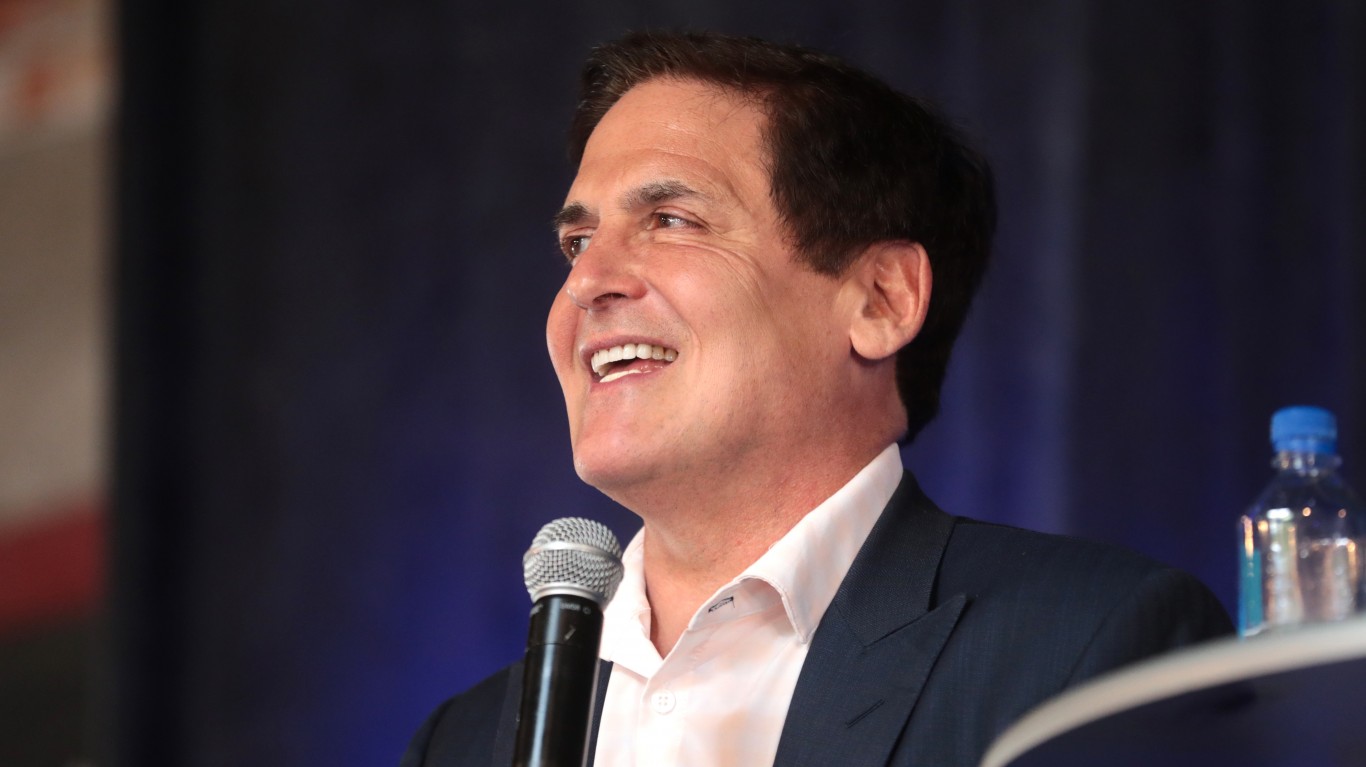
Billionaire investor Mark Cuban has a new metaphor for the AI infrastructure boom, and it doubles as a plug for one of his side projects. On the latest episode of the All-In podcast, Cuban predicted that “a lot of data centers… are going to be turned into pickleball courts” if AI models and data centers keep getting more efficient. The joke lands harder because Cuban co-owns the Dallas Flash pickleball team. The underlying argument is one investors chasing the “Mark Cuban AI bubble” and “AI infrastructure overbuild” narratives should take seriously.
Cuban brings dot-com-era operator credibility to the debate. He is a founder who sold Broadcast.com to Yahoo for $5.7 billion in April 1999, right before the market imploded. That timing gives his overbuild warning some weight, even if his “data centers to pickleball courts” punchline is doing most of the work on social media.
The Efficiency Argument
Cuban’s core view is that hyperscalers like Meta and Alphabet are correctly betting that AI usage will keep rising, but that “technological breakthroughs” will make AI dramatically cheaper and more power-efficient. If that happens, much of the computing capacity being poured into the ground today will not be needed at the scale currently planned.
His analogy is the late-1990s fiber-optic rush. Telecoms overbuilt long-haul networks, then connection speeds improved and, in Cuban’s telling, “there wasn’t a bandwidth problem anymore.” He expects a similar price-performance curve in AI compute. On Big Tech’s habit of pouring cash into AI infrastructure, borrowing heavily, and pledging to keep spending for years, Cuban called it “planning for perfection, and that’s going to be hard,” adding, “nobody can predict that well.”
The comments were reported by Business Insider’s Theron Mohamed on July 22, 2026.
A Different Kind of Bubble, in Cuban’s View
Cuban is careful to separate overbuild risk from mania. He argues the AI boom is “not the traditional dot-com bubble” because there are fewer companies going public at “crazy valuations” with “no revenue, no traffic, no nothing,” and none of the retail-mania tells (like cab drivers pitching internet stocks) that defined 2000. “It’s not the traditional dot-com bubble, right?” he said.
Where the pain would show up, in his framing, is narrower. Cuban said the damage would be concentrated: it “could just destroy a lot of VCs and a lot of funds and a lot of PE” that have gone all-in on AI infrastructure bets, while sparing “most people across the US.”
He Is Not Alone
Other well-known skeptics have arrived at similar conclusions through different doors. Michael Burry has warned that Big Tech is overinvesting in chips and data centers that could quickly become obsolete. GMO co-founder Jeremy Grantham has called AI “obviously a bubble,” comparing it to the railroad and internet bubbles as transformational technologies that still sparked overinvestment. All three still see AI as transformative. Their argument is that the capex math assumes a demand curve history rarely delivers.
What the Market Is Saying Right Now
The current market is running the other way. Super Micro Computer just disclosed over $60 billion in new orders and a record backlog in its latest SEC filing, guiding gross margin to 15-17%, doubled from a previous 8% outlook, and the stock rose 24%. Bank of America is telling clients that wafer fab equipment spending will surge from $144 billion in 2026 to $250 billion by 2028. OpenAI plans to dramatically increase compute spending through 2030, and Microsoft just signed a multi-billion-dollar agreement to rent computing capacity from Mistral’s European data centers.
That is exactly the “planning for perfection” Cuban is warning about. Whether it ends in more revenue or more pickleball courts is the question every AI-infrastructure investor should be underwriting right now.
Contact [email protected] for any questions or corrections.














 Top Gaining Stocks
 Top Losing Stocks