Did Nvidia CEO Jensen Huang Just Unlock the $50 Billion China Market?
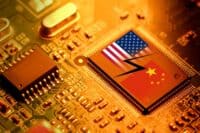
For the past two years, the artificial intelligence boom has been shaped as much by politics as technology. Washington tightened export controls, while Beijing pushed for self-reliance. And investors in Nvidia (NASDAQ:NVDA | NVDA Price Prediction) watched one of the…

For the past two years, the artificial intelligence boom has been shaped as much by politics as technology. Washington tightened export controls, while Beijing pushed for self-reliance. And investors in Nvidia (NASDAQ:NVDA | NVDA Price Prediction) watched one of the company’s largest growth markets turn into a geopolitical chessboard.
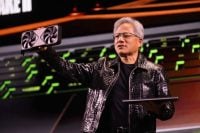
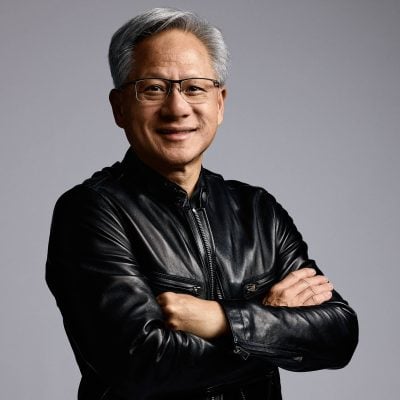
Now comes a potentially major shift. According to an exclusive Reuters report, Nvidia CEO Jensen Huang just secured U.S. approval for sales of Nvidia’s prized H200 AI chips to 10 Chinese firms, including Alibaba (NYSE:BABA), JD.com (NASDAQ:JD), ByteDance, and Lenovo, during President Donald Trump’s China trip. Reuters reported the potential deals could open access to a Chinese AI market estimated at roughly $50 billion annually.
That does not mean Nvidia is back to business as usual in China. Beijing still must approve the transactions, but this appears to be the clearest sign yet that Washington may be softening its stance on limited AI chip exports. For Nvidia shareholders, that matters.
China Was Never a “Nice-to-Have” Market
Investors sometimes forget how large Nvidia’s China business once was before export restrictions hit. According to Nvidia’s fiscal 2025 annual report, China represented approximately 13% of total revenue, or $17.1 billion — up 66% from the year before and almost triple the amount from fiscal 2023 — before tighter export controls sharply reduced shipments of advanced AI processors.
The H200 is one of Nvidia’s most sought-after AI accelerators, designed for training and inference workloads powering large language models and cloud AI systems. These are the chips companies need if they want to compete seriously in generative AI, and China’s demand has not disappeared simply because restrictions were imposed.
Chinese cloud giants including Alibaba and Tencent have continued investing aggressively in AI infrastructure despite limited access to Nvidia’s most advanced products. Meanwhile, domestic alternatives from Huawei still trail Nvidia in software ecosystem maturity and developer adoption.
Surprisingly, Nvidia’s competitive moat in China may actually have widened during the restriction period because CUDA — Nvidia’s proprietary AI software platform — became even more entrenched globally.
Why This Matters More Than One Chip Deal
This story is not just about whether Nvidia sells a few thousand H200 chips. It is about whether the company regains a strategic foothold in the world’s second-largest economy at a time when AI infrastructure spending is accelerating worldwide.
Here’s what the numbers tell us:
| Company | FY2026 Revenue Growth | Market Cap | Forward P/E |
| Nvidia | 66% | $5.49 trillion | 20x |
| Advanced Micro Devices (NASDAQ:AMD) | 34% | $726 billion | 34x |
| Intel (NASDAQ:INTC) | Flat | $604 billion | 80x |
Source: Company filings, market data as of May 2026.
Nvidia is already dominating the AI accelerator market outside China. Analysts at research firm IDC estimated Nvidia controlled over 80% of the global AI GPU market entering 2026.
So why does China matter? Because maintaining hypergrowth gets harder at Nvidia’s current size. The company already generated more than $96.7 billion in free cash flow over the past four quarters. Adding even a fraction of a reopened China opportunity could help extend Nvidia’s growth runway further into the decade.
Granted, risks remain. The U.S. government could reverse course again if geopolitical tensions escalate. China could reject approvals or favor domestic suppliers. And investors should remember that export-compliant chips often carry lower margins than Nvidia’s unrestricted flagship products.
That said, the mere fact Washington appears willing to negotiate at all changes the conversation.
Huang Is Playing the Long Game
One reason investors have bid up Nvidia’s valuation is Huang himself. While rivals focused narrowly on hardware performance, Huang spent more than a decade building Nvidia into a full-stack AI ecosystem company — chips, networking, software, developer tools, and cloud partnerships. That ecosystem is now so deeply embedded that many AI developers build specifically around Nvidia architecture first.
The Reuters report also highlights something else savvy investors should notice: Huang personally joined the U.S.-China delegation at the last minute. That suggests Nvidia was not simply reacting to policy changes — it may be helping shape them.
In any case, Nvidia’s ability to maintain dialogue with both Washington and Beijing has become a competitive advantage in itself. Few semiconductor companies possess that level of influence.
Key Takeaway
In short, Nvidia has not fully unlocked China yet — but the door may have opened wider than at any point since export restrictions began.
If approved by Chinese regulators, access to major firms like Alibaba, JD.com, ByteDance, and Lenovo could restore billions in high-margin AI revenue opportunities for Nvidia over time. More importantly, it signals that Nvidia remains too strategically important to be completely sidelined from the global AI race.
When all is said and done, that may be the real story investors should focus on.
Contact [email protected] for any questions or corrections.
After two decades of patrolling the dark corners of suburbia as a police officer, Rich Duprey hung up his badge and gun to begin writing full time about stocks and investing. For the past 20 years, he’s been cruising the markets looking for companies to lock up as long-term holdings in a portfolio while writing extensively on the broad sectors of consumer goods, technology, and industrials. Because his experience isn’t from the typical financial analyst track, Rich is able to break down complex topics into understandable and useful action points for the average investor. His writings have appeared on The Motley Fool, InvestorPlace, Yahoo! Finance, Money Morning, and, of course, 24/7 Wall St. He has been featured in both U.S. and international publications, including MarketWatch, Financial Times, Forbes, Fast Company, and USA Today.