President Trump Pushed for Nvidia China Deal — but It’s AMD’s Chips Beijing Wants
The AI boom has turned semiconductors into geopolitical bargaining chips. One minute, Washington is tightening export controls. The next, trade delegations are back in Beijing trying to reopen markets worth tens of billions of dollars. For investors, the bigger question…

The AI boom has turned semiconductors into geopolitical bargaining chips. One minute, Washington is tightening export controls. The next, trade delegations are back in Beijing trying to reopen markets worth tens of billions of dollars. For investors, the bigger question is simple: Which company actually benefits when the political theater ends?
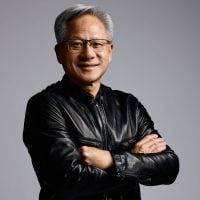
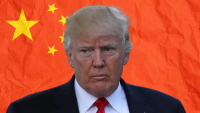
President Donald Trump’s recent China trip appeared, at first glance, to hand Nvidia (NASDAQ:NVDA | NVDA Price Prediction) a major victory. But surprisingly, the headlines may have obscured the more important development — Beijing seems far more interested in deepening ties with Advanced Micro Devices (NASDAQ:AMD) instead.
Trump Helped Nvidia Reopen the Door to China
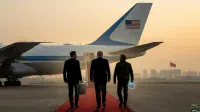
Trump traveled to China with a delegation of U.S. executives as part of a broader push to revive business ties between the world’s two largest economies. At the conclusion of the visit, multiple agreements were announced, including a deal allowing Nvidia to sell its H200 AI chips to 10 Chinese companies.
Among the reported buyers were Alibaba (NYSE:BABA), JD.com (NASDAQ:JD), ByteDance, and Lenovo — all major players in China’s cloud computing and AI infrastructure markets.
That mattered because China was once one of Nvidia’s most important growth markets. China previously accounted for roughly 20% to 25% of data center-related sales before export restrictions imposed under both the Biden and Trump administrations narrowed access to advanced AI chips.
The H200 agreement briefly suggested Nvidia might regain part of that lost business. And given Nvidia’s dominance in AI accelerators, it made sense why the announcement dominated headlines. After all, Nvidia still controls an estimated 80% to 90% share of the AI GPU market.
China Appears to Be Cooling on Nvidia
That said, Beijing’s response afterward told a different story. Reports indicate Chinese regulators quickly moved to place Nvidia’s GPUs under tighter government scrutiny, raising questions about how much practical market access the company will actually regain. China has increasingly emphasized reducing reliance on U.S. technology suppliers, particularly in areas tied to AI and national security.
In any case, Nvidia’s position in China remains politically fragile. The company’s premium AI chips sit directly at the center of the U.S.-China technology conflict. That creates a problem for investors. Nvidia may win approvals one month and face restrictions the next.
AMD, meanwhile, appears to be navigating the environment differently. Reports say AMD CEO Lisa Su met with China’s vice premier He Lifeng in Beijing on Monday at his request. The Chinese official reportedly invited AMD to deepen cooperation as trade relations stabilize. The tone matters because it signals Beijing may view AMD as a more workable long-term partner.
AMD Could Be the More Interesting China AI Play
Let’s look at what the numbers tell us.
| Company | Forward P/E Ratio | 2026 Revenue Growth Estimate | AI GPU Market Position |
| Nvidia | Around 19 | 73% | Dominant leader |
| Advanced Micro Devices | Around 31 | 42% | Fast-growing challenger |
Granted, Nvidia remains the AI kingpin. Its CUDA software ecosystem, Blackwell architecture, and hyperscaler relationships still give it a lead competitors have not closed. But AMD does not need to beat Nvidia outright to reward shareholders.
AMD’s MI300 accelerator family has already gained traction with hyperscalers and enterprise customers. If China begins steering more AI demand toward AMD chips while limiting Nvidia’s influence, AMD gains access to incremental revenue streams investors may not fully appreciate yet.
Surprisingly, AMD may also carry lower geopolitical baggage in Beijing’s eyes because it has historically held a smaller share of China’s AI infrastructure market. Nvidia became too dominant — and therefore too strategically sensitive.
Regardless, China reopening even part of its AI chip market creates opportunity. The question is who captures more of it.
Key Takeaway
In short, Trump’s China trip may have generated splashy headlines for Nvidia, but the more actionable signal for sharp investors could be AMD’s warming relationship with Beijing.
Nvidia still owns the strongest AI franchise in semiconductors. Its revenue reached $215.9 billion over the past fiscal year while free cash flow topped $96 billion. Those numbers are hard to ignore.
Yet AMD may offer investors something Nvidia currently cannot — a cleaner path into a reopened China market. For savvy investors looking beyond the obvious headline, that distinction could matter a lot over the next 12 to 24 months.
Contact [email protected] for any questions or corrections.
After two decades of patrolling the dark corners of suburbia as a police officer, Rich Duprey hung up his badge and gun to begin writing full time about stocks and investing. For the past 20 years, he’s been cruising the markets looking for companies to lock up as long-term holdings in a portfolio while writing extensively on the broad sectors of consumer goods, technology, and industrials. Because his experience isn’t from the typical financial analyst track, Rich is able to break down complex topics into understandable and useful action points for the average investor. His writings have appeared on The Motley Fool, InvestorPlace, Yahoo! Finance, Money Morning, and, of course, 24/7 Wall St. He has been featured in both U.S. and international publications, including MarketWatch, Financial Times, Forbes, Fast Company, and USA Today.