Quantum Stocks Are Surging: Time to Load Up on D-Wave, or Is IonQ the Safer Bet?
Quantum computing holds immense promise to transform industries by tackling problems beyond the reach of traditional computers. It could accelerate drug discovery, optimize logistics, enhance financial modeling, and advance materials science through superior processing power. Yet, the field grapples with…


Quantum computing holds immense promise to transform industries by tackling problems beyond the reach of traditional computers. It could accelerate drug discovery, optimize logistics, enhance financial modeling, and advance materials science through superior processing power. Yet, the field grapples with steep challenges.
Qubits, the core units of quantum computing, suffer from decoherence — the loss of stability amid environmental noise — which limits computation time. Error rates remain high, demanding advanced correction methods that consume extra resources. Scaling to millions of qubits requires breakthroughs in cooling, control systems, and integration, all while costs soar into the billions. These hurdles delay widespread adoption, confining most systems to research labs and potentially delaying commercial viability for a decade.
Despite these obstacles, investor enthusiasm has propelled quantum stocks upward. Over the past year, the sector has seen explosive gains, with Rigetti Computing (NASDAQ:RGTI) rocketing more than 5,200% higher. This surge reflects hype around tech giants like Nvidia (NASDAQ:NVDA | NVDA Price Prediction) and Microsoft (NASDAQ:MSFT) investing heavily, alongside policy pushes for national security applications.
D-Wave Quantum (NYSE:QBTS) is another quantum computing stock enjoying tremendous gains, soaring over 3,550% higher over the last 12 months. QBTS specializes in quantum annealing, a method suited for optimization tasks like scheduling or portfolio balancing. Its Advantage2 system boasts over 4,400 qubits with 20-way connectivity, enabling real-world use via the Leap cloud platform, where 20.6 million problems have been solved.
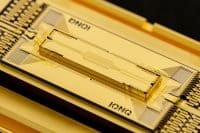
IonQ (NYSE:IONQ), by contrast — up nearly 800% — employs trapped-ion technology, using stable atomic qubits for gate-based computing that supports broader algorithms, including simulations for chemistry and AI. IonQ’s Forte Enterprise systems deliver high-fidelity gates over 99.9%, and it eyes 100 physical qubits in 2025.
The question for investors, though, is which quantum computing stock is the better buy today for the next 12 months and beyond.
D-Wave Quantum (QBTS)
D-Wave has carved out a niche with its annealing systems that excel at finding optimal solutions in complex datasets. The Advantage2 prototype, launched this year, doubles coherence time and boosts energy scale by 40%, allowing simulations — like magnetic materials modeling — that would take classical supercomputers a million years to complete.
Revenue hit $22.3 million in the trailing 12 months, up from prior years, driven by cloud access and on-premises sales to institutions like NASA and Lockheed Martin (NYSE:LMT). A recent U.K. project optimizing police vehicle placement highlights practical deployment.
D-Wave plans to scale to 100,000 qubits by the end of this decade, targeting a 66% compound annual growth rate in revenue through 2030 in sectors like logistics and finance, where annealing shines. Partnerships with Volkswagen and Banco Bilbao Vizcaya Argentaria (NYSE:BBVA) bolster commercial traction.
The Qubits 2025 conference in March highlighted hybrid artificial intelligence (AI)-quantum integrations, with sessions on production deployments and roadmap updates for quantum optimization and hardware advancements.
Significant challenges persist. Annealing’s focus on specific problems limits its scope compared to gate-based systems, risking obsolescence. Critics, like Martin Shkreli, call it a “dead-end” for universal computing while export restrictions may curb global reach. The stock’s 426x sales multiple suggests overvaluation, especially after a 97% drop in 2022’s downturn.
D-Wave’s second-quarter operating losses also widened, and profitability is still distant, but it has cash reserves of $819 million to fund R&D without immediate dilution.
IonQ (IONQ)
IonQ’s trapped-ion approach traps ions in electromagnetic fields for qubits with superior stability, operating near room temperature to sidestep cryogenic extremes. This yields low-error gates and supports quantum networking, like converting photons for fiber compatibility.
Q2 revenue jumped 82% to $20.7 million, beating guidance, with full-year forecasts at $82 million to $100 million. Collaborations with AstraZeneca (NYSE:AZN) for drug workflows and Oak Ridge for grid optimization show enterprise traction.
IonQ aims to scale to 800 logical qubits by 2027 and 80,000 by 2030, targeting cryptographically relevant quantum computers within the next few years. Its $1.08 billion acquisition of Oxford Ionics’ chip technology bolsters hardware development while acquisitions of Lightsynq for quantum interconnects and Vector Atomic for sensors expand into quantum internet and space applications, backed by a Department of Energy agreement.
The quantum computing company’s Analyst Day last month outlined its Tempo system, aiming for 100 physical qubits in 2025.
Challenges include escalating costs, with Q2 operating losses at $181 million from scaling efforts. Trapped-ion systems are costly to build, and IBM’s (NYSE:IBM) superconducting qubits pose stiff competition. A $1 billion equity raise diluted shares, and its 416x price-to-sales ratio reflects a highly speculative valuation, particularly as delays in error correction could derail its timelines.
The Verdict
Despite both quantum computing stocks facing challenges, IonQ emerges as the superior investment. Its gate-based, stable tech positions it for universal applications, outpacing D-Wave’s niche annealing in a market favoring versatility.
With revenue growth outstripping peers and a roadmap to fault-tolerant scale, IonQ offers balanced risk-reward. D-Wave suits short-term optimization plays but faces technology limitations. Both carry volatility, but IonQ’s partnerships and acquisitions signal stronger execution.
Contact [email protected] for any questions or corrections.
After two decades of patrolling the dark corners of suburbia as a police officer, Rich Duprey hung up his badge and gun to begin writing full time about stocks and investing. For the past 20 years, he’s been cruising the markets looking for companies to lock up as long-term holdings in a portfolio while writing extensively on the broad sectors of consumer goods, technology, and industrials. Because his experience isn’t from the typical financial analyst track, Rich is able to break down complex topics into understandable and useful action points for the average investor. His writings have appeared on The Motley Fool, InvestorPlace, Yahoo! Finance, Money Morning, and, of course, 24/7 Wall St. He has been featured in both U.S. and international publications, including MarketWatch, Financial Times, Forbes, Fast Company, and USA Today.