What Blackstone’s President Just Said About AI Should Get Nvidia Investors Really Excited
Nvidia (NASDAQ:NVDA | NVDA Price Prediction) has spearheaded the artificial intelligence (AI) revolution, supplying chips that power everything from data centers to advanced computing. Its stock recently surpassed the $5 trillion market capitalization milestone, making it the world’s most valuable…


Nvidia (NASDAQ:NVDA | NVDA Price Prediction) has spearheaded the artificial intelligence (AI) revolution, supplying chips that power everything from data centers to advanced computing. Its stock recently surpassed the $5 trillion market capitalization milestone, making it the world’s most valuable company. This surge reflects investor enthusiasm for AI’s potential to transform industries.
However, concern is growing that the AI boom resembles past tech bubbles, such as in the dot-com era, where valuations detached from fundamentals led to crashes. Critics argue current prices for Nvidia and its peers are inflated, outpacing real business growth. Despite these warnings, the market has largely dismissed them, continuing to drive shares higher amid strong demand for AI infrastructure.
The fear of an AI bubble persists, though, casting a shadow over the sector’s sustainability. But not all voices echo this skepticism. Blackstone‘s (NYSE:BX) president and COO recently shared insights that could energize Nvidia investors eyeing long-term expansion.
AI as a Productivity Powerhouse
Jon Gray recently gave an interview with CNBC where he pushed back against bubble talk surrounding AI investments. He emphasized that the massive capital flowing into the sector stems from tangible productivity gains already emerging. Gray highlighted examples in coding, customer engagement, legal work, and content creation where AI is driving efficiencies.
He described the current wave as a “huge investment boom in chips and data centers” to enable a broader productivity surge. Gray noted that global labor costs represent trillions of dollars annually, so even a modest reduction through AI could unlock enormous value.
This contrasts with traditional bubbles, which bet on speculative future revenues; here, the focus is on cutting expenses today. Blackstone itself is investing heavily in AI infrastructure, securing 15- to 20-year leases with trillion-dollar tech giants, not building speculatively like risky real estate booms.
Gray acknowledged potential misallocations of capital, drawing parallels to railroads and the internet, where some ventures failed but the overall transformation succeeded. He stressed responsible investing to capture the “very large prize” AI offers, warning that Wall Street may underestimate its disruptive impact on legacy businesses.
Huang Echoes the Sentiment
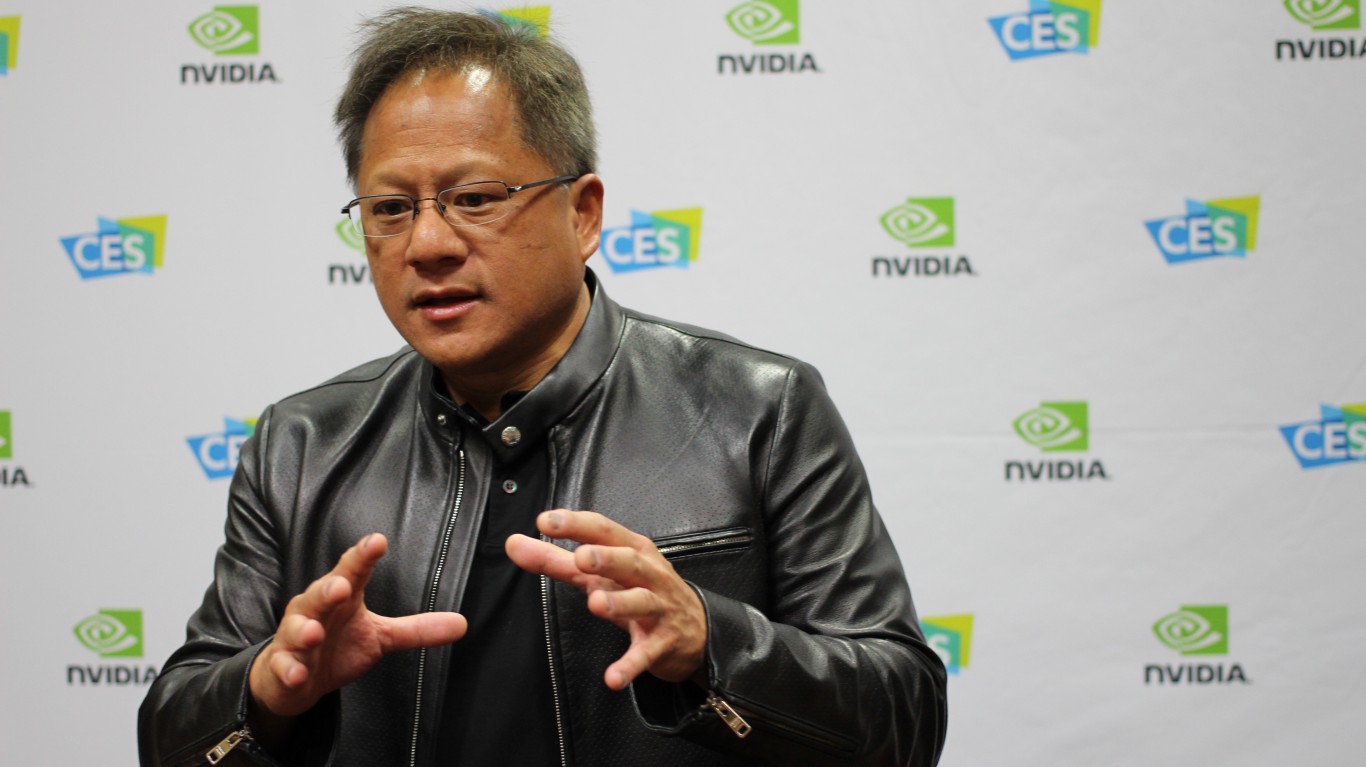
Nvidia CEO Jensen Huang echoed Gray’s views during remarks at the APEC summit in South Korea this morning. Fielding questions on AI stocks’ potential bubble, Huang asserted that we are at the start of a decade-long buildout of a new computing platform, arguing AI has moved beyond curiosity to delivering real utility for consumers and corporations. That is what makes it profitable and justifies increased investments.
This came after Nvidia announced a massive new deal with the South Korean government and some of the country’s biggest tech giants, including Samsung and Hyundai, to supply 260,000 Blackwell accelerators. Each is expected to deploy 50,000 of Nvidia’s chips in their smart factories, while Naver — the country’s largest internet provider — will acquire 60,000 chips.
Huang’s optimism reinforces Gray’s narrative: AI isn’t hype but a foundational shift driving sustained demand for Nvidia’s hardware.
Key Takeaway
Because of the misallocations that will occur, the AI boom can give the appearance of being a bubble. Yet Gray and Huang make compelling cases that current investments yield lasting returns through increased profitability, productivity boosts, and infrastructure.
Bubbles burst when promises falter, but AI’s early wins in cost savings and efficiency suggest there is durability here. That’s not to say risks such as overcapacity or economic downturns couldn’t trigger corrections, but they are more speed bumps on the road to further growth. What we are seeing may just be overvaluation rather than a bubble.
For Nvidia investors, these endorsements signal that the sector’s growth phase may extend far beyond today’s valuation. If the history of transformative tech is any guide, the rewards Nvidia investors will reap will outweigh the perils.
Contact [email protected] for any questions or corrections.
After two decades of patrolling the dark corners of suburbia as a police officer, Rich Duprey hung up his badge and gun to begin writing full time about stocks and investing. For the past 20 years, he’s been cruising the markets looking for companies to lock up as long-term holdings in a portfolio while writing extensively on the broad sectors of consumer goods, technology, and industrials. Because his experience isn’t from the typical financial analyst track, Rich is able to break down complex topics into understandable and useful action points for the average investor. His writings have appeared on The Motley Fool, InvestorPlace, Yahoo! Finance, Money Morning, and, of course, 24/7 Wall St. He has been featured in both U.S. and international publications, including MarketWatch, Financial Times, Forbes, Fast Company, and USA Today.