Pay Attention, Little Known VGK Has Nearly Doubled VOO and SPYs Returns This Year
Going into the final weeks of 2025, the S&P 500 has had another strong year. ETFs that track the S&P 500 have posted double-digit returns yet again for the year, with Vanguard S&P 500 ETF (NYSE: VOO) coming in year-to-date…


Going into the final weeks of 2025, the S&P 500 has had another strong year. ETFs that track the S&P 500 have posted double-digit returns yet again for the year, with Vanguard S&P 500 ETF (NYSE: VOO) coming in year-to-date at 18.43% and SPDR S&P 500 ETF (NYSE: SPY) right behind at 18.34% at the time of this writing. Much of these gains can be credited to the multi-trillion net capital valuations that have swelled with Apple, Nvidia, Microsoft, and other Magnificent 7 AI stocks that festoon the S&P 500’s top 10.
However, there are many household name companies that are not a part of the S&P 500 top 10, mostly due to their lack of AI development. A good number of them aren’t even American. For example – Nestle (chocolate), AstroZeneca (pharma), and LVMH (luxury goods) are all European companies whose products have garnered widespread use, and their respective stock prices have risen accordingly. A notable point is that none of these companies’ gains are contingent upon any in-house AI development, but rather on intrinsic value of their respective products and sales.
Nevertheless, they are essential in the market, and all three can be found in the top 10 list of another ETF: the Vanguard FTSE Europe ETF (NYSE: VGK). More intriguing is the fact that VGK currently sports a year-to-date return of 32.97%, which is 79% higher than VOO and only a few points shy of doubling its returns.
Vanguard FTSE Europe ETF
Issued by Vanguard, the second largest asset manager in the world after BlackRock, the Vanguard FTSE Europe ETF tracks the FTSE Developed Europe All Cap Index, which covers stocks from the Eurozone and Scandinavia. Passively managed, its inception dates back to 3-4-2005. An overview of VGK appears below:
| YTD Return | 32.97% | Yield | 2.86% |
| Net Assets | $35.84 billion | Beta | 1.08 |
| Average volume | 2.8 million shares | 52-week range | $62.02-$83.37 |
| Expense Ratio | 0.06% | 1-Year Return | 27.64% |
| NAV | $82.67 | 3-Year Return | 16.48% |
| # of Stocks | 1,239 | 5-Year Return | 10.63% |
The top 10 holdings of VGK are:
- ASML Holding – 2.91%
- SAP SE – 1.87%
- AstraZeneca PLC – 1.73%
- HSBC Holdings – 1.70%
- Nestle SA – 1.69%
- Novartis AG – 1.62%
- Roche Holding AG – 1.58%
- Shell PLC – 1.54%
- Siemens – 1.46%
- LVMH Moët Hennessy – 1.26%
As one can see, unlike with VOO or SPY, in which 7 out of the top 10 are AI tech companies, the top 10 holdings of VGK contain a wider range of industrial sectors: pharma, technology, financial, and luxury goods. In fact, VGK’s sector concentration puts technology at #6, or 8.27%, behind:
- Financial – 22.79%
- Industrials – 20.19%
- Healthcare – 12.92%
- Consumer Defensive – 8.83%
- Consumer Cyclical – 8.48%
How Can VGK Outpace VOO and SPY?
There are a number of reasons why VGK has been able to outperform VOO and SPY this year. It is admittedly an anomaly. Historically, it has usually lagged behind, sometimes by a substantial amount. However, 2025 contained certain events that helped to give VGK a big boost. A few of these include:
Geopolitical Tariff Fears:
In March, President Trump’s reciprocal tariff policy announcement caused a big drop in the S&P 500, since many believed the analysts and pundits that it would trigger massive inflation and supply chain issues. With WalMart and other US retailers relying on Chinese manufacturing for millions of their best-selling retail items, the concerns over a renewed trade war with China were understandably disconcerting.
Europe, on the other hand, felt the impact much less severely. The initial trade conflicts largely were focused on China and India, so the comparative stability of European markets drew investors from all over the world who were seeking less volatility and unknown economic outcomes.
Sector Preferences From Global Investors:
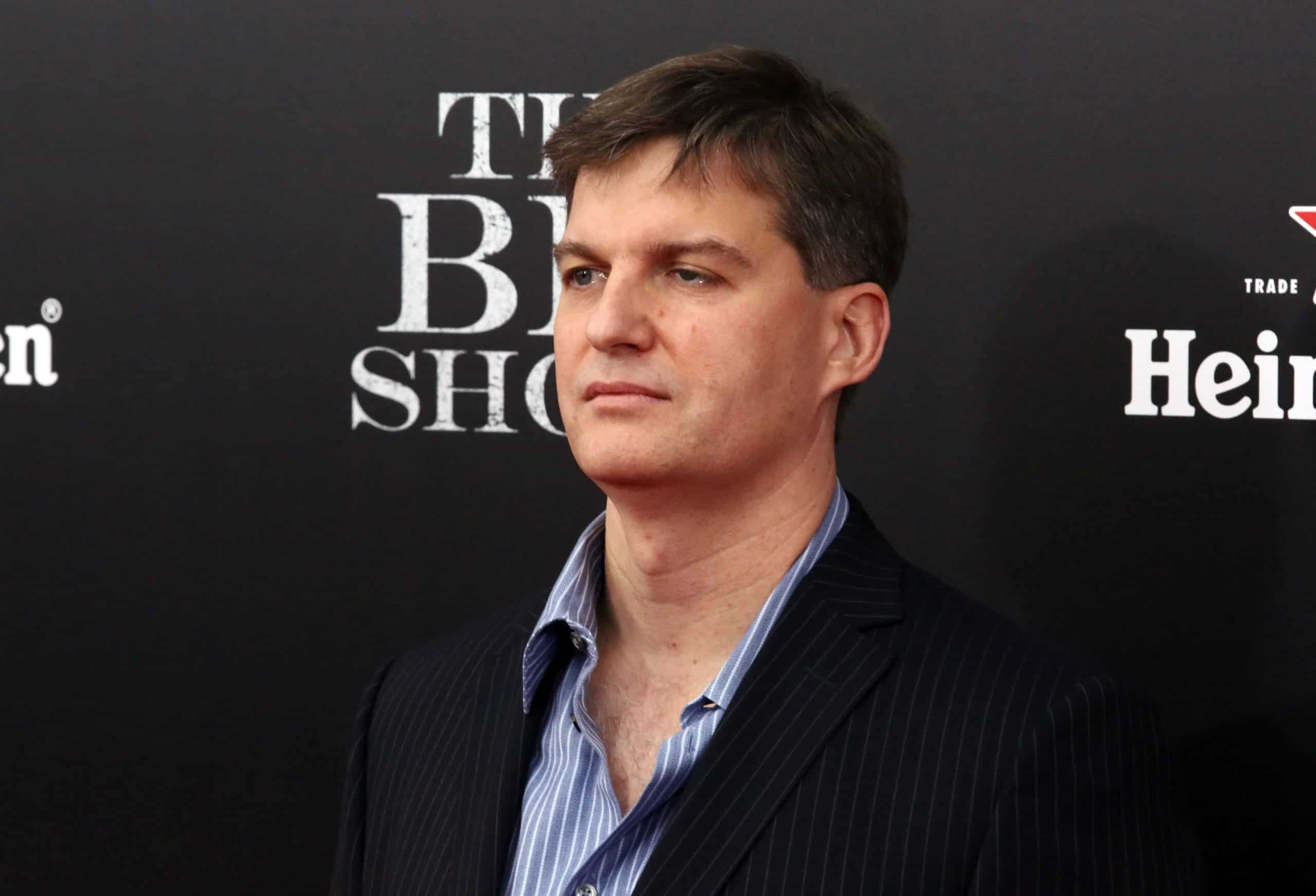
The huge bull run on the AI focused Magnificent 7 stocks has created the first multi-trillion valuations of Apple, Nvidia, Microsoft, et. al. This has also led to fears that the AI industry has become a bubble, not unlike that of the dotcoms. Michael “The Big Short” Burry is a vocal critic of the AI bubble and of Nvidia in particular, and his track record for shorting economic bubbles in the market warranted a movie about his successful prediction of the 2008 subprime mortgage banking meltdown, starring Christian Bale as Burry. VGK’s 44% weighting towards financials and industrials became appealing to many institutional investors this year who shared Burry’s fears.
Strength In Numbers:
While the S&P 500 represents 500 of the strongest market-weighted companies representing a cross-section of US economic and financial health, the Magnificent 7 stocks are responsible for over half of the 18% gain YTD, making it a “live by the sword, die by the sword scenario”. By contrast, VGK’s index, the FTSE Developed Europe All Cap Index, encompasses over 1,200 different stocks across multiple countries. Given the lower level of sector competition in each European and Scandinavian nation, each has its own territorial near-monopolies in various sectors, cumulatively making for multiple big winners all contributing to the overall index strength.
As 2025 comes to a close, the S&P 500 is still not showing any signs of faltering, but Europe should be able to maintain at least some of its lead, provided it does not succumb to foolish policies or geopolitical in-fighting among EU members, such as Brussels’ attempts to compel Italy to accede to its migrant policy, which Prime Minister Giorgia Meloni is staunchly resisting.
Contact [email protected] for any questions or corrections.
After 15 years on Wall Street with 7 of them as Director of Corporate and Municipal Bond Trading for a NYSE member firm, I started my own project and corporate finance consultancy. Much of the work involves writing business plans, presentations, white papers and marketing materials for companies seeking budgetary allocations for spinoffs and new initiatives or for raising capital for expansion or startup companies and entrepreneurs. On financial topics, I have been published under my own byline at The Motley Fool, 247wallst.com, DealFlow Events’ Healthcare Services Investment Newsletter and The Microcap Newsletter, among others. Additionally, I have done freelance ghostwriting writing and editing for several financial websites, such as Seeking Alpha and Shmoop Financial. I have also written and been published on a variety of other topics from music, audiophile sound and film to musical instrument history, martial arts, and current events. Publications include Copper Magazine, Fidelity (Germany), Blasting News, Inside Kung-Fu, and other periodicals.