Supreme Court Showdown: 2 Stocks Poised for a Trump Tariff Triumph
President Donald Trump announced sweeping tariffs on April 2, 2025, dubbing the date Liberation Day. The executive order imposed a 10% baseline tariff on imports from nearly all countries starting Apr. 5, with higher country-specific rates to follow for Apr.…


President Donald Trump announced sweeping tariffs on April 2, 2025, dubbing the date Liberation Day. The executive order imposed a 10% baseline tariff on imports from nearly all countries starting Apr. 5, with higher country-specific rates to follow for Apr. 9. This triggered a global market crash, with the S&P 500 dropping more than 12% in the following week.
U.S. stocks recovered after Trump paused some tariffs on Apr. 9, with the S&P 500 largely returning to pre-announcement levels within a month. However, the tariffs’ constitutionality under the International Emergency Economic Powers Act remains in question. The Supreme Court could rule as soon as tomorrow on their legality. If upheld, the duties would continue shielding U.S. producers from foreign competition.
Domestic manufacturers like Nucor (NYSE:NUE | NUE Price Prediction) and First Solar (NASDAQ:FSLR) stand to gain the most from sustained protection if the tariffs are found constitutional.
Nucor (NUE)
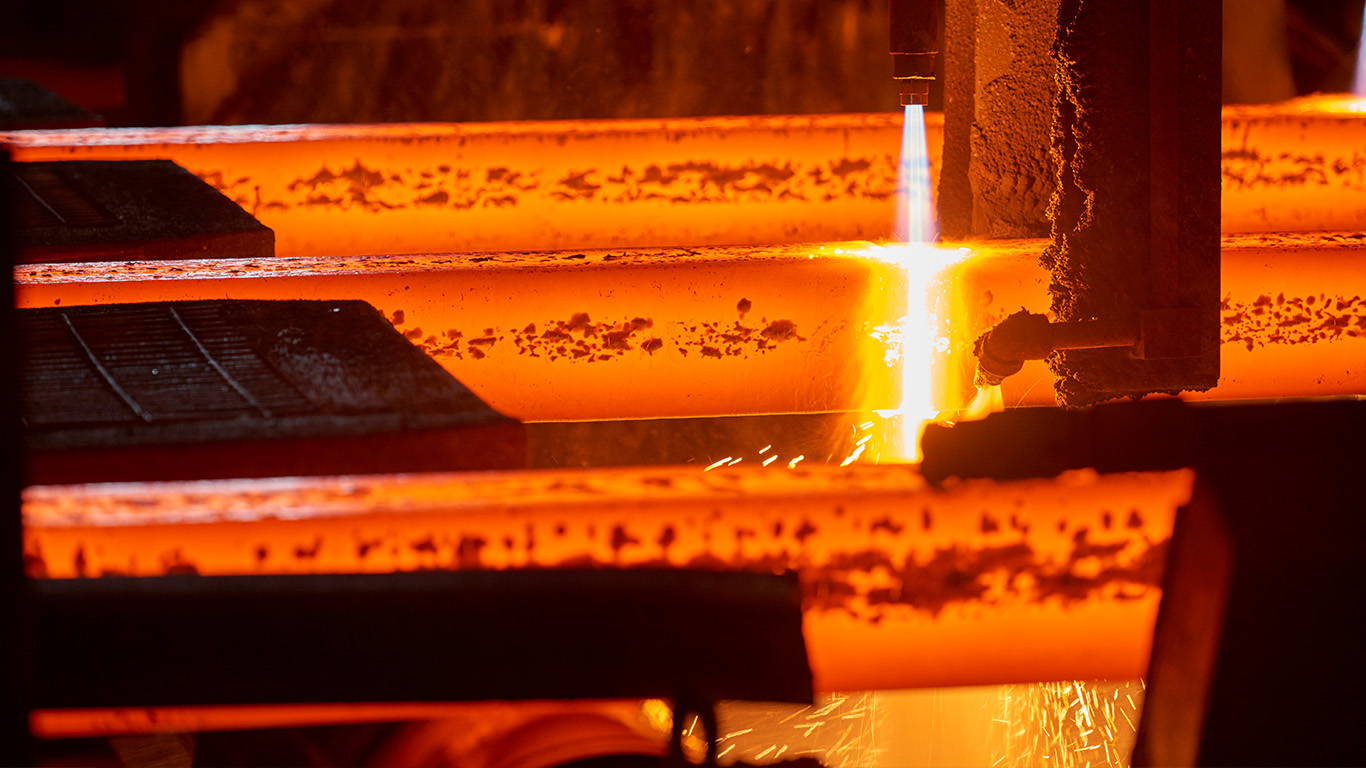
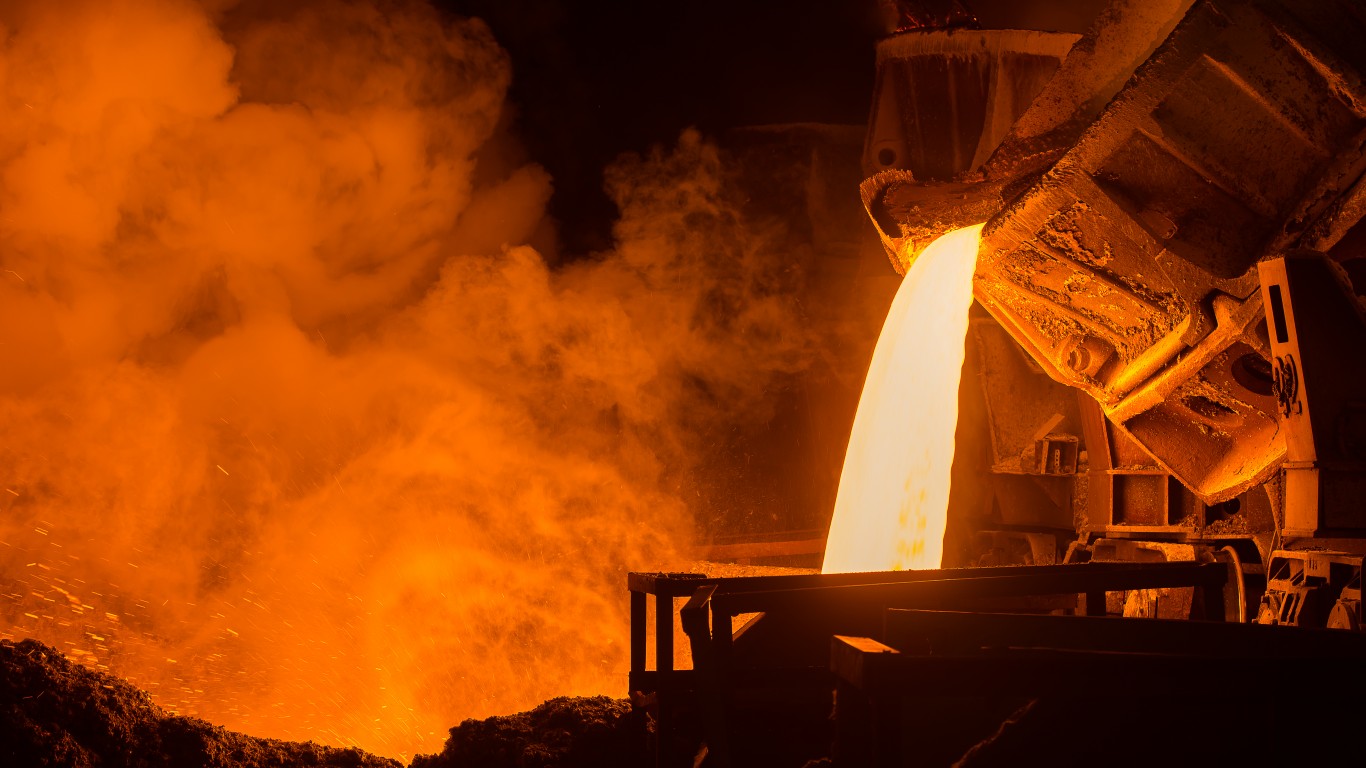
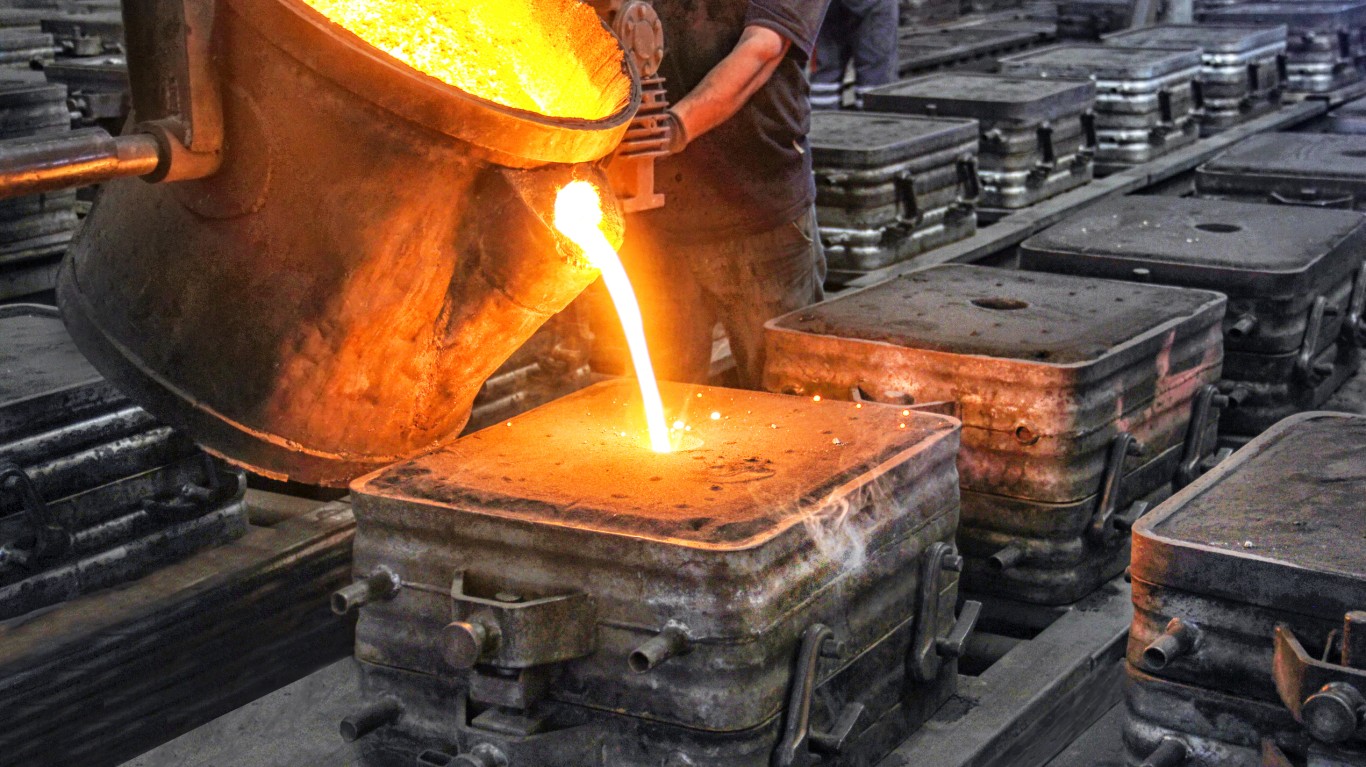
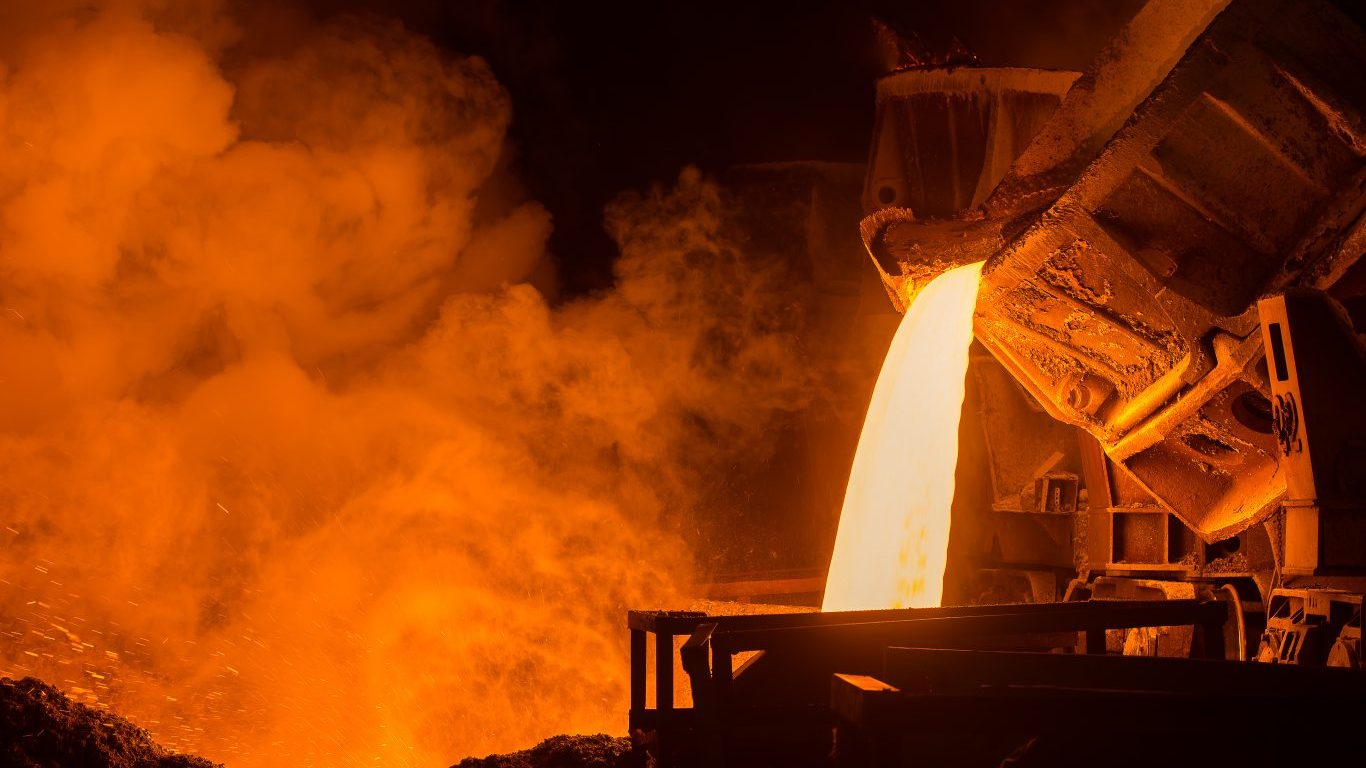
Nucor shares have surged 43% over the past year, driven by Trump’s steel tariffs and robust domestic demand. The company, a leading U.S. steel producer, benefited from the expansion of Section 232 tariffs, which imposed 25% duties on steel imports early in 2025 and doubled them to 50% by June. This reduced U.S. sheet steel imports by 35% through October, allowing Nucor to capture more market share.
CEO Leon Topalian described the tariffs as a necessary tool to counter global overcapacity during the third-quarter earnings call. Nucor’s order backlog jumped 58% from the year-ago period, reaching its largest level in history, as customers sought domestic supply as imports were disrupted. The steelmaker beat earnings estimates two of the three quarters this year and only missed by a penny in the second.
Third-quarter results showed a surge in steel mill shipments, offsetting higher input costs and contributing to what Topalian called a tsunami of earnings power from AI-driven infrastructure builds. Despite some muted demand in other sectors, the tariffs helped benchmark steel prices rise from $725 per metric ton before Trump’s inauguration to $875 by June.
Morgan Stanley analysts highlighted Nucor as a key beneficiary after the administration formalized the duties, noting reduced competition from abroad. If the Supreme Court upholds the tariffs tomorrow, Nucor would see continued import declines, enabling higher pricing and volumes. This would support margins by limiting cheaper foreign steel, which has historically undercut U.S. producers.
With no exceptions or loopholes, as emphasized by Topalian, Nucor could sustain its backlog growth and invest in capacity without fear of overcapacity rebounding globally. A ruling against the tariffs, though, could reverse these gains, exposing Nucor to renewed import pressure and potential price drops.
First Solar (FSLR)
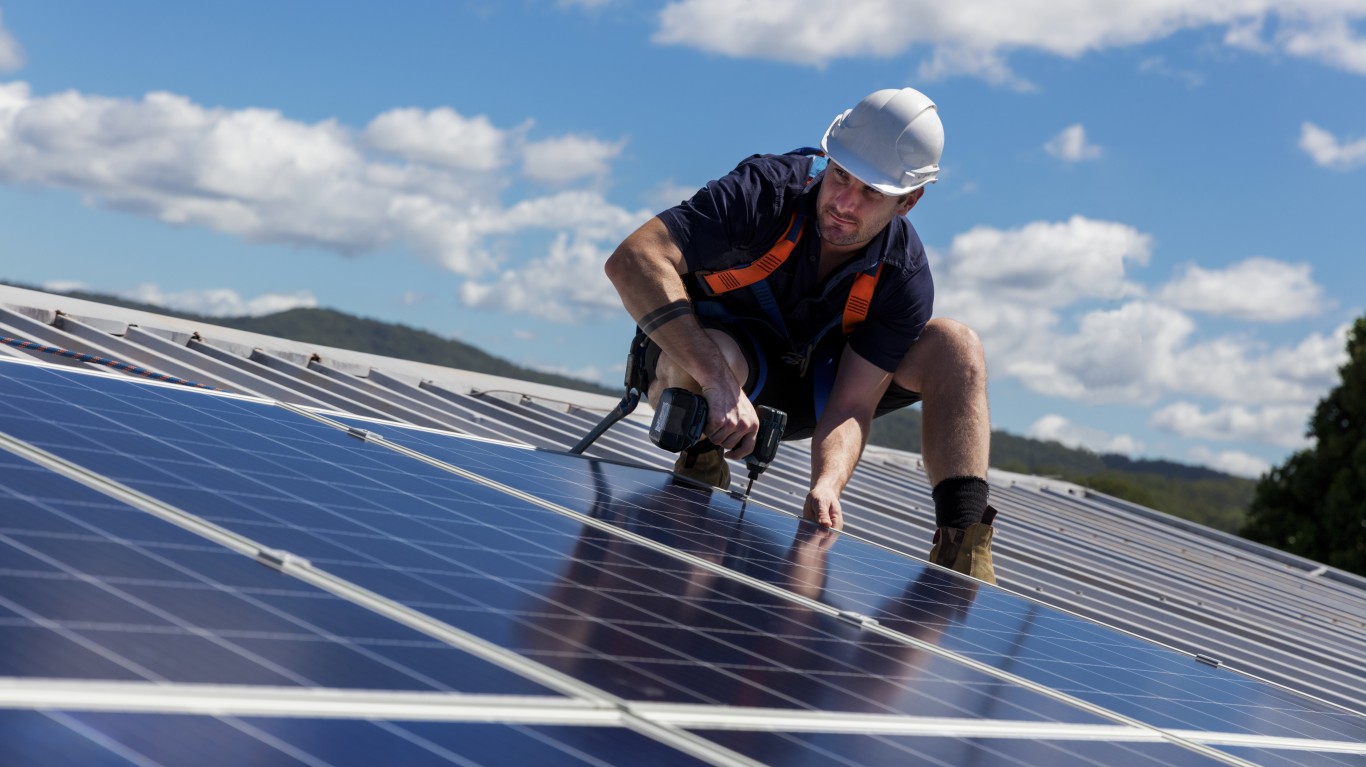
First Solar stock jumped 29% over the past year, propelled by U.S.-focused production and the tariffs on solar imports. The cadmium telluride panel maker avoided duties on polysilicon-based products from China and Southeast Asia, positioning it as a preferred supplier under the Inflation Reduction Act’s incentives.
In April, shares gained about 5% amid market turmoil, as investors viewed the company’s Ohio, Alabama, and upcoming Louisiana facilities as insulated from the 54% tariff on Chinese goods. Fourth-quarter 2024 results showed net sales of $1.5 billion, up $600 million sequentially, with 2025 guidance forecasting $5.3 billion to $5.8 billion, exceeding estimates. By November, anti-dumping duties ranging from 21.3% on Malaysia to 271.28% on Vietnam further boosted First Solar’s competitiveness against rerouted Chinese panels.
Piper Sandler analysts called it the sole tariff beneficiary, raising their price target to $250 and noting extended higher average selling prices. CEO Mark Widmar highlighted the domestic supply chain’s role in offering pricing and delivery certainty amid trade frictions during First Solar’s third-quarter call. Shares hit a 52-week high in November after strong results, with a 13% gain the following day.
Reciprocal tariffs — 50% on India, 20% on Vietnam plus penalties, and 19% on Malaysia — closed loopholes and enhanced First Solar’s moat. If the court rules in Trump’s favor tomorrow, upholding the tariffs would solidify these barriers, creating long-term pricing power and margin expansion for First Solar. This would reduce cheap imports, allowing the company to maintain high bookings and utilization at its U.S. plants without retroactive duty risks. A negative ruling, however, might ease import pressures, but First Solar’s domestic focus would still provide an edge over foreign rivals.
Contact [email protected] for any questions or corrections.
After two decades of patrolling the dark corners of suburbia as a police officer, Rich Duprey hung up his badge and gun to begin writing full time about stocks and investing. For the past 20 years, he’s been cruising the markets looking for companies to lock up as long-term holdings in a portfolio while writing extensively on the broad sectors of consumer goods, technology, and industrials. Because his experience isn’t from the typical financial analyst track, Rich is able to break down complex topics into understandable and useful action points for the average investor. His writings have appeared on The Motley Fool, InvestorPlace, Yahoo! Finance, Money Morning, and, of course, 24/7 Wall St. He has been featured in both U.S. and international publications, including MarketWatch, Financial Times, Forbes, Fast Company, and USA Today.