2026’s Biggest AI Trends: The Memory Explosion | MU Stock, SNDK Stock, SK Hynix, CAMT Stock
Summary: To ring in 2026, our 24/7 Wall St. Analysts Eric Bleeker and Austin Smith are counting down 12 trends for AI investors to watch in 2026. The first trend the two will be discussing is the AI-driven “memory explosion”…

This post may contain links from our sponsors and affiliates, and Flywheel Publishing may receive compensation for actions taken through them.
Summary:
To ring in 2026, our 24/7 Wall St. Analysts Eric Bleeker and Austin Smith are counting down 12 trends for AI investors to watch in 2026.
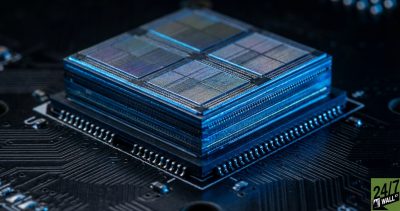
The first trend the two will be discussing is the AI-driven “memory explosion” that has been emerging as a core investment theme as inference, larger context windows, and reasoning models dramatically increase demand for memory and storage.
“As inference rises, so will memory and storage demand,” Bleeker explains. “What you have to do is you have to hold the model weights in high bandwidth memory, which creates that incredible need for high bandwidth memory.”
High-bandwidth memory has become critical because AI model weights must reside close to compute, making memory a dominant cost and potential bottleneck in AI systems.
Bleeker explains that going forward, semiconductor equipment companies are expected to benefit as industry investment ramps up to alleviate these memory and manufacturing constraints.
As Smith notes, “One of the things that’s happening with AI is that commodities are suddenly becoming precious. Memory was always just a commodity in tech. Same with copper, energy – now they’re all becoming precious inputs.”
The AI Investor Podcast Is Your Number Source for AI News
This conversation was from our most recent episode of The AI Investor Podcast. It’s free to subscribe in your favorite podcast player and every episode we give updates and recommendations in a $500,000 portfolio filled with our top AI stock ideas.
We’ve recommended winning stock ideas like Lumentum (NASDAQ: LITE), which is up 286% since we first called it, and Credo (Nasdaq: CRDO), which is up 418%.
You can listen to our most recent episode in either Apple Podcasts or Spotify below:
Transcript:
Austin: I love this. So I love starting off with the 12 biggest trends, and this is a framework that has served the portfolio well. Right? Like one of your early trends was, was the AI infrastructure build out before a lot of people really appreciated the billions of dollars that were flowing into this, which then led you to many of your interconnect plays, right?
Which have been some of the best performers in the sector. So calling out these trends then allows us to tie different investments to them.
Theme one, memory explosion. So you’ve explained this to me a couple times and, and maybe you can give us just a quick primer for why the memory explosion is happening. And this is, this all comes down to inference, right? And context windows. Am I correct? Right. Like, as we leverage these LLMs more, we need greater memory to make greater use of them and they become more powerful as they’re their the as as they have to leverage more inference. Am I correct in that? Like, is that with the, the, the thesis here?
Eric Bleeker: Yeah, I mean, as there’s multiple dynamics to it. But you know, as inference rises, so will memory and storage demand. What you have to do is you have to hold the model weights in high bandwidth memory, which creates that incredible need for high bandwidth memory.
We saw that cross last year, and we looked at a lot of the growth in areas like reasoning and what that would do to memory demand. And that’s why we made that prediction about that being our top market for last year.
Now as we head into this next year, we have new dynamics as well. We’ve gone from AI being something that is at the frontier of early adopters to massive scale. We’ve got 800 million users a day of ChatGPT, Gemini is beyond 400 million, and we’re moving to new areas like image generation, still massive gains to come in video.
You could think about what happens to video as it becomes a larger and larger portion of social networks themselves. And then you think that all of this data needs to be stored somewhere, right?
So the way that Bank of America (NYSE: BAC) | BAC Price Prediction has framed it is that what we’ve seen so far in AI was the shovels – GPUs – and now we need to build the warehouses to store the gold. That’s the storage device and hardware side.
So Austin, if we go back and go through some of the basics – people buy a computer and they have memory in it, but they might not know what these acronyms are. What we have is DRAM, which is all about data execution.
The actual models – the weights – are stored in high-bandwidth memory, and about 40% of demand for DRAM now comes from AI. That’s been a severe ramp, which has led to escalating constraints.
I saw a headline the other day that the Stargate project alone is projected to consume 40% of all DRAM itself.
So Austin, if you’re a company like NVIDIA (NASDAQ: NVDA), number one, this memory cost explosion is a threat because the number one cost component of your systems is now memory itself. Also, it’s potentially a threat to the AI buildout because if memory gets too expensive or isn’t available, you won’t be able to build all of this.
What we saw—and as we go across each theme, you’re going to hear NVIDIA a lot because CES is happening right now – they unveiled BlueField-4, which is essentially a storage management system. It allows much more efficient offloading of memory tasks to NAND, which is a deeper, cheaper form of memory.
So what we’ve seen so far in 2026 is that eight out of the ten best-performing stocks in the entire market are memory-related.
Austin: This is the SanDisk (NASDAQ: SNDK)—up 30% in just a week, right?
Eric Bleeker: Correct.
Austin: Okay.
Eric Bleeker: And the reason is because SanDisk is the pure play for NAND – this type of memory that goes into solid-state drives. I think they were up 600% last year and now they’re already up 30%.
Last year, it was just seen as DRAM, and now we’re seeing an explosion across the entire memory stack.
Now Austin, here’s what I want to highlight. Memory itself is a giant risk to other stocks in your portfolio because if it gets too expensive, it puts pressure everywhere.
I saw some estimates that SanDisk could raise prices 50% quarter over quarter, maybe even 100%. That puts tremendous pressure on companies like Apple (NASDAQ: AAPL). I even saw that the next PlayStation – made by Sony Group (NYSE: SONY)—might be delayed because memory costs are so high.
What’s going to have to be the release valve is more semiconductor equipment to build more fabs, because memory companies held off investment after vicious cycles in the past.
Austin: Western Digital (NASDAQ: WDC) and SanDisk were basically a five-year dead zone for investor money.
Eric Bleeker: Yep.
Austin: One of the things that’s happening with AI is that commodities are suddenly becoming precious. Memory was always just a commodity in tech. Same with copper, energy – now they’re all becoming precious inputs.
AI has created such demand that these industries just aren’t built to scale this fast.
Eric Bleeker: Correct. Investing is about being ahead of the bottlenecks – and then understanding how a company like NVIDIA works around them.
That’s what we saw first with Micron Technology (NASDAQ: MU) and SK Hynix (OTC: HXSCF), and then it moved to companies like SanDisk.
This year, I’m focused on semiconductor equipment plays. We did Lam Research (NASDAQ: LRCX) last year, which delivered phenomenal returns. We also did Camtek (NASDAQ: CAMT).
There are a lot of incentives to alleviate this bottleneck, and I think there’s still phenomenal growth ahead.
Austin: You bought Lam Research, Camtek, SK Hynix, and Micron in January of last year – two are up over 200%.
This memory explosion feels similar to optics. It’s not just exploding demand – it’s a transition to new technology, which creates real compounding if you’re in the right names.
Contact [email protected] for any questions or corrections.



![The Micron Technology logo in blue is centered on a dark green background with lighter green grid lines and glowing green line and bar charts. A black box at the bottom displays white text: '129.49 +3.22 [2.55%]'. A '24/7 WALL ST' logo is in the top right corner.](https://247wallst.com/wp-content/uploads/2024/05/Postive-1-200x113.jpg)


