A Big Correction Would Cost Dow 10,000 Points
Last year, the S&P 500 declined 19% from its February highs to its late April lows. A wild rally took it higher for the balance of 2025, and it closed up 17% for the year. From a market risk perspective,…


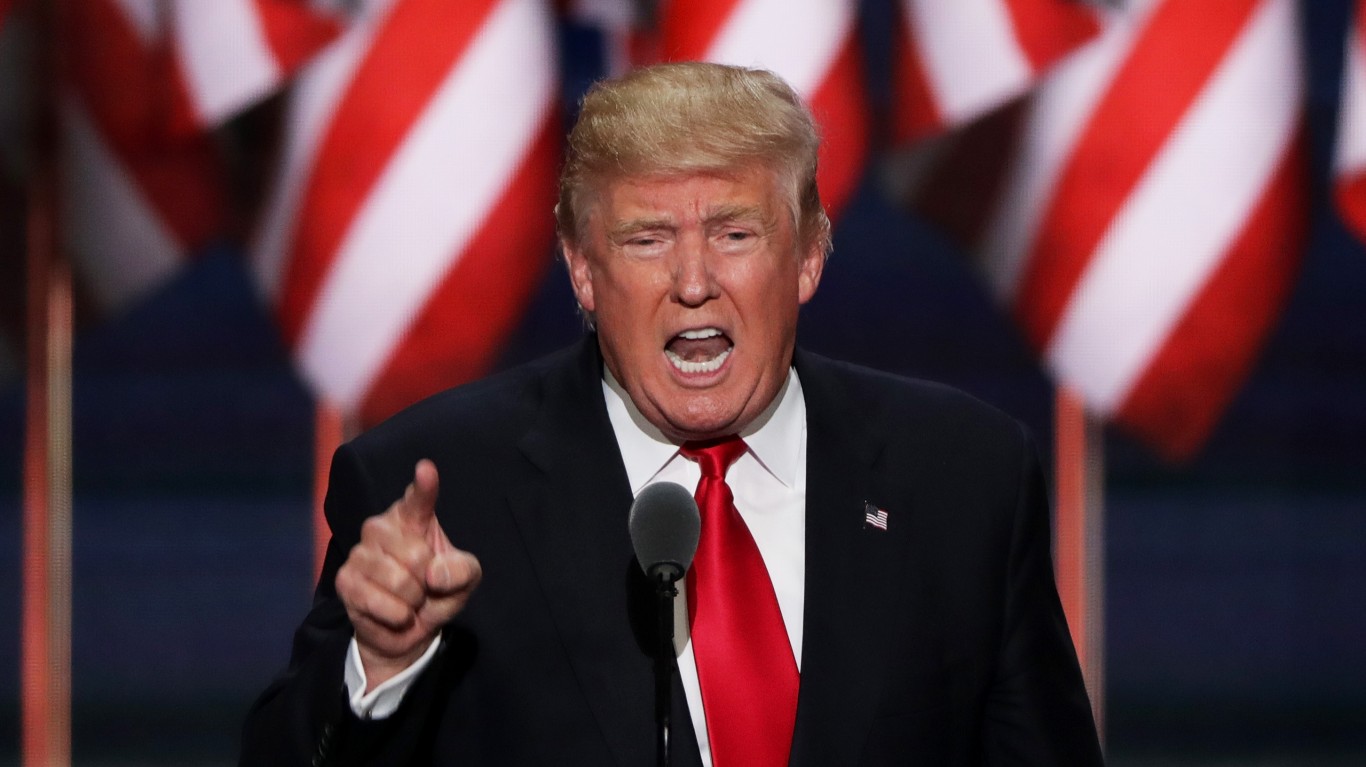
Last year, the S&P 500 declined 19% from its February highs to its late April lows. A wild rally took it higher for the balance of 2025, and it closed up 17% for the year. From a market risk perspective, most of the decline was attributable to a single event. This was the Donald Trump “Liberation Day,” which targeted huge tariffs across much of the world.
Liberation Day, on April 2, was the day when the president threatened tariffs on nearly 100 nations. It was presented as a blanket set of charges, but some countries faced larger amounts. At one point, China faced tariffs exceeding 50%. The market assumed that international trade would be affected by hundreds of billions of dollars. Earnings at thousands of US companies were put at risk. The president backed down, quickly. Suddenly, the market began to rebound.
A 20% correction has occurred several times this century. The Dotcom bust triggered one. The COVID-19 drop was part of a panic about how many people the virus would kill worldwide. The 2008/2009 housing bubble also caused a drop.
The Dow Jones Industrial Average (DJIA) is unique among indices because it comprises only 30 components, in contrast to the S&P 500. The Dow, therefore, has a less stable base. Most of the run-up from 25,000 on January 4, 2018, to 50,000 recently was driven by a few stocks. According to The Wall Street Journal, the engine of the increase was driven by jumps in financial and tech stocks. In particular, this includes Goldman Sachs (NYSE: GS | GS Price Prediction), Apple (NASDAQ: AAPL), Microsoft (NASDAQ: MST), Visa (NYSE: V), Amex (NYSE AXP), and JPMorgan (NYSE JPM).
What drove the Dow up from 25,000 to 50,000 could drive it down. Two Dow components have exposure to the AI sector, which some analysts believe is a bubble. Apple and Microsoft are among the companies at the center of this. Among the exposures financial stocks face is the potential disruption of their industry by AI. Trading and lending are particularly vulnerable to AI replacing humans. That would open the door to smaller financial services companies.
Financial services companies also have exposure to inflation. Although it is nearly dead today, it was alive in March 2022, when the CPI jumped 8.5%. Inflation is among the primary reasons for loan defaults. The economy is hot now based on GDP. Many forecasts for this year is that hot will get hotter
The wild card in market value is geopolitical considerations. Parts of the world are unstable at present, and recent decisions by the US could exacerbate these problems. The war in Ukraine continues to drive worry about inflation, particularly in the energy sector. The US has one aircraft carrier in the Middle East region and may send another soon. The Dow has also risen at an unusually fast rate. It crossed 40,000 on March 16, 2024.
Stock markets rarely go down slowly. Usually, one or more events cause a correction, or even a crash. There is a threat of one or more of the catalysts today.
Contact [email protected] for any questions or corrections.
Douglas A. McIntyre is the co-founder, chief executive officer and editor in chief of 24/7 Wall St. and 24/7 Tempo. He has held these jobs since 2006.
McIntyre has written thousands of articles for 24/7 Wall St. He is an expert on corporate finance, the automotive industry, media companies and international finance. He has edited articles on national demographics, sports, personal income and travel.
His work has been quoted or mentioned in The New York Times, The Wall Street Journal, Los Angeles Times, The Washington Post, NBC News, Time, The New Yorker, HuffPost USA Today, Business Insider, Yahoo, AOL, MarketWatch, The Atlantic, Bloomberg, New York Post, Chicago Tribune, Forbes, The Guardian and many other major publications. McIntyre has been a guest on CNBC, the BBC and television and radio stations across the country.
A magna cum laude graduate of Harvard College, McIntyre also was president of The Harvard Advocate. Founded in 1866, the Advocate is the oldest college publication in the United States.
TheStreet.com, Comps.com and Edgar Online are some of the public companies for which McIntyre served on the board of directors. He was a Vicinity Corporation board member when the company was sold to Microsoft in 2002. He served on the audit committees of some of these companies.
McIntyre has been the CEO of FutureSource, a provider of trading terminals and news to commodities and futures traders. He was president of Switchboard, the online phone directory company. He served as chairman and CEO of On2 Technologies, the video compression company that provided video compression software for Adobe’s Flash. Google bought On2 in 2009.