Retirees and Income Investors Get Paid Monthly, Plus 20% Gains With This ETF
The AAM S&P 500 High Dividend Value ETF (NYSEARCA:SPDV) generates income by holding dividend-paying stocks. With 51 positions from the S&P 500, the fund targets high-yield companies. SPDV delivers monthly distributions, paying $0.10 in January 2026 following steady monthly payouts…

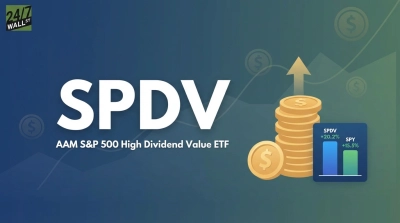
The AAM S&P 500 High Dividend Value ETF (NYSEARCA:SPDV) generates income by holding dividend-paying stocks. With 51 positions from the S&P 500, the fund targets high-yield companies. SPDV delivers monthly distributions, paying $0.10 in January 2026 following steady monthly payouts that have trended upward over two years.
Unlike covered call ETFs that manufacture yield through options or leveraged funds that amplify volatility, SPDV’s distributions come directly from dividends paid by holdings. The trade-off is total return. The fund posted a 20.2% gain over the past year, outperforming the SPDR S&P 500 ETF Trust (NYSEARCA:SPY), which returned 15.5% over the same period. SPDV’s focus shifts value toward income rather than appreciation.
Top Holdings Drive the Income Stream
Newmont Corp (NYSE:NEM | NEM Price Prediction) anchors SPDV’s income strategy as the fund’s largest holding at 3.48%. The gold miner’s conservative 14.8% payout ratio creates a financial cushion that protects dividend payments even when gold prices decline. This stability through commodity cycles makes Newmont a reliable foundation for SPDV’s monthly distributions.
Halliburton (NYSE:HAL) represents 2.57% of the portfolio and offers a 1.94% yield. The oilfield services provider maintains a 45.3% payout ratio, suggesting the dividend remains sustainable even during energy sector downturns. Strong institutional ownership of 90.4% indicates confidence in the company’s ability to generate cash flow through commodity cycles.
CVS Health (NYSE:CVS) represents 2.45% of the portfolio but presents dividend sustainability concerns. The healthcare giant offers a 3.4% yield, yet quarterly earnings fell 43.2% year-over-year amid margin pressure. The market appears to expect a turnaround based on the forward PE of 11x, but CVS remains the holding most worth monitoring for potential dividend cuts.
Monthly Distributions Show Stability
SPDV’s dividend history demonstrates portfolio health through consistent growth. Monthly payments climbed from $0.085 in early 2023 to $0.11 by early 2025, reflecting improving cash flow from underlying holdings. The fund supplements these base distributions with year-end specials that fluctuate based on annual performance, providing income-focused investors with reliable monthly cash flow backed by established dividend payers.
Contact [email protected] for any questions or corrections.
I am a long time investor and student of business, and believe finding good companies that can become great investments is the best game on earth. After 20 years of writing and researching the public markets it is clear that individuals have never had more tools and information to take control of their financial lives. From ETFs and $0 commissions to cryptos and prediction markets there has never been a greater democratization of access to investing.
I write to help people understand the investments available to them so they can make the best choice for their portfolio, whether they're starting out or looking for income in retirement.