Manchester United Just Proved the Ratcliffe Cost-Cutting Plan Is Working — Sort Of
Manchester United’s fiscal Q2 2026 results, filed February 25, 2026, delivered a sharper-than-expected profitability turnaround driven almost entirely by cost discipline rather than revenue growth. The stock was priced at $17.95 at filing, though it closed the day at $17.36,…

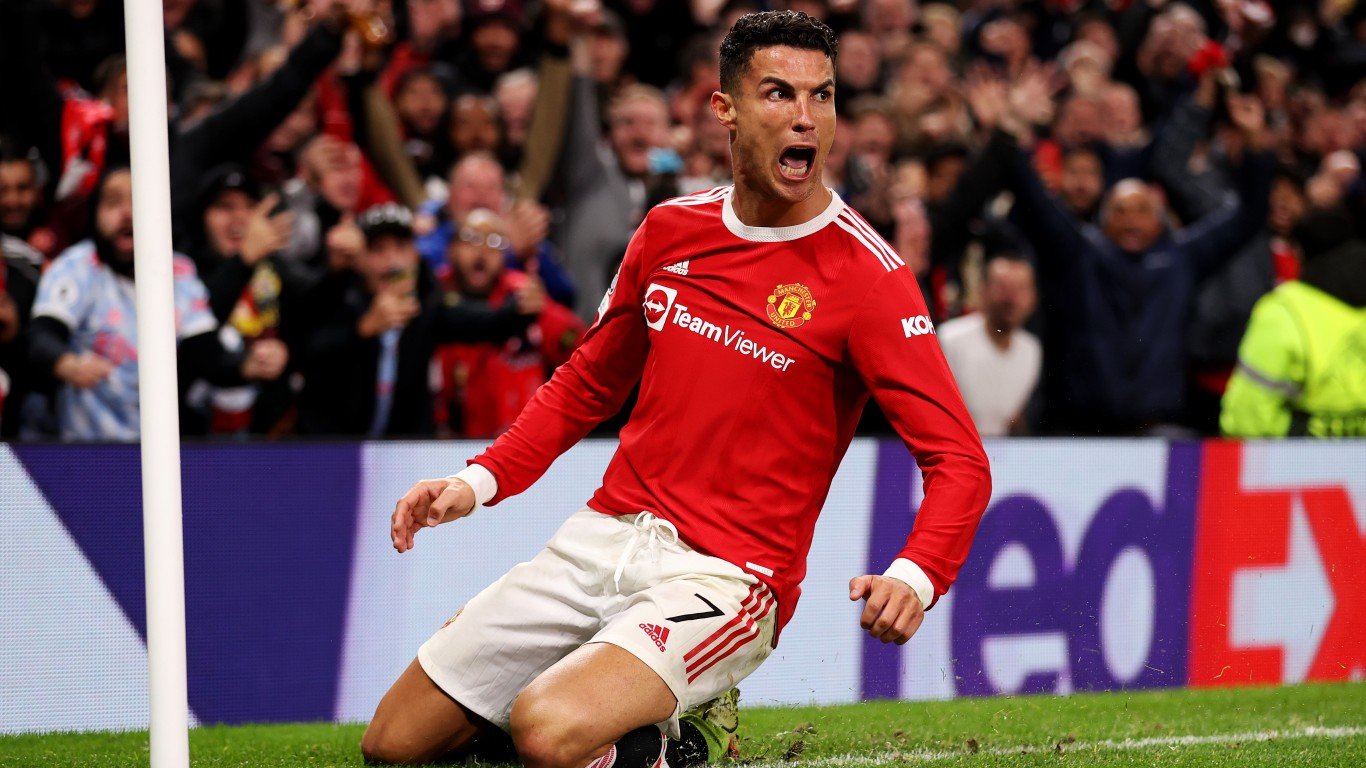
Manchester United’s fiscal Q2 2026 results, filed February 25, 2026, delivered a sharper-than-expected profitability turnaround driven almost entirely by cost discipline rather than revenue growth. The stock was priced at $17.95 at filing, though it closed the day at $17.36, down 3.72% over the prior week. The headline number: adjusted diluted EPS swung from a loss of $0.05 a year ago to a profit of $0.03.
Q2 FY2026 Earnings Scorecard
| Category | Grade | Key Insight |
|---|---|---|
| Revenue Performance | B+ | Revenue of $257.6M beat estimates of $188.9M by a wide margin, though it still represents a 4.2% YoY decline on a constant-currency basis due to the absence of UEFA competition. |
| Earnings Beat/Miss | A | Adjusted EPS of $0.03 per share significantly exceeded the $0.07 estimate; net profit of $5.7M reversed a $37.5M loss from the prior year. |
| Forward Guidance | B | Full-year FY2026 guidance reiterated at $866.2M–$893.2M revenue and $243.6M–$270.7M adjusted EBITDA; no upward revision despite the strong Q2 beat. |
| Profit Margins | A- | Operating income surged 532% to $26.5M as total operating expenses fell 11.5%; adjusted EBITDA rose 7.8% to $102.9M despite lower revenue. |
| Cash Generation | C | Operating cash flow remained negative at -$20.8M, though improved 75.6% YoY; cash on hand dropped to $60.1M from $129.2M a year ago while revolving credit usage climbed to $392.5M. |
| Management Tone | B+ | CEO Omar Berrada struck a confident tone, stating “We are now seeing the positive financial impact of our off-field transformation materialise both in our costs and profitability.” Guidance was reiterated but not raised. |
Bottom Line
The cost transformation story is real. Employee benefit expenses fell 9.0% to $101.6M and net finance costs dropped from $50.9M to $18.8M on favorable FX movements, combining to drive the earnings swing. The absence of UEFA competition for the men’s team in FY2026 remains the central revenue drag, with partner revenue down 13.5% partly due to the expired Tezos training kit deal worth $7.8M with no announced replacement.
Investors watching MANU should focus on two things heading into the back half of FY2026: whether the men’s team secures a UEFA-qualifying finish (currently 4th in the Premier League), and whether management can close the partnership gap before year-end. A return to European competition in FY2027 would meaningfully change the revenue trajectory. For now, the profitability improvement is encouraging, but the tightening cash position and rising debt, with $650M in USD-denominated non-current borrowings exposed to currency swings, are worth monitoring closely.
Contact [email protected] for any questions or corrections.
Joel South covers large-cap stocks, dividend investing, and major market trends, with a focus on earnings analysis, valuation, and turning complex data into actionable insights for investors.
He brings more than 15 years of experience as an investor and financial journalist, including 12 years at The Motley Fool, where he served as an investment analyst, Bureau Chief, and later led the Fool.com investing news desk. He has also co-hosted an investing podcast and appeared across TV and radio discussing market trends.