Margins Crack at AutoZone — Investors React Swiftly
AutoZone‘s (NYSE: AZO | AZO Price Prediction) fiscal Q2 2026 results landed with a thud this morning, as a meaningful revenue miss overshadowed a slim earnings beat and sent shares sharply lower. The stock closed at $3,882.47 on March 2,…

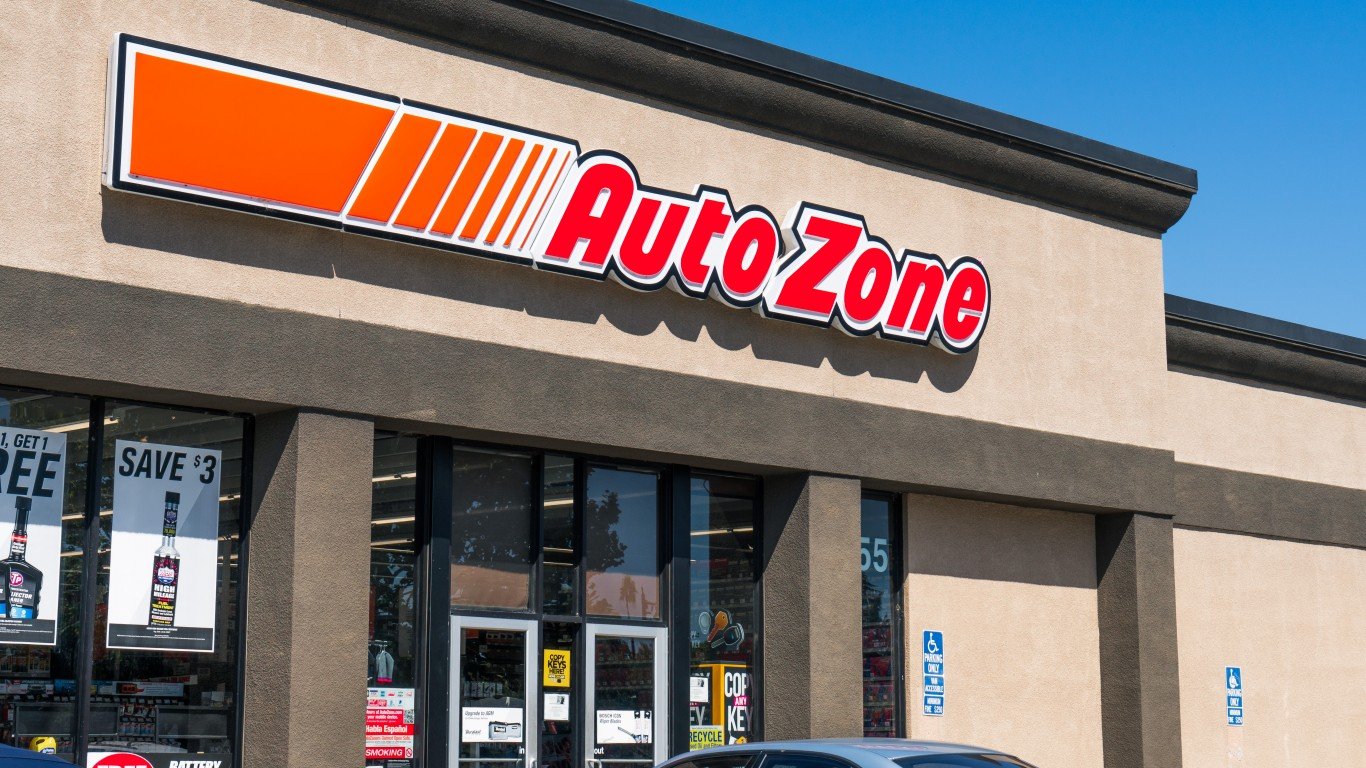
AutoZone‘s (NYSE: AZO | AZO Price Prediction) fiscal Q2 2026 results landed with a thud this morning, as a meaningful revenue miss overshadowed a slim earnings beat and sent shares sharply lower. The stock closed at $3,882.47 on March 2, reflecting investor concern over deteriorating margins and a top-line shortfall that no EPS beat could paper over.
Q2 FY2026 Earnings Scorecard
| Category | Grade | Key Insight |
|---|---|---|
| Revenue Performance | D+ | Revenue of $4.27B missed the $4.35B consensus estimate by roughly $76M, though it still grew 8.1% year-over-year from $3.95B in Q2 FY2025. |
| Earnings Beat/Miss | B- | Reported EPS of $27.63 edged past the $27.40 estimate by $0.23 — a modest but welcome break from three prior consecutive misses. |
| Forward Guidance | C | AutoZone provided no formal EPS or sales guidance for Q3, consistent with its typical practice, leaving investors to extrapolate from a margin compression trend that has persisted across recent quarters. |
| Profit Margins | D | Gross margin declined to 52.5% from 53.9% a year ago, a 137 basis-point decrease driven largely by a non-cash LIFO charge. Operating margin also compressed, falling to approximately 16.3% from 17.9% last year as operating expenses rose modestly as a percentage of sales. |
| Cash Generation | C+ | Q2 operating cash flow totaled $342.5M against capital expenditures of $327.5M, resulting in modest free cash flow for the quarter. AutoZone repurchased $310.8M of stock, demonstrating continued commitment to capital returns despite softer profitability. |
| Management Tone | C | Management highlighted continued same-store sales growth and international expansion, but acknowledged margin pressure and cost headwinds. Same-store sales rose 5.2% overall, or 3.3% on a constant currency basis, reflecting solid top-line demand despite profitability compression. |
Bottom Line
The scorecard tells a split story. Revenue growth remains solid at 8.1% year-over-year, and total same-store sales increased 5.2%, but profitability is clearly under pressure. Net income declined to $468.9M from $487.9M a year ago, while gross and operating margins both contracted.
Operating profit fell 1.2% year-over-year to $698.5M, reflecting cost pressures that outpaced sales leverage. While earnings per share managed a modest beat, the quality of that beat appears offset by declining margins and weaker cash conversion in the quarter.
The stock trades at roughly 27x trailing earnings with a forward P/E near 25x, pricing in stabilization that the latest margin data has not yet confirmed.
Key open questions heading into Q3 include whether margin compression moderates as LIFO impacts normalize, whether SG&A leverage improves relative to revenue growth, and whether same-store sales momentum can continue in both DIY and Commercial channels. While AutoZone’s long-term compounding model remains intact, near-term earnings trajectory and margin stabilization remain the central issues investors will monitor.
Contact [email protected] for any questions or corrections.
Joel South covers large-cap stocks, dividend investing, and major market trends, with a focus on earnings analysis, valuation, and turning complex data into actionable insights for investors.
He brings more than 15 years of experience as an investor and financial journalist, including 12 years at The Motley Fool, where he served as an investment analyst, Bureau Chief, and later led the Fool.com investing news desk. He has also co-hosted an investing podcast and appeared across TV and radio discussing market trends.