





Still a giant in the transportation space, Lyft (NASDAQ:LYFT) is trading at $13.32 as of March 5, 2026, down 31.2% year-to-date and off sharply from the $20.62 price at the time of Q3 2025 earnings. That collapse frames the central tension: Q4 2025 results showed genuine operational momentum, yet retail investors on Reddit are asking whether the company can survive. Social sentiment scores across a 24-hour window ending March 5 ranged from 20 to 32, firmly bearish, concentrated in r/investing.
Ultimately, for LYFT, Q4 tells two stories, depending on which line you read: gross bookings hit $5.07 billion, up 19% year-over-year, and active riders reached a record 29.2 million, up 18%. Adjusted EBITDA grew 37% year-over-year to $154.1 million. Full-year free cash flow exceeded $1.1 billion, an all-time high. But reported revenue of $1.592 billion missed the $1.649 billion consensus estimate, missed the $168 million headwind from legal, tax, and regulatory reserve changes consensus estimate, and was dragged down by a $2.755 billion, and the headline net income of $2.9 billion non-cash tax valuation allowance release was inflated by a $2.9B non-cash tax valuation allowance release.
Reddit’s Verdict Is Blunt
The dominant thread on r/investing poses a stark question. User MainBuddy604 wrote:
Any investors in Lyft? Lyft stock has been abysmal since it’s IPO and has done worse than NYC taxi medallions have from the peak. Odd of Lyft going bankrupt?
by u/MainBuddy604 in investing
The post, which drew 31 upvotes and 16 comments, frames Lyft as a “bloated and poorly run cab operation” and compares its stock decline to the collapse of NYC taxi medallions. The price data gives it grounding: Lyft shares are down 79.34% over five years. Three concrete pillars drive the bearish case:
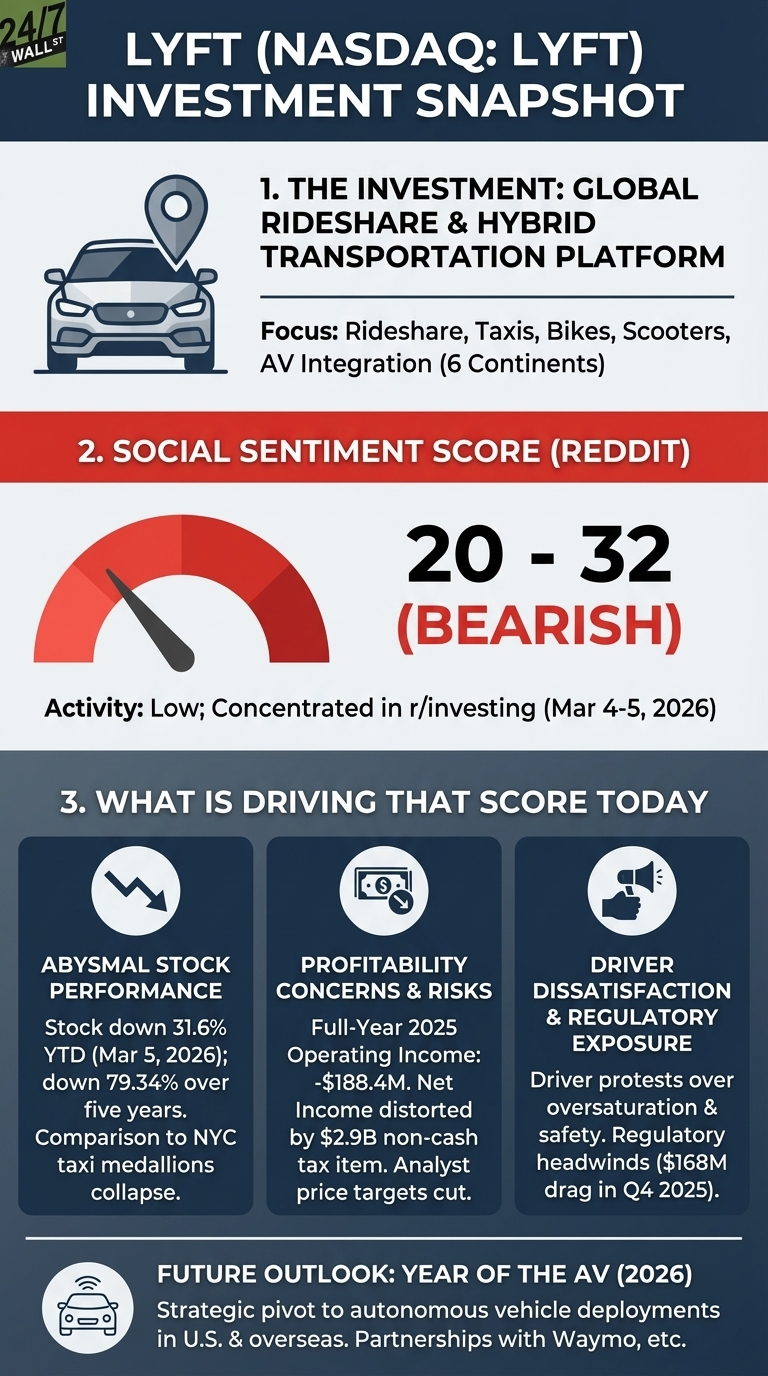
- Operating income for 2025 remained negative at -$188.4 million, indicating GAAP profitability remains elusive despite EBITDA progress.
- Multiple analysts cut price targets after Q4, with Mizuho dropping to $16 from $27, Susquehanna to $15 from $24, and BofA to $17 from $19.
- Driver protests over platform oversaturation and ongoing safety incidents create regulatory exposure that could pressure already-thin margins.
Lyft’s AV Bet vs. Uber’s Narrative Dominance
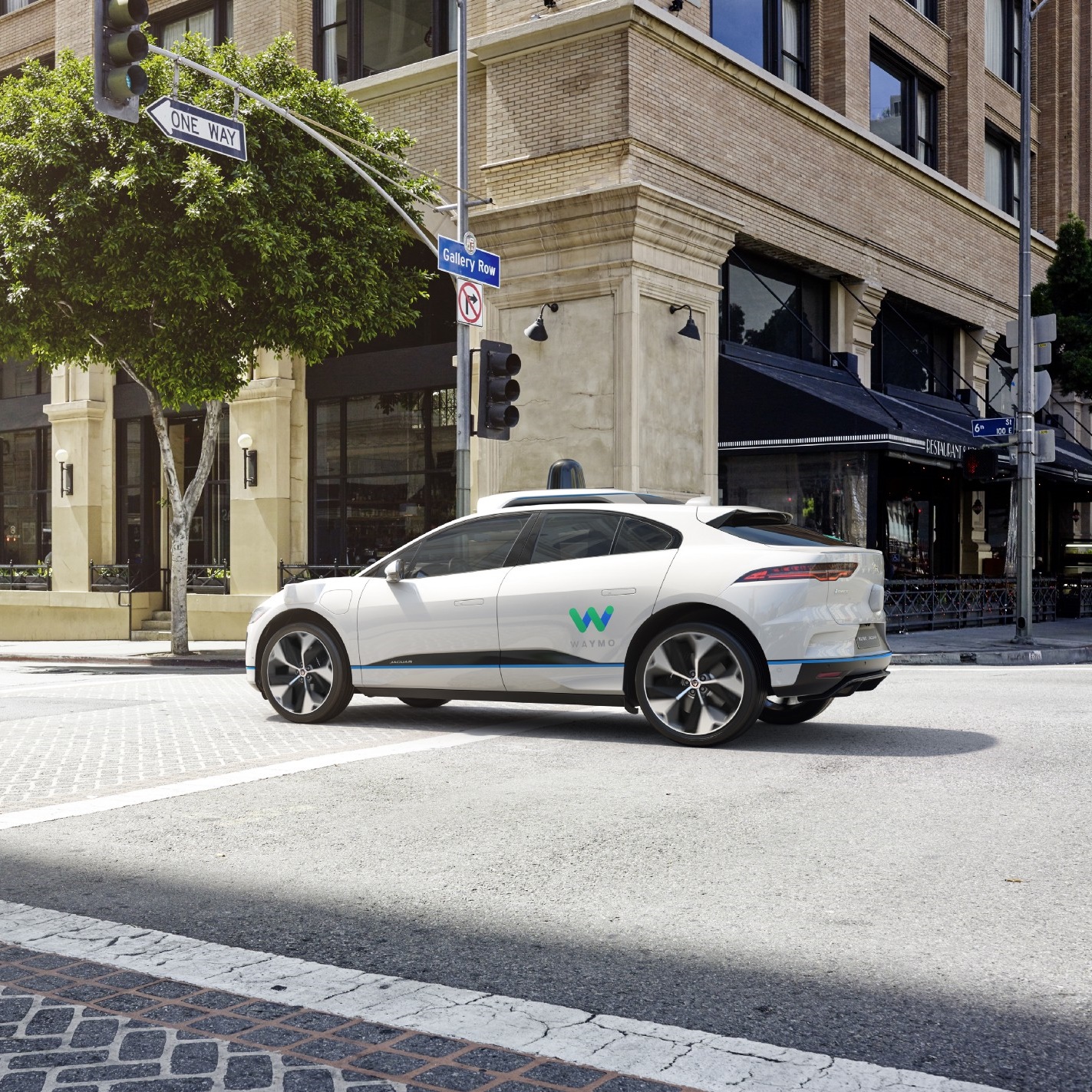
CEO David Risher declared that “2026 will be the year of the AV with deployments in the U.S. and overseas.” Lyft has a Waymo partnership in Nashville and a memorandum of understanding with Hamburg for Level 4 AV integration, though analysts note these are unlikely to drive near-term revenue catalysts. Uber (NASDAQ:UBER | UBER Price Prediction)’s Q3 2025 earnings call discussed autonomous vehicles and its own Waymo partnership at length, while Lyft went unmentioned, suggesting Lyft is reacting rather than leading.
The Test Ahead
As far as analyst considerations go, RBC Capital’s Brad Erickson maintained a Buy with a $22 price target, citing operational momentum and Q1 2026 guidance calls for gross bookings of $4.86 billion to $5.00 billion and adjusted EBITDA of $120 million to $140 million. Whether Lyft hits those numbers without another large legal reserve charge is the cleanest test of whether this profitability inflection is structural or a one-off.















 Top Gaining Stocks
 Top Losing Stocks