Wall Street’s $138.56 Price Target Makes United Airlines’ Sell-off Look Like a Buying Opportunity
United Airlines Holdings (NASDAQ:UAL | UAL Price Prediction) has been under significant pressure lately. Shares are down 6.20% over the past week, down 21% over the past month and down nearly 24% year-to-date as of March 12. That puts the…

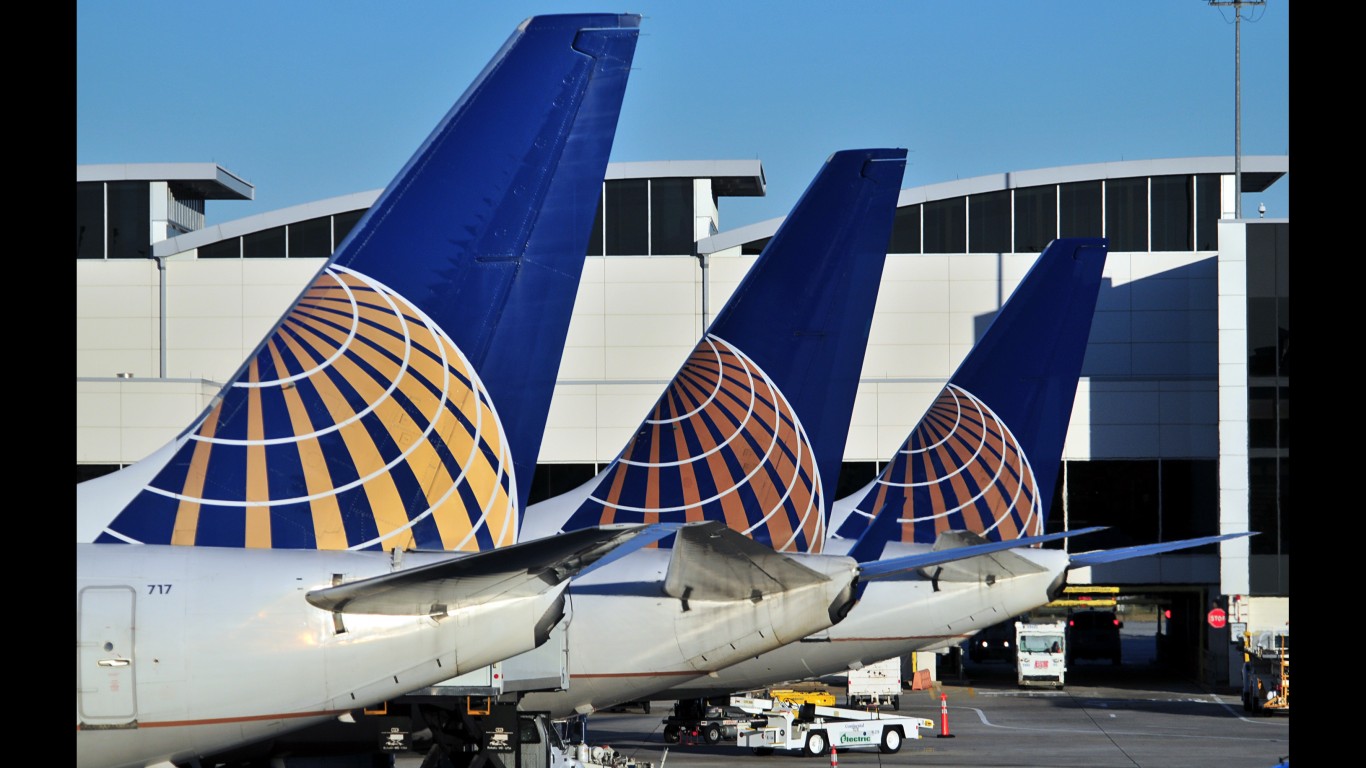
United Airlines Holdings (NASDAQ:UAL | UAL Price Prediction) has been under significant pressure lately. Shares are down 6.20% over the past week, down 21% over the past month and down nearly 24% year-to-date as of March 12. That puts the stock well below its 52-week high of $119.21.
Most analysts maintain moderate near-term caution given the fuel cost environment, but Jefferies is holding firm with a Buy rating and a $125 price target, implying meaningful upside from current levels. That compares to the broader Street consensus target of $138.56. But can UAL realistically reach $125 by the end of 2026?
Jefferies’ $125 UAL Prediction
Jefferies lowered its target from $148 to $125 after raising Q1 fuel cost estimates by about 14% and Q2 estimates by about 30% following a roughly 50% spike in jet fuel prices from the January average. The key to the bull case: Jefferies currently assumes second-half fuel prices revert toward pre-conflict levels, which would allow United’s earnings power to reassert itself. With FY 2026 adjusted EPS guidance of $12.00 to $14.00, the valuation math remains compelling at a forward P/E of roughly 7x.
Key Drivers of UAL Stock Performance
- Fuel cost normalization in H2 2026: Jefferies’ thesis hinges on oil prices retreating as geopolitical pressures ease. WTI crude was $64.51/bbl in February 2026, well below the $75.74/bbl seen in January 2025 and far below 2022 peaks above $114/bbl. A return toward late-2025 levels would directly expand margins and compound earnings for long-term holders.
- Premium and loyalty revenue momentum: Premium revenue grew 11% and loyalty revenue grew 9% in full-year 2025, both outpacing overall revenue growth of 3.52%. These high-margin streams are structurally less sensitive to fuel volatility.
- Fleet expansion and network investment: United plans over 100 narrowbody and approximately 20 Boeing 787 widebody deliveries in 2026, along with new international routes and major hub upgrades. These investments build long-term earnings capacity.
What Will It Take for UAL to Reach $125?
With approximately 323.4 million shares outstanding, a $125 price target implies significant upside potential. Three conditions are required: fuel prices must stabilize and retreat in the second half of 2026; United must execute on its $12.00 to $14.00 EPS guidance range; and investor sentiment toward airlines must recover as near-term macro fears fade.
The primary risk is clear: United does not hedge fuel costs, leaving it fully exposed to the roughly 58% jet fuel spike that has already pressured Q1 2026 results. That said, with a trailing P/E near 9x, record 2025 revenue of $59.07 billion, and a proven premium strategy, Jefferies’ conviction that this selloff is a temporary headwind rather than a structural break remains a credible analytical case.
Contact [email protected] for any questions or corrections.
Joel South covers large-cap stocks, dividend investing, and major market trends, with a focus on earnings analysis, valuation, and turning complex data into actionable insights for investors.
He brings more than 15 years of experience as an investor and financial journalist, including 12 years at The Motley Fool, where he served as an investment analyst, Bureau Chief, and later led the Fool.com investing news desk. He has also co-hosted an investing podcast and appeared across TV and radio discussing market trends.