$2 Trillion War Over The Fate Of AI
The headlines won’t stop. The most recent is that Amazon’s (NASDAQ: AMZN | AMZN Price Prediction) Jeff Bezos plans to raise $100 billion for a new AI Manufacturing Fund to buy manufacturing facilities and update their efficiency with AI. Alibaba…

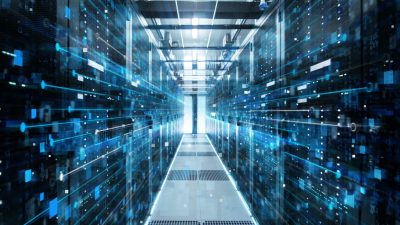
The headlines won’t stop. The most recent is that Amazon’s (NASDAQ: AMZN | AMZN Price Prediction) Jeff Bezos plans to raise $100 billion for a new AI Manufacturing Fund to buy manufacturing facilities and update their efficiency with AI. Alibaba and Tencent lost $66 billion in market capitalization in one day due to failed AI plans. OpenAI will pivot again toward a “superapp” to attract more business and software customers. The effort to build AI data centers continues to explode. The New York Times reports that the AI giants have begun building off-grid data centers powered by their own energy sources. These companies are desperate for electricity and cannot wait for traditional energy sources to solve the problem. And, these structures will cause significant air pollution.
Among the largest mega AI companies, including Meta (NASDAQ: META), Amazon, Google, and OpenAI, plans call for investing well over $500 billion in AI investment this year. To stay competitive, the number will need to grow. They don’t have enough cash on their balance sheets, so they are turning to the financial sector, which seems happy to gamble on providing funds for infrastructure.
And, AI guru Jensen Huang of Nvidia (NASDAQ: NVDA) expects $1 trillion in chip sales for his most advanced products through 2027. And chips are only one part of the chain of investments needed to reach the top of the AI pyramid and stay there.
One aspect of chips, software, and the customer chain is that data centers will eventually be as large as Manhattan and will have the power to serve the equivalent of hundreds of thousands of homes. That is not in aggregate. That is the power of one huge data center. The politics of building these could influence the mid-term elections, and potentially the race for president. Trump has already said he plans to ensure residential electricity prices do not soar. He calls it the Ratepayer Protection Pledge and says many AI companies have already signed it. That does not mean the pledges will be kept.
One aspect of the staggeringly fast, large-scale buildout of the AI future is that there will be winners and losers. This is already being reflected in public company stock prices and in the sums that private companies, including Anthropic and OpenAI, can raise. And, it relies on whether the private companies can launch IPOs to raise even more capital. Some in both the tech and financial industries believe an OpenAI IPO could value that company at $1 trillion. That is equivalent to Berkshire Hathaway’s (NYSE: BRK-B) market cap and would make OpenAI the 10th- or 11th-largest market-cap stock in the world. Some industry experts believe OpenAI is not worth that much, and an IPO will be a failure.
The battle for leadership is not a decade away. It is this year, or maybe next. Not every AI company will have the “best” products and the most revenue. Not every data center will find enough AI companies to turn a profit. AI may not advance as quickly or as far as the consensus opinion suggests. Anyone counting the dollar investment in the AI race can see that the figure will be $2 trillion in 2027, and could go up from there.
Contact [email protected] for any questions or corrections.
Douglas A. McIntyre is the co-founder, chief executive officer and editor in chief of 24/7 Wall St. and 24/7 Tempo. He has held these jobs since 2006.
McIntyre has written thousands of articles for 24/7 Wall St. He is an expert on corporate finance, the automotive industry, media companies and international finance. He has edited articles on national demographics, sports, personal income and travel.
His work has been quoted or mentioned in The New York Times, The Wall Street Journal, Los Angeles Times, The Washington Post, NBC News, Time, The New Yorker, HuffPost USA Today, Business Insider, Yahoo, AOL, MarketWatch, The Atlantic, Bloomberg, New York Post, Chicago Tribune, Forbes, The Guardian and many other major publications. McIntyre has been a guest on CNBC, the BBC and television and radio stations across the country.
A magna cum laude graduate of Harvard College, McIntyre also was president of The Harvard Advocate. Founded in 1866, the Advocate is the oldest college publication in the United States.
TheStreet.com, Comps.com and Edgar Online are some of the public companies for which McIntyre served on the board of directors. He was a Vicinity Corporation board member when the company was sold to Microsoft in 2002. He served on the audit committees of some of these companies.
McIntyre has been the CEO of FutureSource, a provider of trading terminals and news to commodities and futures traders. He was president of Switchboard, the online phone directory company. He served as chairman and CEO of On2 Technologies, the video compression company that provided video compression software for Adobe’s Flash. Google bought On2 in 2009.