XPeng Drops 5%: Is This Tesla Rival’s Autonomous Driving Bet Enough to Justify the Risk?
XPeng (NYSE:XPEV | XPEV Price Prediction) stock is down 5% in early trading on Friday, sliding toward $18 after closing at $19.15 the day prior. The move comes on the same morning the company reported its Q4 2025 earnings, and…

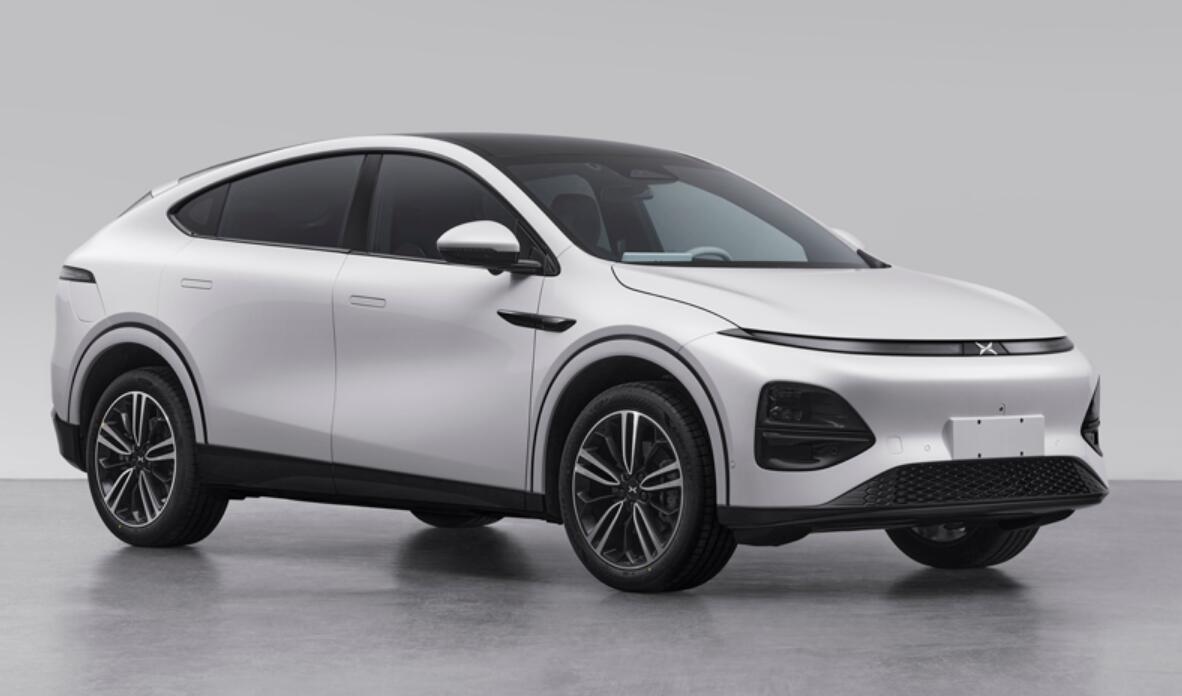
XPeng (NYSE:XPEV | XPEV Price Prediction) stock is down 5% in early trading on Friday, sliding toward $18 after closing at $19.15 the day prior. The move comes on the same morning the company reported its Q4 2025 earnings, and the reaction tells a familiar story: the numbers looked great, but what comes next has investors nervous.
The drop lands after a rough stretch. XPEV shares were already down 5.57% year-to-date and off nearly 20% over the past year. Today’s move erases much of the ground the stock recovered over the past month, when it climbed 7.34% heading into earnings.
A Profit Milestone Overshadowed by What’s Ahead
XPeng posted its first-ever quarterly net profit in Q4 2025, a genuine milestone for a company that has burned cash since going public. Gross margins hit 21.3%, a record high, reflecting the company’s improving cost structure and pricing discipline even as competitors slashed prices.
The delivery surge underpins that profitability story: full-year vehicle deliveries reached 429,445 units, up 125.9% year over year, driving full-year revenues to RMB76.72 billion. That kind of top-line momentum is what made the weak Q1 2026 guidance so jarring for investors.
So why is the stock selling off? The Q1 2026 guidance is the culprit. XPeng’s forward outlook signals a “substantial decrease in deliveries and revenue, reflecting current market challenges.” That kind of language after a record quarter is exactly what spooks investors who were hoping the profitability milestone marked a turning point rather than a peak.
The China EV market is grinding through a difficult period. Pricing wars among domestic competitors have forced manufacturers to cut prices to maintain volume, and fading government subsidies are removing a tailwind the sector relied on for years. XPeng navigated this well enough in Q4, but the guidance suggests Q1 will feel the pressure more acutely.
The Autonomous Driving Bet
The bull case on XPeng has never really been about near-term deliveries. Rather, it’s about whether the company can position itself as a physical AI platform rather than just another EV maker.
XPeng’s VLA 2.0 autonomous driving system is now deployed in the new P7 Ultra, G7 Ultra, and X9 Ultra models, with nationwide test drives underway across China. The company is also pushing into humanoid robotics with its IRON robot, targeting large-scale production by year-end, using the same underlying VLA architecture.
The 2026 delivery target of 550,000 to 600,000 units is ambitious, and XPeng plans to get there with four new SUV models and a meaningful push into European markets. That European expansion is where trade policy risk enters the picture. Tariffs and evolving EU-China trade dynamics could complicate XPeng’s ability to compete on price abroad, which is a real overhang the market is pricing in today.
For context on just how competitive this space has become, several EV players are already making serious inroads against Tesla’s global dominance, and XPeng is one of the names most frequently cited in that conversation.
How XPeng Stacks Up Against Tesla
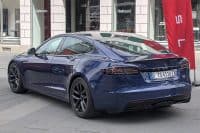
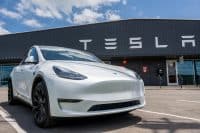
Tesla (NASDAQ:TSLA) stock is down 2% today; the company remains the benchmark that XPeng is measured against in the autonomous driving race. Tesla has 1.1 million active Full Self-Driving (FSD) subscriptions, commenced driverless robotaxi testing in Austin in December 2025, and is planning Cybercab volume production in 2026. XPeng is chasing that roadmap with its own autonomous stack, but from a much earlier stage of commercial deployment.
The gap in scale is real: Tesla carries a $1.41 trillion market cap against XPeng’s $14.13 billion. XPeng isn’t trying to outpace Tesla on volume. The bet is that its AI-native approach to autonomous driving, combined with the Volkswagen partnership and European ambitions, builds a differentiated platform that justifies a premium over a standard Chinese EV manufacturer.
Analyst consensus for XPEV stock sits at a moderate buy with an average 12-month price target of $25.78, well above where the stock is trading today. Bernstein maintained a hold this morning, while CICC kept its buy rating with a target of HK$90.
What to Watch
The Q1 2026 guidance is the story right now. XPeng’s cash position of $6.79 billion gives it the runway to absorb a soft quarter without tapping capital markets, meaning the company can stay on offense with R&D even if deliveries disappoint near-term.
The deeper question is whether the slowdown is seasonal or structural. A natural pause after a record year looks very different from a trend tied to persistent pricing pressure and fading subsidies. Looking ahead, XPeng’s Q1 delivery data and any updates on the European launch will be the key signals that could shift analyst outlooks in either direction.
Contact [email protected] for any questions or corrections.
David Moadel is financial writer specializing in stocks, ETFs, options, precious metals, and Bitcoin. David has written well over 1,000 articles for leading online publications, helping investors understand markets, income strategies, and risk.
His work has appeared in The Motley Fool, InvestorPlace, U.S. News & World Report, TipRanks, ValueWalk, Benzinga, Market Realist, TalkMarkets, Finmasters, 24/7 Wall St., and others.
With a master’s degree in education, David has taught at the elementary, high school, and college levels. That teaching background shapes his writing style: clear, educational, and practical. David has also built a loyal social-media audience by providing trustworthy financial content on YouTube, X/Twitter, and StockTwits.