This AI Semi Equipment Maker Has Been Quietly Chewing Up the Competition
When investors scan the AI semiconductor equipment space, two names dominate the conversation: ASML (NASDAQ:ASML | ASML Price Prediction), with its cutting-edge lithography monopoly, and ACM Research (NASDAQ:ACMR), with its specialized wafer-cleaning tech. They grab the headlines, the analyst upgrades,…

When investors scan the AI semiconductor equipment space, two names dominate the conversation: ASML (NASDAQ:ASML | ASML Price Prediction), with its cutting-edge lithography monopoly, and ACM Research (NASDAQ:ACMR), with its specialized wafer-cleaning tech. They grab the headlines, the analyst upgrades, and the breathless commentary.
But one player has been methodically outpacing almost everyone else — and doing it without the fanfare. Lam Research (NASDAQ:LRCX) has delivered a staggering 321% total return over the past three years, handily beating ACM Research’s 269% and more than tripling ASML’s 105%. Over the last year alone, Lam shares have surged nearly 180%. That’s the kind of quiet compounding that turns patient investors into true believers.
Yet the stock tumbled roughly 10% yesterday, dragged down alongside memory-chip names and other equipment suppliers as Google’s new TurboQuant compression algorithm promises to slash the memory footprint of large language models by up to six times without sacrificing performance. The fear was less memory demand could mean slower growth for the entire chipmaking supply chain.
The Overlooked Leader in AI Chipmaking Equipment
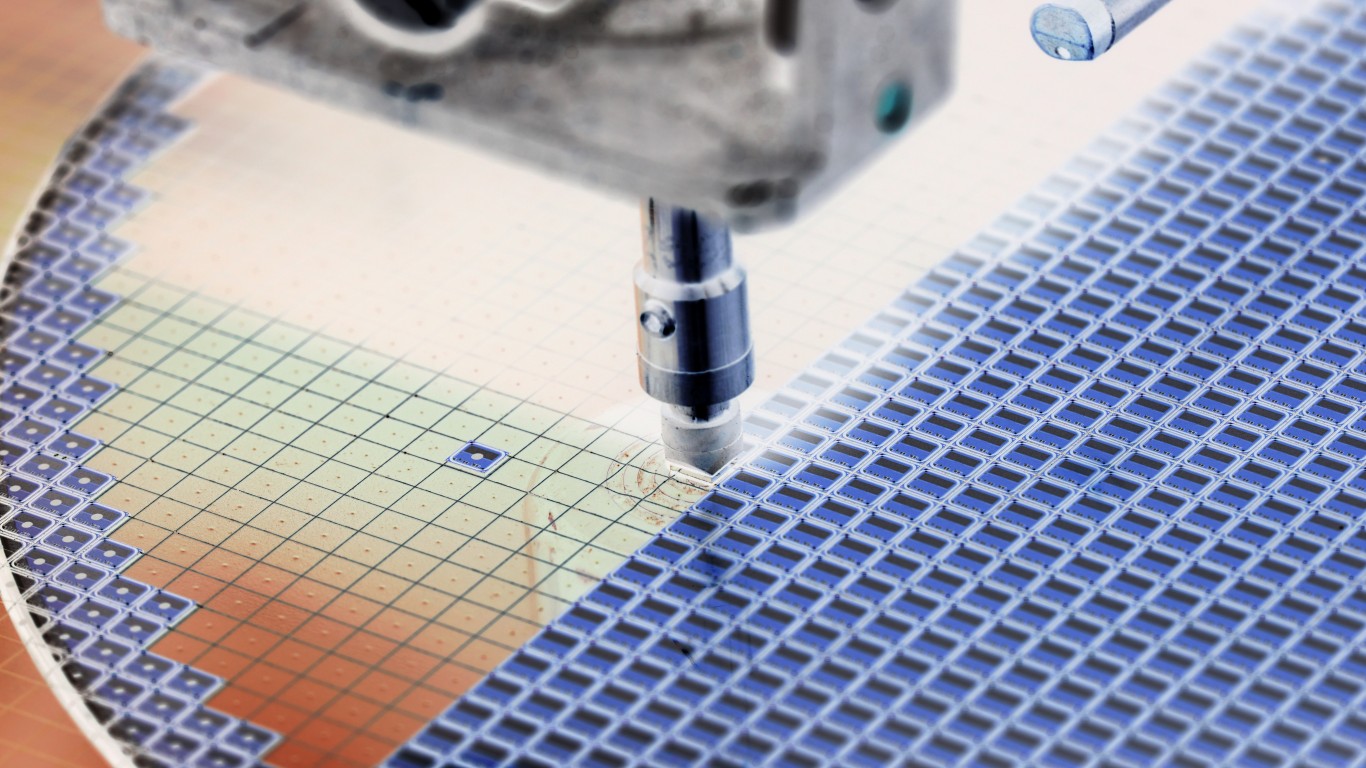
The reaction was especially punishing for Lam Research because the company’s etch and deposition tools are deeply embedded in the production of high-bandwidth memory (HBM) and advanced AI logic chips. It doesn’t make the flashy front-end lithography systems; it owns critical middle- and back-end processes — etching intricate 3D structures into silicon wafers and depositing the thin films that make today’s most powerful chips possible.
These steps are indispensable for the advanced packaging techniques that power AI accelerators, high-performance computing, and next-generation memory stacks. While ASML gets credit for enabling smaller transistors, Lam’s tools shape the actual architecture that lets those transistors deliver blistering performance at scale.
That focus has paid off handsomely. As hyperscalers and foundries race to ramp AI capacity, demand for Lam’s equipment has remained robust even as broader semiconductor cycles ebb and flow. The company’s installed base generates high-margin recurring revenue from spares, upgrades, and services — providing a cushion that pure-play equipment makers sometimes lack.
Advanced packaging revenue jumped significantly last year, and management has guided for continued strong growth in 2026. In an industry where every new AI model seems to require denser, more efficient silicon, Lam has carved out a durable moat without needing the same level of headline-grabbing breakthroughs as its peers.
Why the Market Overreacted to Google’s TurboQuant
Google’s TurboQuant is undeniably impressive on a technical level. By dramatically compressing the key-value cache that large models rely on for context and recall, it could reduce the amount of expensive HBM and DRAM needed to run inference at scale. Wall Street’ concluded softer long-term demand for memory chips means softer demand for the equipment used to build them. The selloff spilled over to Lam, Applied Materials (NASDAQ:AMAT), and others because investors lumped the entire AI supply chain together in one panicked trade.
But not everything is as it seems. TurboQuant is a software efficiency play, not a hardware replacement. AI workloads aren’t shrinking — they’re exploding. Even if individual models become more memory-efficient, the sheer volume of new applications, agents, and multimodal systems will still drive massive fab expansions. Chipmakers aren’t about to cancel orders for tools that enable higher yields and better performance at the most advanced nodes.
History shows these “sell the news” reactions in semiconductors are often short-lived when underlying secular demand remains intact. Lam’s recent drop indicates a misreading of the threat.
How This Dip Creates a Real Opportunity for Investors
Here’s what smart money sees that the panicked sellers missed: Lam Research enters this moment with strong momentum, a clean balance sheet, and exposure to the parts of the AI buildout that are hardest to disrupt. Its tools are already qualified across leading foundries and memory makers, and the shift toward 3D stacking and hybrid bonding plays directly to Lam’s strengths. While the near-term memory scare may linger for a few weeks, the multi-year tailwinds from AI infrastructure spending dwarf any single algorithmic improvement.
Analysts also aren’t convinced Google’s announcement was the big breakthrough portrayed. Lynx Equity Strategies analyst KC Rajkumar said Google’s headline compression numbers are impressive but largely measured against older-generation baselines rather than the cutting-edge techniques already in widespread use. The actual improvements are thus dramatically narrower.
For investors, the 10% haircut offers a rare chance to buy a proven outperformer at a more attractive valuation after its run. The stock’s forward multiple remains reasonable relative to its growth trajectory and the size of the opportunity in front of it.
Key Takeaway
Lam Research isn’t the flashiest AI equipment story, but it has been the most rewarding. The Google TurboQuant announcement created a textbook overreaction that has little to do with Lam’s long-term positioning and everything to do with short-term fear. Patient investors who look past the noise will see a company that has quietly compounded returns at an elite clip while building an indispensable role in the AI revolution.
The recent tumble doesn’t change the fundamentals — it simply hands new buyers a better entry point into a name that has already proven it can chew up the competition. In a sector where hype often fades, Lam Research’s steady approach keeps delivering exactly what long-term portfolios need.
Contact [email protected] for any questions or corrections.
After two decades of patrolling the dark corners of suburbia as a police officer, Rich Duprey hung up his badge and gun to begin writing full time about stocks and investing. For the past 20 years, he’s been cruising the markets looking for companies to lock up as long-term holdings in a portfolio while writing extensively on the broad sectors of consumer goods, technology, and industrials. Because his experience isn’t from the typical financial analyst track, Rich is able to break down complex topics into understandable and useful action points for the average investor. His writings have appeared on The Motley Fool, InvestorPlace, Yahoo! Finance, Money Morning, and, of course, 24/7 Wall St. He has been featured in both U.S. and international publications, including MarketWatch, Financial Times, Forbes, Fast Company, and USA Today.