





Let’s cut straight to it. A geopolitical shock just knocked roughly one-third of global helium supply offline. Iran’s strike on Qatar’s largest LNG facility damaged production lines that could take years to rebuild, stranding 200 specialized shipping containers near the Strait of Hormuz.
Helium isn’t just a party-balloon gas. Chipmakers need it for semiconductor fabrication, where it accounts for 17% of total U.S. demand, according to the U.S. Geological Survey’s Mineral Commodity Summaries 2026. The New York Times quoted industry consultant Phil Kornbluth saying, “There is a tsunami coming, but it’s still a thousand miles offshore.”
For everyday investors, that distant wave creates a surprising pocket of opportunity right here in the U.S. oil patch.
The Helium Crunch Hitting Chipmakers Hard
Global helium consumption runs about 6 billion cubic feet per year. Qatar supplied a big slice until this month. With one-third of output sidelined, prices have already soared. Semiconductor plants at Taiwan Semiconductor Manufacturing (NYSE:TSM), Samsung, and SK Hynix rely on ultra-high-purity helium for cooling and atmosphere control in advanced nodes. Disruptions here ripple to AI servers, smartphones, and autos.
The USGS pegged 2025 U.S. Grade-A helium sales at 81 million cubic meters (2.9 billion cubic feet), valued at $970 million. Demand from electronics held steady at 17% of use. Supply shocks like this don’t vanish overnight.
That leaves domestic producers in the driver’s seat.
America’s Helium Powerhouse
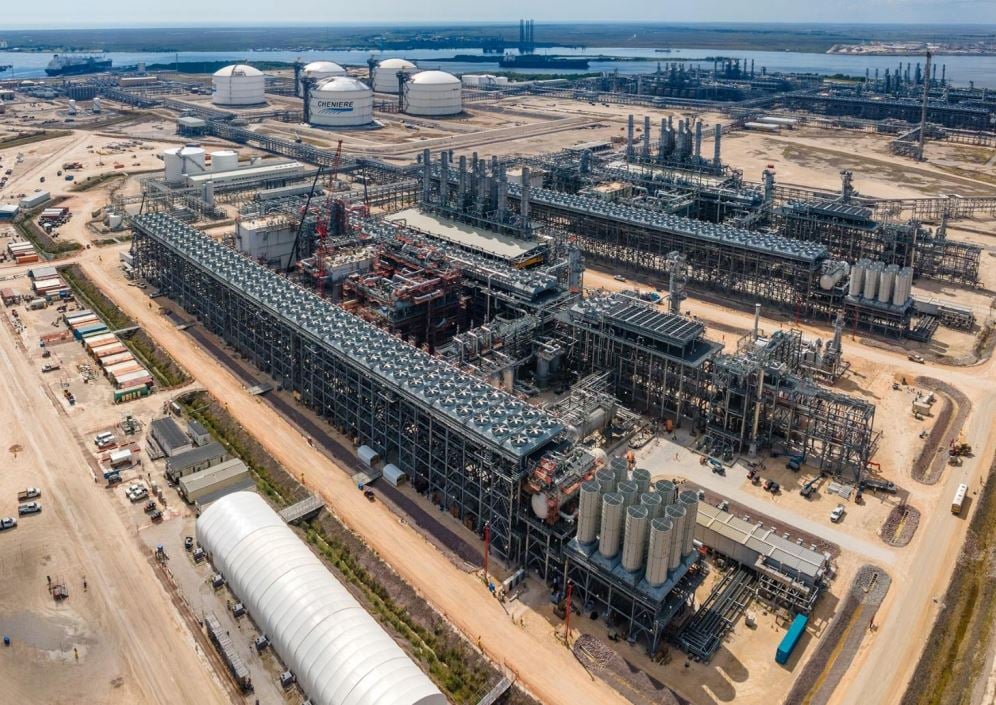
ExxonMobil (NYSE:XOM | XOM Price Prediction) operates the Shute Creek Gas Plant at LaBarge, Wyoming — the largest helium facility in the country. It extracts up to 1.4 billion cubic feet of Grade-A helium annually from natural gas that contains 0.6% helium. That equals roughly 20% of global supply, according to ExxonMobil’s own corporate disclosures and independent analyses dating back years. Reserves there support another 80 years of output at current rates. Unlike pure industrial-gas firms that buy and refine crude helium, Exxon pulls it straight from the ground as a byproduct of processing CO2-rich natural gas. When Qatar falters, Wyoming steps up — no new wells are required.
Recent local reporting in Wyoming already notes rising helium values tied directly to the Iran conflict. Helium isn’t Exxon’s largest revenue line — oil, gas, and chemicals dominate — but every incremental price bump flows straight to the bottom line with virtually no added capital cost.
Why Exxon Stacks Up as a Buy
Let’s look at the numbers that matter, particularly for passive income investors. Exxon trades at $171, with a forward annual dividend of $4.12 per share, delivering a 2.41% yield. That payout has risen for 43 consecutive years. In 2025, the company generated $52 billion in cash flow from operations and $26.1 billion in free cash flow. Shareholder distributions hit $37.2 billion, including $17.2 billion in dividends and $20 billion in buybacks.
Compare that to its peers: Chevron (NYSE:CVX) offers a similar energy profile but lacks Exxon’s helium scale; its 2025 free-cash-flow yield trails its rival’s. Industrial-gas names like Linde (NYSE:LIN) and Air Products & Chemicals (NYSE:APD) face sourcing headaches from Qatar exposure and trade at higher multiples without Exxon’s diversified upstream base. The oil and gas giant’s trailing P/E sits at 25.52 — elevated on oil prices but supported by 13% average annual earnings growth projected through 2030 in the company’s updated plan.
Granted, helium contributes only a sliver of Exxon’s $332 billion 2025 revenue. No one buys the stock solely for balloon gas. That said, the coming shortage hands Exxon a low-effort margin expander at a time when chip demand for AI keeps climbing. No matter how you slice it, the plant’s 80-year runway and 20% global share turn a macro headache into a quiet tailwind.
Key Takeaway
In short, Exxon Mobil gives safety-focused investors a data-backed way to own the helium shortage without chasing speculative pure-plays. At a 2.41% yield backed by $26.1 billion in 2025 free cash flow, the stock rewards patience while the tsunami builds offshore.
If you already hold Exxon for its oil-and-gas core, the helium kicker makes it even more attractive. For new money, consider adding on dips below $165. The numbers line up: steady production, rising prices, and a dividend that has compounded for four decades. That combination lets retail investors sleep easier — no matter what happens next in the Strait of Hormuz.









 Top Gaining Stocks
 Top Losing Stocks