




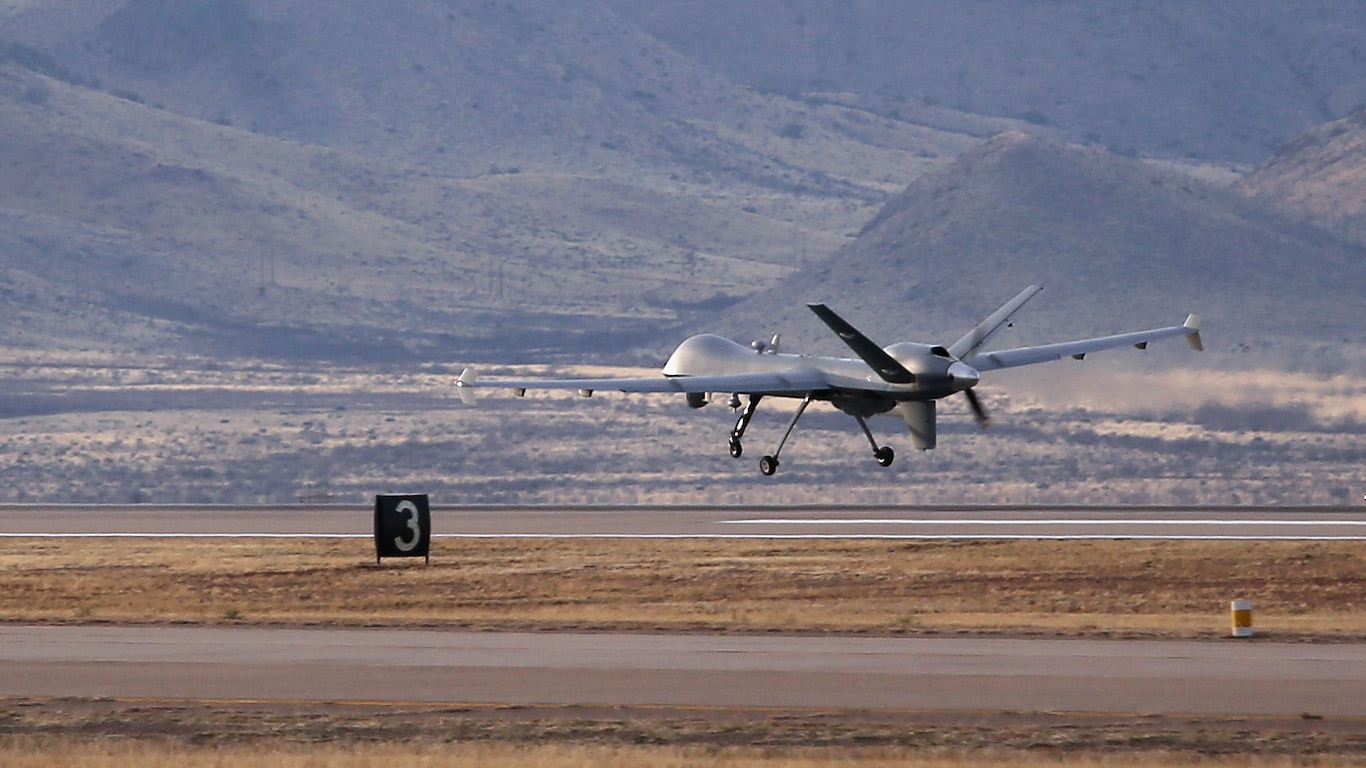
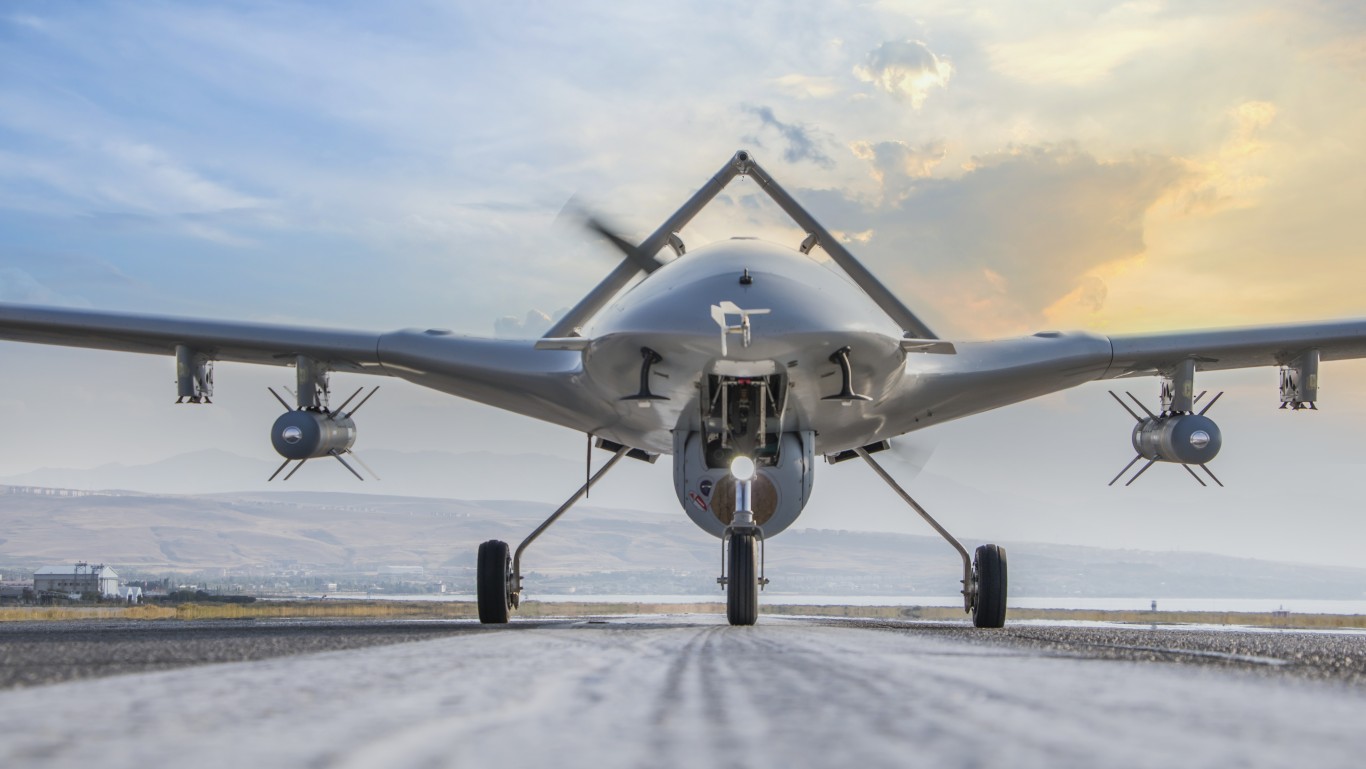
- Drones that cost $10,000 to $100,000.
- Missiles that cost millions to shoot them down.
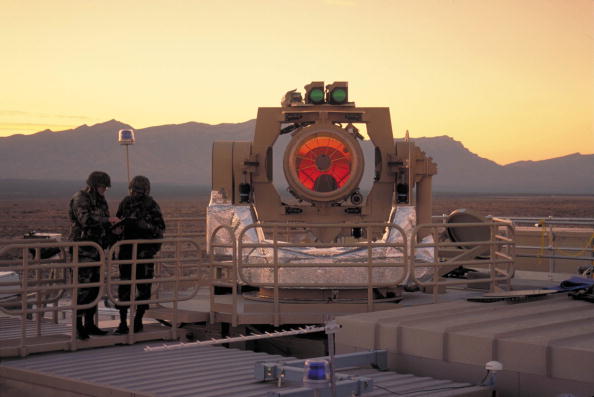
- Lasers that cost $10 per shot.
Memorize those numbers. The conflicts over the next decade and beyond are going to be based on them. To be clear, I don’t want any of them. But as long as the first one is in the air, the other parts of the equation must exist as well.
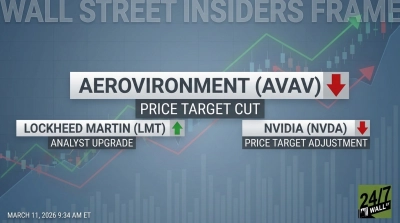
AeroVironment Inc (NASDAQ:AVAV) CEO Wahid Nawabi laid out the strategic case for directed energy in terms that should resonate with any investor thinking about the future of defense spending.
This is the technology that is considered the holy grail for the next era, maybe many decades of warfare and allows us to actually defend ourselves, defend our bases, defend our military, defend our national security interests, defend America against these mass attacks of drones, whether small drones, medium drones, or even large drones.
—Wahid Nawabi, CEO of AeroVironment, TV interview
The economics are hard to ignore. Shooting down a drone with AeroVironment’s LOCUST laser system costs less than $10, using just two to five seconds of laser energy. Compare that to the interceptor missiles currently used against Iranian drone swarms, which cost orders of magnitude more and are in short supply across allied arsenals.
Why the Battlefield Shift Matters Now
Nawabi pointed to the Ukraine and Iran conflicts as proof that mass drone attacks are now a defining feature of modern warfare. He noted in the Q3 earnings call that Iran launched close to 1,400 one-way attack drones into the UAE alone in a single week. That scale of attack exposes the fatal flaw in kinetic-only defenses: you can run out of interceptors. Lasers don’t reload. Their supply lines are power.
AeroVironment’s answer is layered. The Titan series handles RF jamming, which Nawabi described as the world’s best technology in that category, while LOCUST handles the directed energy kill layer. The company recently unveiled the LOCUST X3, a third-generation high-energy laser weapon system offering scalable power from 20 to 35+ kW and AI-enabled detection and tracking, with engagements costing under $5 per shot.
Nawabi on competitive positioning: “We are the only ones or one of the very few that can actually produce in volume and deliver a battle-tested proven technology or capability to war fighters today. Most players are talking about production capacity 2 to 3 years from now.”
The Investment Picture
The stock is down roughly 23% year-to-date, pressured by a Q3 earnings miss and the loss of the U.S. Space Force SCAR contract, which triggered a $151.31 million goodwill impairment charge. But underlying demand signals tell a different story. The company posted a record funded backlog of $1.10 billion and a book-to-bill ratio of 1.6x in the same quarter. The analyst consensus price target sits at $311, with 16 analysts rating the stock Buy or Strong Buy against just three Holds and zero Sells.
The analyst consensus price target sits at $311.47, with 16 analysts rating the stock Buy or Strong Buy against just three Holds and zero Sells.
If you believe drone warfare is structural and not cyclical, and that the economics of laser-based defense will force procurement decisions faster than the Pentagon’s traditional timeline, AeroVironment’s current valuation and its manufacturing lead in directed energy make it worth serious attention. The Army already has systems in the field, customers are asking for more, and the production ramp is underway.











 Top Gaining Stocks
 Top Losing Stocks