The Second Year of President Donald Trump’s Term Has a Pattern — Here’s What It Means for Stocks
So far in 2026, the S&P 500 is up approximately 5.2% year-to-date after posting a strong 18.1% total return in 2025. While the index has recovered from a rocky start earlier this spring, CFRA Research notes this remains a historically…


So far in 2026, the S&P 500 is up approximately 5.2% year-to-date after posting a strong 18.1% total return in 2025. While the index has recovered from a rocky start earlier this spring, CFRA Research notes this remains a historically sensitive period for the market. If you invested through Donald Trump’s first term, the current volatility likely feels familiar: Year Two of the presidential cycle has a long-standing reputation for being the most challenging stretch for investors.
History doesn’t repeat exactly, but the pattern is hard to ignore. Let’s walk through why it happens, what it usually looks like, and two stocks that are showing everyday investors how to handle this kind of environment without losing sleep.
Trump’s first term followed this script with striking accuracy: strong 21.8% gains in 2017 were followed by a 4.4% drop in 2018 amid trade tensions and midterm election jitters. The reasons are consistent—markets begin to digest post-election policy shifts, midterm uncertainty creates a “wait-and-see” atmosphere, and the initial excitement of a new term often meets the reality of legislative hurdles.
We are seeing that rhythm play out again. Despite a mid-quarter rally, the 2026 market has already seen dips as deep as 7% in late March, lining up with classic second-year volatility. The good news? This doesn’t signal a permanent downturn. It simply means it’s a strategic time to focus on companies with dominant pricing power, reliable cash flows, and business models that can withstand the political noise.
With trailing 12-month earnings at $20.70 per share, Lockheed provides a steady anchor for portfolios. Management continues to leverage a massive backlog of global defense contracts, providing a level of revenue visibility that “high-growth” tech stocks currently lack. For investors, Lockheed is offering stability and income while the broader index navigates the midterm year.
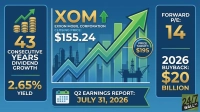
In the energy sector, Exxon Mobil (NYSE: XOM) is proving its resilience. For the full year 2025, the company reported $28.8 billion in earnings and a staggering $52 billion in operating cash flow. More importantly for shareholders, it returned $37.2 billion through dividends and buybacks.
Exxon’s financial health is particularly clear when compared to its peers. While Chevron (NYSE: CVX) saw net income fall to $12.3 billion in 2025 and faced a tighter free cash flow gap for its shareholder returns, Exxon covered its $17.2 billion dividend with ease. Currently yielding roughly 2.8%, Exxon offers a formidable margin of safety for those wary of market swings.
The silver lining remains the seasonal trend: in the vast majority of second-year cycles since 1950, the market has delivered its most meaningful recovery in the fourth quarter. Patience, paired with high-quality value plays, has historically been the winning formula to bridge the gap.
However, companies like Lockheed Martin and Exxon Mobil demonstrate that you don’t have to fight the cycle. By owning resilient businesses that generate massive cash flow, you can afford to ignore the noise and wait for the late-year tailwinds. Your portfolio doesn’t need to outrun the news cycle; it just needs to own solid companies that keep compounding regardless of the political climate.
Update Note: Updated S&P 500 YTD performance (~5.2% as of early May 2026) and 2025 total return (18.1%). Updated Lockheed Martin Q1 2026 revenue ($18.0B), EPS ($6.47), and current dividend yield (2.7%). Updated Exxon Mobil and Chevron full-year 2025 financial results, including earnings, cash flow, and shareholder distributions.
Date: May 8, 2026
Contact [email protected] for any questions or corrections.
After two decades of patrolling the dark corners of suburbia as a police officer, Rich Duprey hung up his badge and gun to begin writing full time about stocks and investing. For the past 20 years, he’s been cruising the markets looking for companies to lock up as long-term holdings in a portfolio while writing extensively on the broad sectors of consumer goods, technology, and industrials. Because his experience isn’t from the typical financial analyst track, Rich is able to break down complex topics into understandable and useful action points for the average investor. His writings have appeared on The Motley Fool, InvestorPlace, Yahoo! Finance, Money Morning, and, of course, 24/7 Wall St. He has been featured in both U.S. and international publications, including MarketWatch, Financial Times, Forbes, Fast Company, and USA Today.