Caterpillar Continues to Crush the Magnificent 7 — Here’s How It Gets to $1,000
U.S. factories just posted their strongest quarter in years, and the gains aren’t limited to flashy AI chips. Federal Reserve data released this morning shows manufacturing production excluding high-tech industries rose at a 2.4% annualized rate in Q1 — one…

U.S. factories just posted their strongest quarter in years, and the gains aren’t limited to flashy AI chips. Federal Reserve data released this morning shows manufacturing production excluding high-tech industries rose at a 2.4% annualized rate in Q1 — one of the healthiest paces since 2021. The rebound reached traditional sectors such as machinery, metals, and motor vehicles, with economists noting firmer capital spending that now stretches beyond data centers.
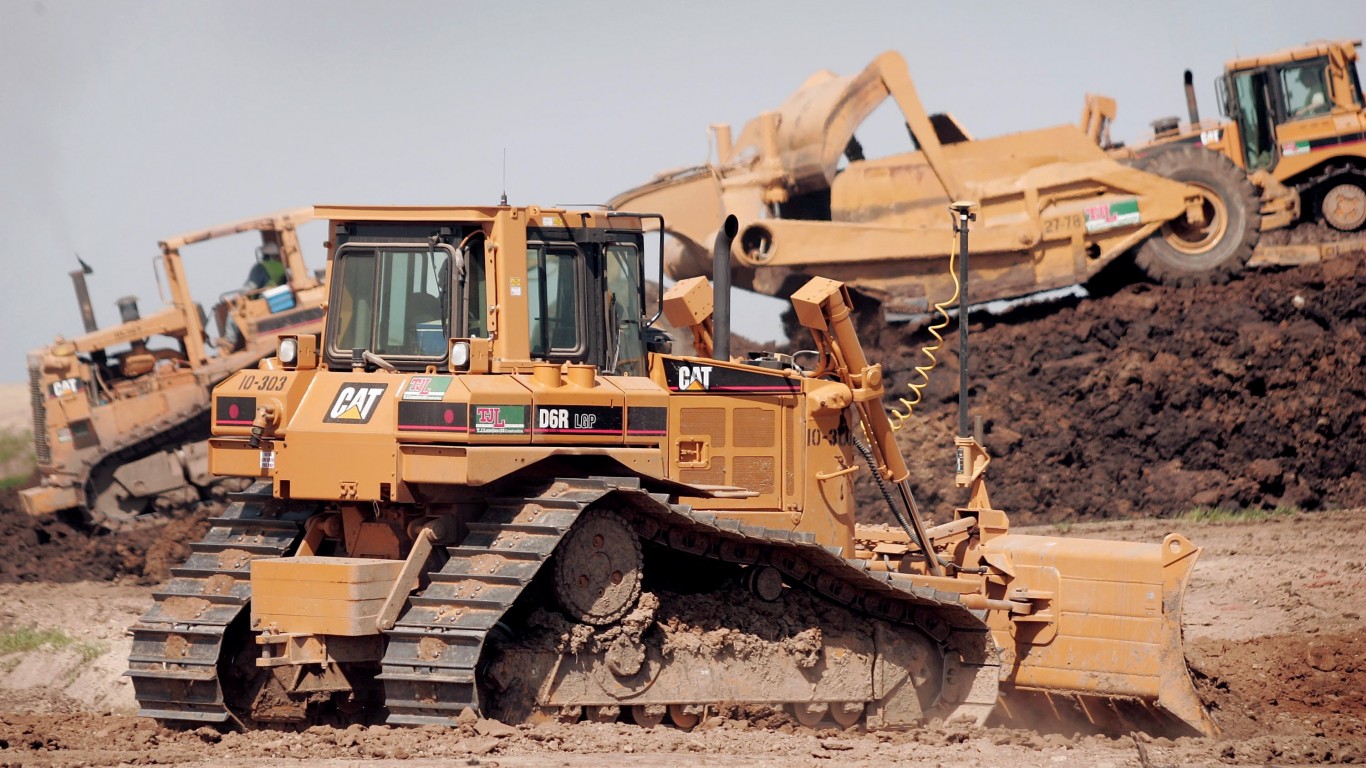
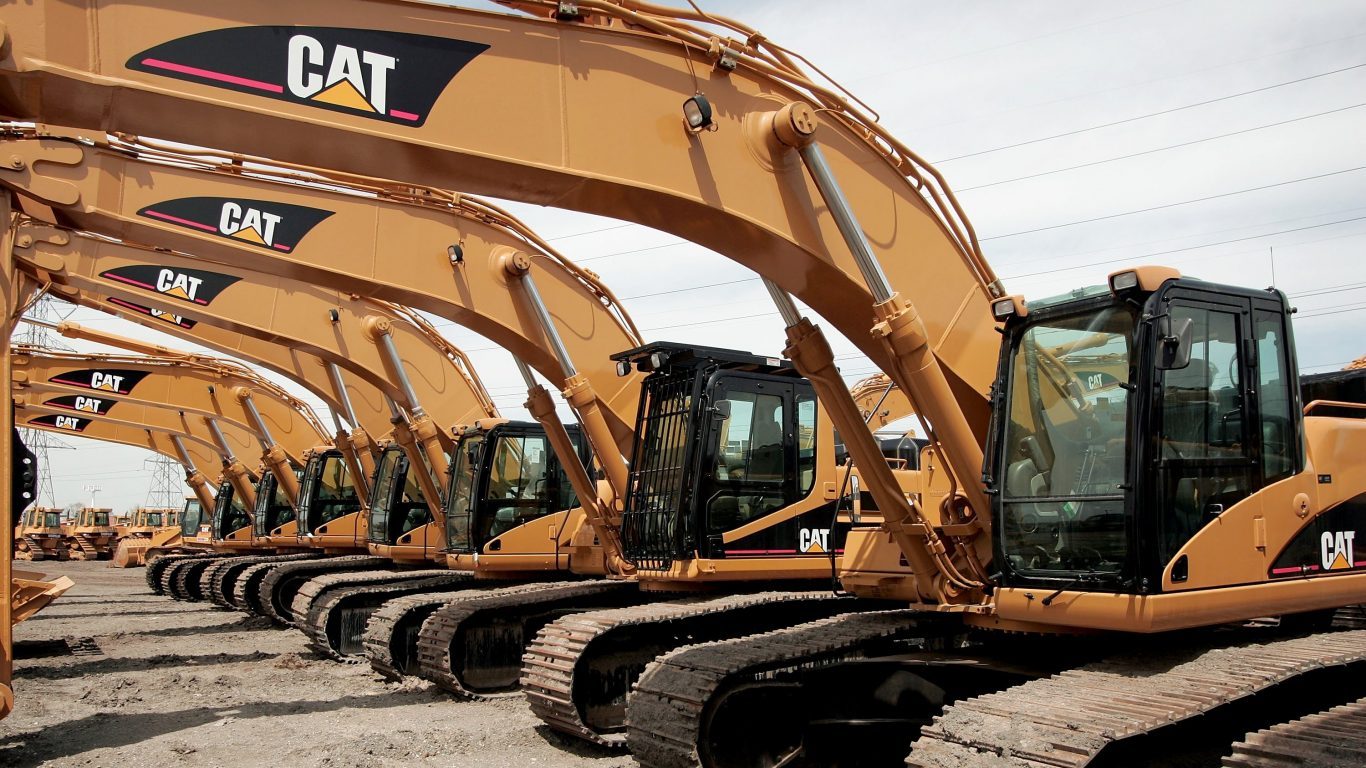
For retail investors, this matters because it points to a genuine cyclical lift in “old economy” demand. Caterpillar (NYSE:CAT | CAT Price Prediction) sits at the center of that shift. The heavy-equipment maker doesn’t just sell bulldozers; it equips the factories, mines, and construction sites that turn policy incentives and reshoring into real output. Let’s see why the numbers line up for a run at $1,000 per share by December.
Caterpillar Outperformed the Magnificent 7—and the Dow—in 2025
Caterpillar didn’t chase hype; it delivered results. In 2025, the stock became the top performer in the Dow Jones Industrial Average, rising roughly 61% for the year. That return topped six of the seven Magnificent 7 stocks on a total-return basis (price appreciation plus dividends), trailing only Alphabet (NASDAQ:GOOG)(NASDAQ:GOOGL) by a slim margin. This year, the momentum is carrying forward. Year-to-date, Caterpillar shares are up 34% at around $768, second only to Intel (NASDAQ:INTC) among Dow components.
Compare that to the broader market. While the S&P 500 logged solid but unspectacular gains, Caterpillar’s machinery and power businesses benefited from steady order flow, even before this morning’s factory data. The company’s latest earnings release showed a record backlog, underscoring that customers aren’t waiting — they’re buying equipment now. Investors who owned the stock through 2025 watched it outpace the very tech giants everyone chased. That track record matters when the next leg of growth arrives from non-AI manufacturing.
Playing Directly to Caterpillar’s Strengths
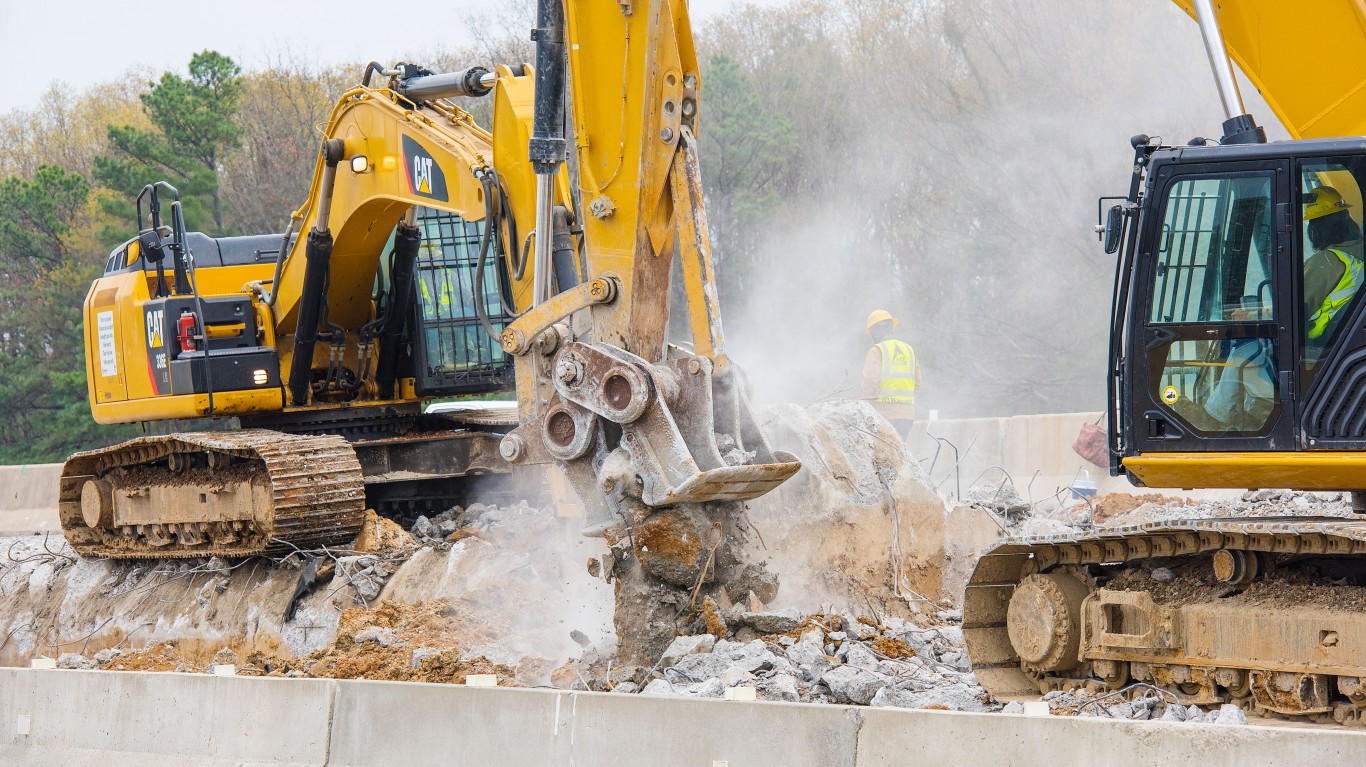
This morning’s Fed report confirms the broadening story. Manufacturing output excluding computers and semiconductors advanced 2.8% annualized in Q1 — proof that capital expenditures are no longer confined to AI build-outs. Machinery orders, construction supplies, and business equipment all contributed. Caterpillar makes the very equipment factories need to expand: excavators for site prep, engines for power generation, and heavy machinery for material handling.
When manufacturers restock inventories or build new capacity, Caterpillar’s sales follow. Its Energy & Transportation segment already supplies engines that keep plants running, and the company’s $725 million expansion of its Lafayette, Ind., engine facility positions it to meet demand from both traditional industry and any lingering data center needs.
Revenue for the trailing 12 months reached $67.59 billion, and free cash flow margins held above 11%, giving the company flexibility to invest without stretching the balance sheet. Simply put, a sustained 2% to 3% rise in non-AI factory output translates into higher machine utilization, replacement demand, and new orders for Caterpillar.
The Math to $1,000 Still Works — Even If Growth Slows a Bit
At $768, the stock sits just 23% below the $1,000 threshold. Reaching that level requires roughly a 30% gain from here. Granted, the trailing price-to-earnings ratio stands at 41 times earnings, seemingly elevated compared with historical averages. Yet the forward P/E drops to 33.6 times, and the company pays a $6.04 annual dividend for a 0.78% yield. The payout ratio is a comfortable 32% of earnings.
Even if revenue growth moderates from recent 4% to 5% levels, the manufacturing tailwind provides operating leverage. A full-year 2026 push that captures the current factory rebound could close the gap to $1,000.
That said, Caterpillar remains cyclical. Tariffs and any slowdown in global construction could pressure margins, as management noted in recent earnings commentary. If the rebound fades, the valuation could suffer.
Key Takeaway
Caterpillar has already proven it can outperform tech darlings when industrial demand broadens. With the Federal Reserve’s data confirming a non-AI factory rebound, the same tailwinds that drove 61% gains in 2025 remain intact. At $768 and 23% away from $1,000, the stock doesn’t need heroic growth — just continued execution on the orders already in hand.
Caterpillar is due to report earnings on April 29. Investors should get confirmation that the door to continued expansion is open; it’s up to each investor to walk through it.
Contact [email protected] for any questions or corrections.
After two decades of patrolling the dark corners of suburbia as a police officer, Rich Duprey hung up his badge and gun to begin writing full time about stocks and investing. For the past 20 years, he’s been cruising the markets looking for companies to lock up as long-term holdings in a portfolio while writing extensively on the broad sectors of consumer goods, technology, and industrials. Because his experience isn’t from the typical financial analyst track, Rich is able to break down complex topics into understandable and useful action points for the average investor. His writings have appeared on The Motley Fool, InvestorPlace, Yahoo! Finance, Money Morning, and, of course, 24/7 Wall St. He has been featured in both U.S. and international publications, including MarketWatch, Financial Times, Forbes, Fast Company, and USA Today.