Fortitude Gold (FTCO) Bounced Back From Its Worst Year, But One Risk Could Unwind the Gains
Gold crossed $2,000 in January 2026 and Goldman Sachs lifted its December 2026 price target to $2,500, driven by central bank buying that now averages roughly 1,037 tonnes annually versus a pre-2022 average of 17. For a small Nevada gold…

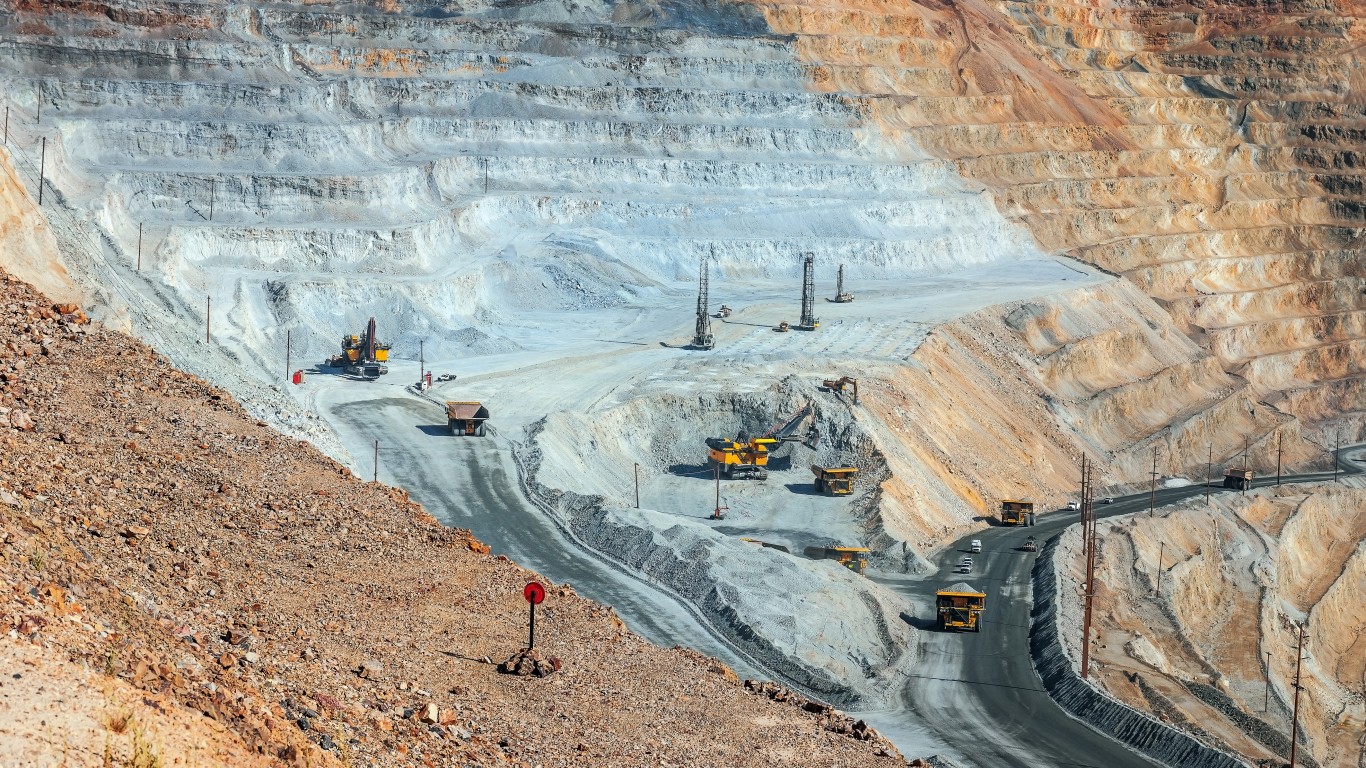
Gold crossed $2,000 in January 2026 and Goldman Sachs lifted its December 2026 price target to $2,500, driven by central bank buying that now averages roughly 1,037 tonnes annually versus a pre-2022 average of 17. For a small Nevada gold producer sitting on permitted, in-ground gold deposits, that price environment is the primary driver of returns.
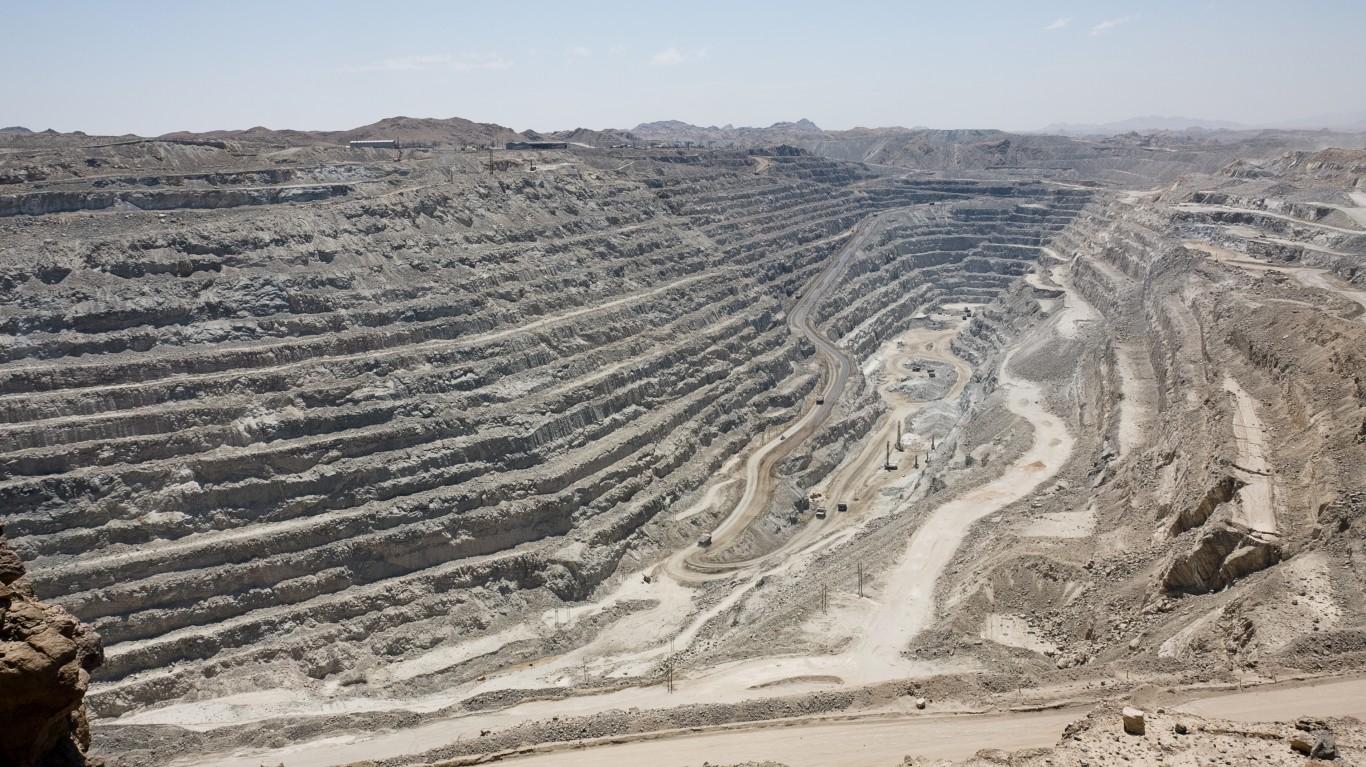
Fortitude Gold Corporation (OTCQB:FTCO) is a concentrated bet on a single operator running heap leach gold mines in Nevada’s Walker Lane Mineral Belt. That concentration matters enormously when sizing a position.
Leveraged Gold Exposure With Operational Risk
Fortitude Gold provides leveraged exposure to the gold price, amplified by operational execution risk. Unlike owning a gold ETF or physical bullion, returns depend on how many ounces the company extracts and at what cost. Every dollar gold rises above the all-in sustaining cost (AISC) flows almost entirely to the bottom line. In 2025, with a realized price of $2,386 and an AISC of $848, the company earned a margin of $1,538 per ounce produced. At $5,000 gold, that same cost structure would imply far wider margins, assuming costs hold.
2025 Production Collapse and Recovery
The 2025 results require context. Gold production fell 68% year-over-year, from 16,472 ounces in 2024 to 5,236 ounces in 2025. full-year revenue came in at $18.4 million versus $37.3 million in 2024. Full-year revenue came in at $18,411,000 versus $37,330,000 in 2024. Gold production fell 68% year-over-year, from 16,472 ounces in 2024 to 5,236 ounces in 2025. Operating cash flow was negative $13,017,000, and the cash position dropped from $27,100,000 to $4,656,000.
CEO Jason Reid attributed the collapse directly to federal permitting gridlock: “The Biden hangover for most of 2025 proved to be the most challenging year in the Company’s history.” The company responded with aggressive cost preservation: “These actions included a 75% reduction in our dividend, suspension of our drill programs, relocation to a very modest office space in south Colorado Springs, and the elimination of employee bonuses.” Despite the production collapse, the company posted a net profit of $420,000 because higher realized gold prices partially offset the volume drop.
The stock has reflected the recovery narrative. FTCO is up about 28% year-to-date in 2026, with shares near $3.50.
2026 Production Ramp and Capital Runway
The investment case for 2026 rests on three mines operating simultaneously for the first time. County Line and Scarlet South both delivered first mineralization to the Isabella Pearl heap leach pad in January 2026. A power grid connection at Isabella Pearl is expected to reduce energy costs by 40%. A $15 million credit facility provides near-term capital, and a $5 million exploration earn-in gives the company runway without funding the full program alone.
Reid outlined longer-term ambition: “Assuming exploration success, our objective is to fast-track East Camp Douglas toward production.” The Golden Mile project is on the BLM Fast-41 permitting track with 2.8 million ounces of measured and indicated resources.
Three Risks That Could Derail the Recovery
- Permitting risk is existential. The entire 2025 production collapse traces to permit delays. The company is racing to lock in approvals under a favorable administration. Reid acknowledged explicitly: “Our goal is to obtain as many additional permits as possible under the Trump Administration in case the American people vote back into power an anti-business and anti-mining administration again in the future.” That is a political risk embedded in the operating model.
- AISC is rising. All-in sustaining costs jumped to $1,697 per ounce in 2025 from $966 per ounce in 2024. Even at today’s gold prices, further cost increases or a gold price reversal would compress margins sharply. Ore grade at Isabella Pearl has declined from 0.95 grams per tonne to 0.75 grams per tonne.
- The dividend is unreliable. The monthly payout was cut 75% in 2025 and remains at $0.005 per share monthly. Until production recovers and operating cash flow turns positive, dividend growth is aspirational.
Debt-Free Nevada Operator, But Not a Smooth Ride
FTCO offers direct leverage to rising gold prices through a debt-free, Nevada-based operator with a growing mine pipeline. Anyone expecting near-term income stability or smooth production growth should recognize that this company’s output can fall 68% in a single year when permitting goes against it.
Contact [email protected] for any questions or corrections.
After 15 years on Wall Street with 7 of them as Director of Corporate and Municipal Bond Trading for a NYSE member firm, I started my own project and corporate finance consultancy. Much of the work involves writing business plans, presentations, white papers and marketing materials for companies seeking budgetary allocations for spinoffs and new initiatives or for raising capital for expansion or startup companies and entrepreneurs. On financial topics, I have been published under my own byline at The Motley Fool, 247wallst.com, DealFlow Events’ Healthcare Services Investment Newsletter and The Microcap Newsletter, among others. Additionally, I have done freelance ghostwriting writing and editing for several financial websites, such as Seeking Alpha and Shmoop Financial. I have also written and been published on a variety of other topics from music, audiophile sound and film to musical instrument history, martial arts, and current events. Publications include Copper Magazine, Fidelity (Germany), Blasting News, Inside Kung-Fu, and other periodicals.