Lithium Americas Is the Worst-Performing Trump Stock — Is It a Buy?
Government intervention in the market isn’t new, but the scale and scope of recent U.S. investments into strategic industries has few modern parallels. From semiconductors to rare earth minerals to defense systems, the Trump administration has directed billions into companies…


Government intervention in the market isn’t new, but the scale and scope of recent U.S. investments into strategic industries has few modern parallels. From semiconductors to rare earth minerals to defense systems, the Trump administration has directed billions into companies tied to national security and supply chain independence. Some of those bets are already paying off. Others, not so much.
That raises a natural question: when the government backs a stock and it still underperforms, is that a red flag — or a buying opportunity? Let’s take a closer look, because one name stands out for all the wrong reasons: Lithium Americas (NYSE:LAC).
How Trump’s Strategic Investments Are Performing
Let’s start with the scoreboard. These investments were disclosed through Defense Dept. awards, Energy Dept. funding releases, and company SEC filings. The goal was clear: rebuild domestic capacity in areas the U.S. can’t afford to outsource.
Here’s how the major names stack up:
| Company | Announcement Date | Gov’t. Investment | Stake/Structure | Return Since Investment |
| MP Materials (NYSE:MP) | July 10, 2025 | ~$400M | Equity + contracts | +102.2% |
| Intel (NASDAQ:INTC | INTC Price Prediction) | August 22, 2025 | ~$8.9B (CHIPS Act grants/loans) | Equity, incentives, + subsidies | +251.2% |
| Lithium Americas | October 1, 2025 | ~$2.3B | Equity + loan support | -18.7% |
| Trilogy Metals (NYSEAMEX:TMQ) | October 6, 2025 | ~$35.6M | Equity + project financing | +96.6% |
| L3Harris Technologies (NYSE:LHX) | January 13, 2026 | ~$1B | Defense procurement | -6.5% |
| USA Rare Earth (NASDAQ:USAR) | January 26, 2026 | ~$1.6B | Equity/private placement | -11.7% |
Returns calculated from closing price on day before investment announcement date.
Here’s what the numbers tell us: Intel is the clear winner so far, returning over 251%, with MP Materials doubling in value and Trilogy Metals nearly so. The others have all generated negative returns, but Lithium Americas has been the worst performer, losing nearly one-fifth of its value since the government investment.
That’s not just underperformance — it’s an outlier. While the Trump administration’s portfolio is trouncing the S&P 500 overall, the losers are notable.
Why Lithium Americas Fell Behind
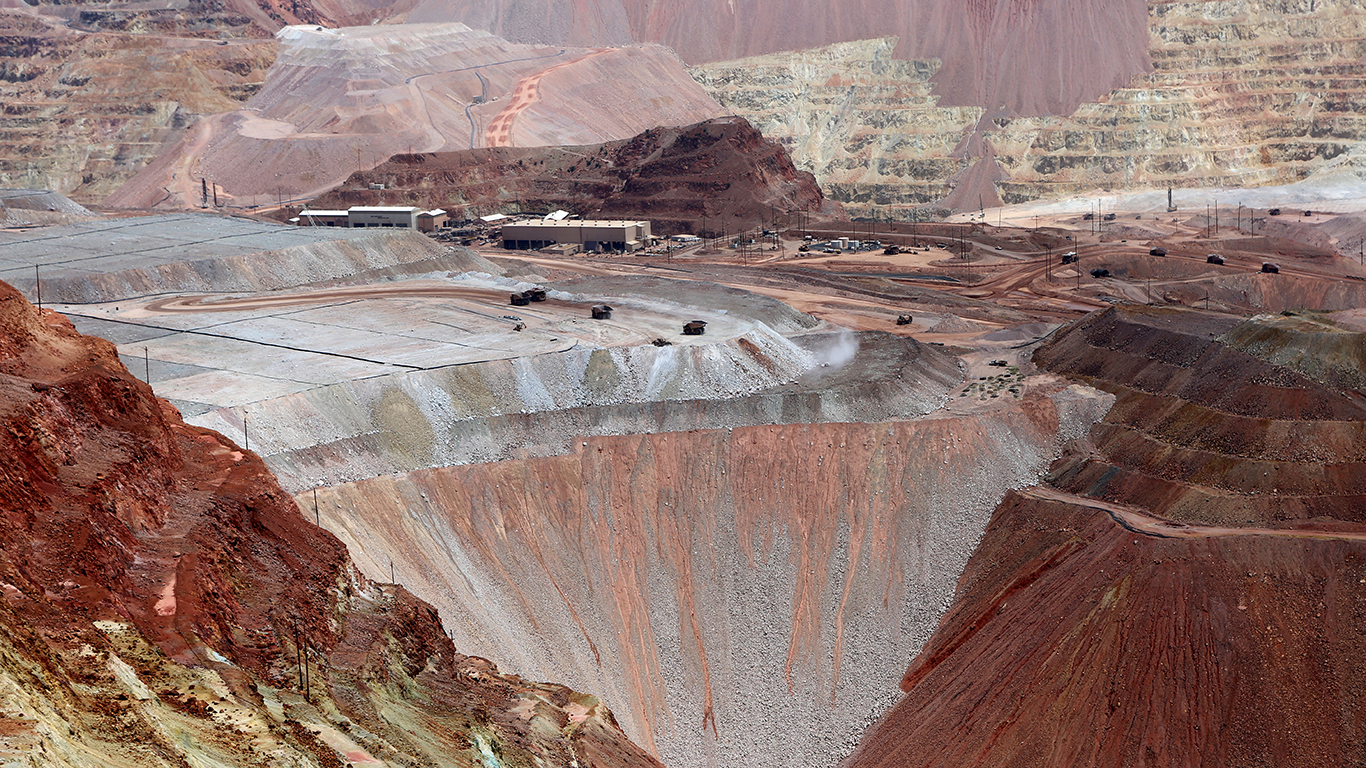
Lithium Americas is developing the Thacker Pass mine in Nevada, one of the largest known lithium deposits in the U.S.. Given how critical lithium is to EV batteries, the federal government took notice — the Energy Dept. committed roughly $650 million in loan support to help accelerate domestic production and reduce dependence on foreign supply chains.
That’s a meaningful vote of confidence. So why has the stock fallen nearly 19% since the announcement? The short answer is that good projects and good stocks aren’t always the same thing, at least not at the same time.
Thacker Pass is still in development, which means the company isn’t generating meaningful revenue yet. Investors are essentially being asked to pay today for cash flows that won’t materialize for years. That’s not unusual for mining projects of this scale, but markets are impatient — and the longer the timeline stretches, the more that future value gets discounted in today’s share price.
Making matters worse, large mining projects almost always face cost pressures, and even a modest 10% to 15% increase in capital spending can significantly dent a valuation model. Lithium Americas has already faced questions about project costs and timelines, and that uncertainty has a way of showing up in the stock price.
Then there’s the commodity itself. Lithium prices dropped sharply from their 2022 peaks, which reduces the profitability assumptions analysts plug into their models — even for a mine that isn’t producing yet. It’s a double blow: the production is delayed, and when it does arrive, the pricing environment may be less favorable than once hoped. Yet prices are rebounding significantly in early 2026.
Compare that to peers like MP Materials, which is already producing and generating revenue and has gained 18% over the same period, and the contrast becomes clear. Scale cuts both ways — bigger potential upside, but significantly more risk in the meantime.
Is This a Buying Opportunity?
So is the selloff a buying opportunity? That depends entirely on your time horizon and risk tolerance.
The optimistic case is genuine. The U.S. still needs domestic lithium regardless of where prices sit today, EV adoption continues to grow, and a $650 million government loan isn’t something to dismiss — it meaningfully reduces the financing risk that typically haunts projects of this size. Thacker Pass remains one of the most strategically important lithium assets in the country.
The cautious case is equally real. Without cash flow, the entire valuation rests on successful future execution. Commodity price swings can rapidly change the economics, and any further delays push returns even further into the future.
Key Takeaway
The core story at Lithium Americas isn’t broken — it’s simply unfinished. For aggressive investors comfortable with long development timelines, it represents a high-upside bet on U.S. lithium independence. For more conservative investors, companies already generating revenue may offer better risk-adjusted returns right now.
Either way, the market is waiting for proof, and until Thacker Pass starts producing, the stock will likely continue to reflect that uncertainty.
Contact [email protected] for any questions or corrections.
After two decades of patrolling the dark corners of suburbia as a police officer, Rich Duprey hung up his badge and gun to begin writing full time about stocks and investing. For the past 20 years, he’s been cruising the markets looking for companies to lock up as long-term holdings in a portfolio while writing extensively on the broad sectors of consumer goods, technology, and industrials. Because his experience isn’t from the typical financial analyst track, Rich is able to break down complex topics into understandable and useful action points for the average investor. His writings have appeared on The Motley Fool, InvestorPlace, Yahoo! Finance, Money Morning, and, of course, 24/7 Wall St. He has been featured in both U.S. and international publications, including MarketWatch, Financial Times, Forbes, Fast Company, and USA Today.