10 Years, Zero Regrets: The Dividend Stocks I Keep Buying
Dividend stocks can be a pillar for long-term investing, generating passive income and offering stability even during tough environments. The current market volatility and geopolitical unrest have attracted investors to dividend stocks. However, not every dividend stock is created equal.…


Dividend stocks can be a pillar for long-term investing, generating passive income and offering stability even during tough environments. The current market volatility and geopolitical unrest have attracted more investors to dividend stocks. Not every dividend stock is created equal, though. It makes sense to focus on companies that have consistently paid and raised their dividends, since that track record signals a genuine commitment to rewarding shareholders. A generous yield draws income seekers in, and leading dividend growers often deliver price appreciation on top of that. I’ve been a dividend investor for decades, and here are the stocks I keep buying.
AbbVie
Pharmaceutical giant AbbVie (NYSE:ABBV | ABBV Price Prediction | ABBV Price Prediction) has built a diverse lineup of drugs treating autoimmune diseases, migraines, cancer, and more. The pipeline is impressive: twelve of the company’s drugs generated more than $1 billion in sales over the past year. Patent expirations remain a headwind, but AbbVie is actively offsetting that pressure with new approvals and strategic bolt-on acquisitions. In June 2026, the company announced it would acquire immunology-focused biopharma firm Apogee Therapeutics for roughly $10.1 billion, a deal expected to close in the third quarter and set to strengthen AbbVie’s immunology pipeline with lead asset zumilokibart showing blockbuster potential in atopic dermatitis.
AbbVie recently reported first-quarter 2026 results and beat expectations across the board. It reported revenue of $15 billion, up 12.4% year over year. The adjusted EPS came in at $2.65. Immunology was the top driver, generating $7.3 billion in revenue, with Skyrizi contributing $4.5 billion and Rinvoq an additional $2.1 billion.
The company managed strong demand across segments and absorbed the ongoing dip in Humira sales without missing a beat. It raised the full-year revenue guidance to $67.3 billion and lifted adjusted EPS guidance to $14.08 to $14.28, a move that increased the midpoint by roughly $300 million from the prior guidance. ABBV shares now trade near $254, a significant recovery from the 52-week low of around $185, as the growth story from Skyrizi and Rinvoq continues to take hold.
As a Dividend King, AbbVie carries a yield of around 2.8% at current prices, with an annual TTM payout of $6.92 per share and a dividend growth streak now at 12 consecutive years. The quarterly dividend stands at $1.73 per share. AbbVie has multiple long-duration growth drivers, and for investors focused on passive income, the combination of a growing payout and a robust pipeline makes it a compelling holding through market cycles.
Coca-Cola
Beverage giant Coca-Cola (NYSE:KO | KO Price Prediction) is one of the world’s most recognizable names. It enjoys rare pricing power and has managed to grow volumes even as it pushed through price increases across markets. The company reported the first quarter 2026 results and delivered a 12% revenue jump to $12.47 billion. Organic sales soared 10%, the Zero Sugar segment saw sales rise 13%, and results held up well across multiple regions. Adjusted EPS came in at $0.86, up 18% year over year.
Warren Buffett’s favorite holding, Coca-Cola earns its margins by selling syrup concentrate rather than managing the capital-heavy bottling business directly, keeping operating costs lean. Management has maintained its full-year forecast, targeting revenue growth of 4% to 5% and adjusted EPS growth of 2% to 3%. The stock pays $2.12 per share annually, translating to a forward yield near 2.6% at current prices around $82. The payout ratio sits around 65%, and Coca-Cola has now raised its dividend for 63 consecutive years, making it one of the most dependable compounders on the market.
The stock has climbed roughly 20% year to date, pressing near its 52-week high. Coca-Cola sets itself apart with its stellar margins, sustained by the breadth of its brand portfolio, its global distribution network, and the consistency of its marketing investment.
Coca-Cola remains, in my view, one of the best dividend stocks to own across any multi-decade time horizon.
PepsiCo
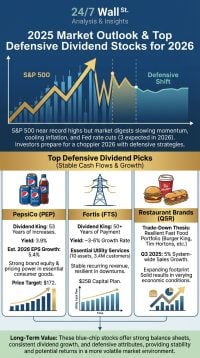
PepsiCo (NASDAQ:PEP | PEP Price Prediction) is another beverage and snack giant that has rarely disappointed income investors. The company raised its annualized dividend 4% to $5.92 per share, effective with the June 2026 payment, marking its 54th consecutive annual dividend per share increase. At current prices the stock yields around 4.3%, comfortably above Coca-Cola and an attractive level for investors who prioritize current income. PepsiCo owns a sprawling portfolio that spans beverages and food brands alike, providing meaningful diversification relative to a pure-play beverage competitor.
For the first quarter of 2026, it reported revenue growth of 8.5% year over year and a 24% jump in operating profit, with international sales doing much of the heavy lifting. Management expects organic revenue to grow 2% to 4% this year and plans to return approximately $8.9 billion to shareholders through dividends and buybacks combined. The sheer scale of that capital return underscores how seriously PepsiCo takes its income-investor base.
The portfolio extends well beyond cola. Brands like Doritos, Mountain Dew, and Quaker Oats keep PepsiCo relevant in snacking categories where consumer demand remains resilient. The company continues aligning its product mix with shifting consumer preferences, an important quality for any holding that needs to earn its keep over a decade or longer. PepsiCo is a stock worth adding on weakness. When it comes to dividends, its track record speaks for itself.
Editor’s note: This pass updated AbbVie’s share price from $206 to approximately $254, refreshed its dividend yield to reflect the current level near 2.8%, and added context on AbbVie’s announced $10.1 billion acquisition of Apogee Therapeutics. PepsiCo’s annual dividend was updated from $5.69 to $5.92 per share following the company’s 4% increase effective June 2026, and its yield was refreshed to approximately 4.3%. Coca-Cola’s year-to-date gain and current price were also updated to reflect current market levels.
Contact [email protected] for any questions or corrections.
Vandita Jadeja is a financial publisher with over a decade of experience writing about financial topics, including investment, savings, retirement, insurance and banking. Vandita is a Chartered Accountant who loves to debunk financial concepts for readers.
Her work has appeared on sites that include The Motley Fool, InvestorPlace, and Benzinga. She covers investing and focuses on stock picks and price prediction for 24/7 Wall St.
When not looking for the next stock investment opportunity, she can be found traveling, reading, chasing sunsets and enjoying her iced latte.