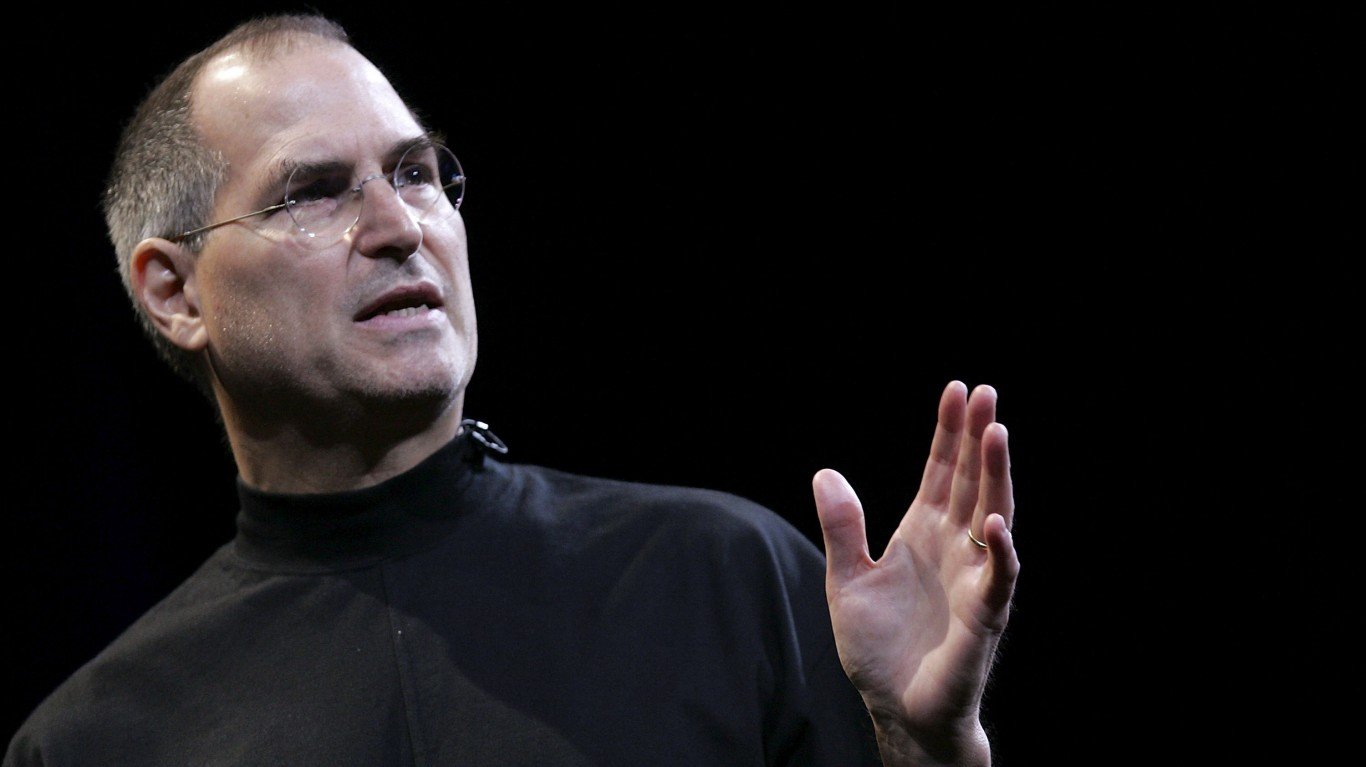
For the first time in 19 years, Apple’s flagship isn’t a phone
For 19 years, the Apple (NASDAQ:AAPL) business model rested on a single pillar: the iPhone. It drove cash, set the strategic roadmap, and defined the company's identity. That era is ending. In 2026, the center of gravity is moving toward…

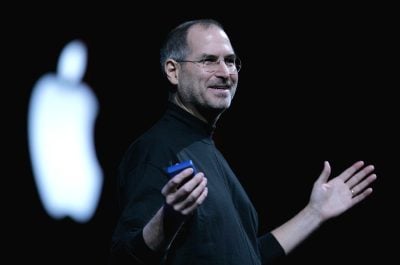
For 19 years, the Apple (NASDAQ:AAPL | AAPL Price Prediction) business model rested on a single pillar: the iPhone. It drove cash, set the strategic roadmap, and defined the company’s identity. That era is ending. In 2026, the center of gravity is shifting toward ambient computing: head-mounted displays, AI-enabled smart glasses, and audio wearables. The iPhone remains central to the ecosystem, now being repositioned as the processing hub and battery source for devices worn on the face rather than held in the hand.
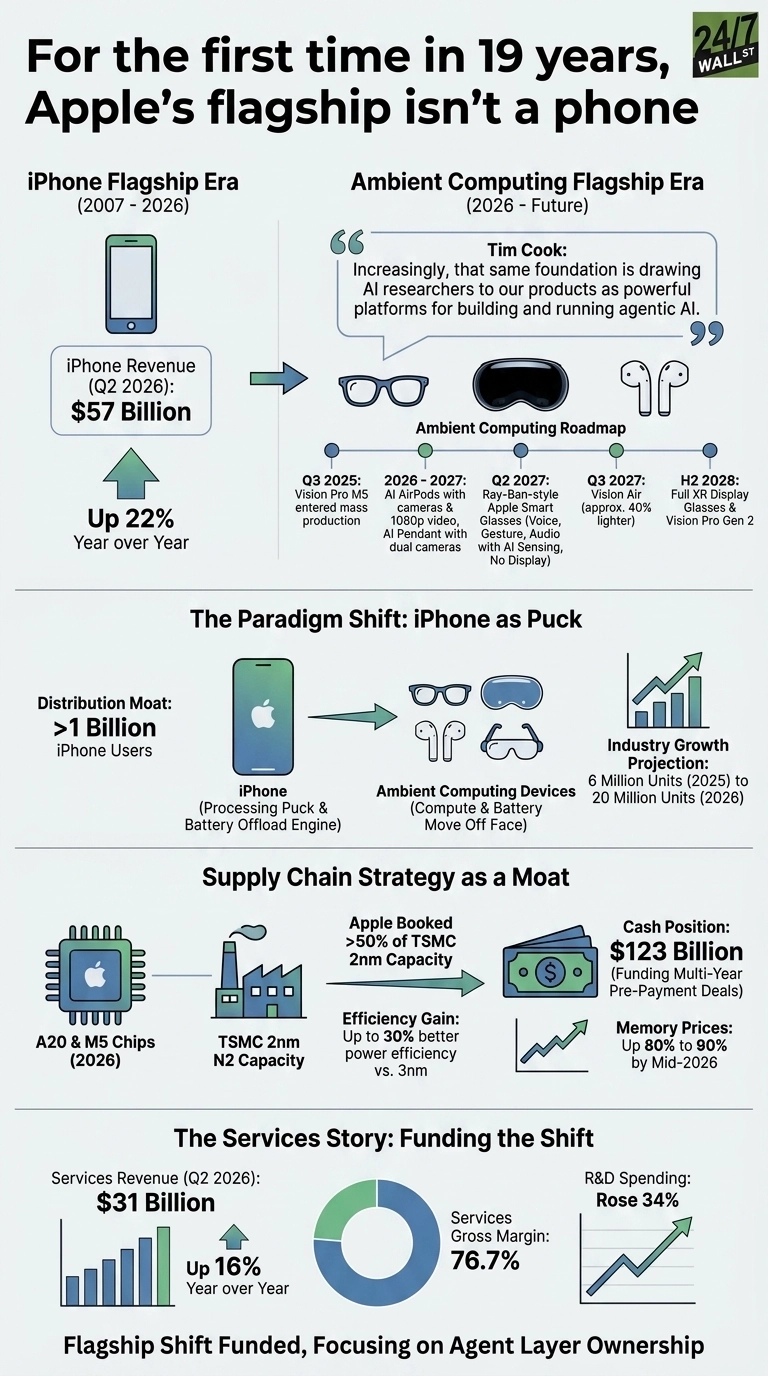
That shift is gaining momentum even as Apple posted record iPhone revenue of $57 billion in Q2 2026, up 22% year over year, in what became the largest non-holiday quarter in the company’s history. Strategy, however, is about trajectory, not snapshots.
The Strategic Pivot
Smartphones demand constant manual input and pull attention away from the world. Ambient computing layers intelligence onto what you see and hear without requiring a screen in your hand. Apple Intelligence, the AI platform Apple launched across its devices, was engineered precisely for that surface. On the Q2 2026 earnings call, then-CEO Tim Cook framed the direction plainly: “Increasingly, that same foundation is drawing developers and researchers to our products as powerful platforms for building and running agentic AI.”
The product pipeline behind that statement has become considerably clearer since this article was first published. Vision Pro with the M5 chip launched in October 2025, delivering faster processing and extended battery life. AI-enabled AirPods with cameras are in advanced testing. An AI pendant with dual cameras is slated for 2027. Ray-Ban-style smart glasses without displays, developed under the internal codename N50, were originally targeted for an early-2027 launch, but Bloomberg’s Mark Gurman reported in late May 2026 that development delays pushed the release to late 2027. More significant still, Apple analyst Ming-Chi Kuo reported in June 2026 that CEO John Ternus, who officially took over from Tim Cook on September 1, has effectively removed the Vision Air and all near-term Vision Pro successors from the roadmap, redirecting engineering resources toward the mass-market N50 glasses. Full XR display glasses with optical waveguides have consequently slipped to 2029 or beyond.
The clearest near-term sign of Apple’s form-factor ambitions is a different device entirely. At a September 9 event, the first product launch under Ternus, Apple is expected to unveil its first foldable iPhone alongside the iPhone 18 Pro and iPhone 18 Pro Max. All three models are expected to use the A20 Pro chip built on TSMC’s 2nm process. The foldable, which may carry the name iPhone Ultra, represents Apple’s first new iPhone form factor since the 2017 iPhone X, and its book-style design sets it apart from existing Android foldables.
Distribution Through the iPhone Base
Lightweight glasses require offloading compute and power to a companion device, and Apple’s approach puts that processing load on the iPhone. The company’s installed base reached a new all-time high of over 2.5 billion active devices as of the Q3 2026 earnings call, with iPhones anchoring the majority of that footprint. That scale turns the existing customer base into a ready-made distribution channel for whatever form factor comes next. Analysts project the smart glasses market will expand from roughly 6 million units in 2025 to 20 million in 2026, driven largely by Meta’s Ray-Ban collaboration. Apple enters with instant reach no standalone hardware startup can replicate.
Supply Chain as Competitive Advantage
Apple has locked more than half of TSMC’s 2nm chip capacity for 2026, securing priority access for the A20 and M6 processors. The 2nm node delivers up to 30% better power efficiency than the current 3nm generation, a critical gain for wearable devices where battery life and heat management constrain usability. Memory costs have surged as HBM production for AI accelerators crowds out conventional DRAM, with prices rising 80% to 90% from mid-2025 to mid-2026. The pressure is real: on both the Q2 and Q3 earnings calls, Apple acknowledged that memory shortages have constrained iPhone and Mac shipments and forced price increases on some hardware. Apple’s net cash position of $62 billion, combined with $147 billion in total liquidity, allows the company to lock in multi-year supply agreements that smaller players cannot afford. Google confirmed at I/O 2026 its Gemini-powered smart glasses push with Warby Parker and Gentle Monster, while Samsung continues to press forward with Android XR. Both are credible rivals, but Apple controls the full stack from silicon to retail.
Services as the Financial Engine
Wearable devices that stay on your face all day drive retention in ways smartphones cannot, and Apple’s services business is what funds the transition. Services revenue hit $31 billion in Q2 2026, up 16% year over year, at a 76.7% gross margin, reaching a new all-time record. R&D spending jumped 34% to $11.4 billion in that quarter, the highest rate in at least three decades relative to revenue. The Q3 2026 results, reported on July 30 in what proved to be Tim Cook’s final earnings call as CEO, showed total revenue of $109.4 billion, up 16% year over year, with iPhone growing another 22% to $54.25 billion. Services came in at $30.74 billion for the June quarter, up 12% year over year, slightly below analyst estimates due to foreign exchange headwinds, though still a June quarter record. Apple also flagged significant supply constraints heading into Q4, with memory shortages expected to weigh on iPhone, iPad, and Mac availability.
The flagship transition is already funded. The strategic question for the next decade is who controls the agent layer that interprets what you see, hear, and ask for when computing moves onto your face. With John Ternus now in the CEO chair and a September 9 product event already on the calendar, that question is moving from roadmap slides to retail shelves.
Editor’s note: This pass added Q3 2026 financial results (revenue $109.4 billion, iPhone revenue $54.25 billion, services revenue $30.74 billion, all June quarter records) reported on July 30, updated Tim Cook’s status to executive chairman and John Ternus’s status to current CEO as of September 1, 2026, and added context on Apple’s September 9 product event where Ternus is expected to unveil the first foldable iPhone alongside the iPhone 18 Pro lineup.
Contact [email protected] for any questions or corrections.
Don Lair writes about options income, dividend strategy, and the kind of boring-but-durable investing that actually funds retirement. He's the founder of FITools.com, an independent contributor to 24/7 Wall St., and a former writer for The Motley Fool.