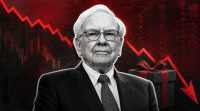
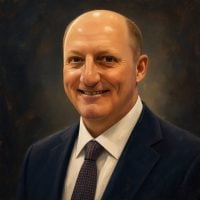
Greg Abel Just Quietly Dumped a Major Berkshire Holding. Here Is What Buffett’s Successor Is Buying Instead.
When Warren Buffett officially retired on December 31, 2025, it marked the end of a six-decade era at Berkshire Hathaway. Greg Abel took the CEO role on January 1, 2026, and his first full quarter running the company produced one…


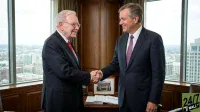
When Warren Buffett officially retired from day-to-day leadership at Berkshire Hathaway (NYSE:BRK.B) on December 31, 2025, it marked the end of a six-decade era. Buffett had transformed Berkshire from a struggling New England textile mill into a trillion-dollar conglomerate with stakes in some of the world’s most dominant businesses. Filling his shoes was never going to be easy, but Greg Abel is moving fast to put his own stamp on the portfolio.
Abel officially took over as CEO on January 1, 2026, and investors are already getting a clearer picture of how he plans to reshape Berkshire in the post-Buffett era. His first full quarter running the company produced one of the most sweeping portfolio overhauls in years.
Abel slashes legacy holdings and cuts deep into the equity book
One of the most significant early signals under Abel has been the aggressive pruning of positions previously associated with former Berkshire investment manager Todd Combs, who departed the company in January 2026 to lead JPMorgan Chase’s newly formed Strategic Investment Group. Combs had helped manage portions of Berkshire’s equity portfolio for over a decade, and his exit cleared the way for a clean break with several of those bets.
The scale of the Q1 2026 cleanup was striking. According to the 13F filing released May 15, Berkshire exited stakes in 16 companies during the quarter. Complete sell-offs included Visa, Mastercard, UnitedHealth Group, Amazon, Domino’s Pizza, and Aon, among others. The portfolio shrank from roughly $274 billion to $263 billion, and the total number of holdings dropped from around 40 to just 29. The message from Abel was clear: concentrate on conviction, cut everything else.
The company’s Bank of America position, one of the largest financial holdings Buffett built, was also trimmed. The Q1 2026 13F showed a reduction of about 0.71%, a modest cut on its own, but part of a broader pattern of reduced financial-sector concentration that began under Buffett in 2024. Bank of America remains the portfolio’s fourth-largest holding, and the top five positions, which include Apple, American Express, Coca-Cola, Bank of America, and Chevron, still account for roughly 68% of the entire book.
Abel bets big on Alphabet and doubles down on Japan
While Berkshire was trimming dozens of positions, Abel was simultaneously making aggressive additions. The headline move of the quarter was a 225% increase in Berkshire’s Alphabet position, a sharp pivot toward big-cap technology. Then, in early June 2026, Abel committed an additional $10 billion to Alphabet in a private placement tied to the company’s broader AI capital-spending push. By some estimates, Berkshire’s combined Alphabet stake across both share classes is now valued at over $31 billion, placing it among the conglomerate’s largest equity holdings.
Abel also made what is being called his first major acquisition as CEO: a $6.8 billion deal to acquire homebuilder Taylor Morrison Homes, deepening Berkshire’s already substantial footprint in U.S. housing alongside Clayton Homes and Berkshire Hathaway HomeServices.
On the international front, Abel has doubled down on Berkshire’s long-running bet on Japan’s five major trading houses, known as sogo shosha. In early May 2026, Berkshire crossed the 10% ownership threshold in all five companies: Itochu, Marubeni, Mitsubishi, Mitsui, and Sumitomo. In his first annual letter to shareholders, Abel described these positions as core, permanent holdings, citing their shareholder-friendly capital allocation, strong dividends, and deeply diversified business models spanning energy, metals, food, and chemicals.
The appeal is straightforward in Buffett-style terms. Many of these trading houses trade at lower valuations than comparable U.S. businesses, generate substantial cash, and have been accelerating dividend growth under pressure from the Tokyo Stock Exchange’s corporate governance reforms. Berkshire expected to collect $812 million in dividend income from these Japanese investments in 2025 alone.
Elsewhere, Abel resumed Berkshire’s share buyback program for the first time in roughly 21 months, repurchasing about $234 million worth of shares in March 2026. That move pushed the company’s cumulative buyback total since 2018 to $78 billion and signaled that Abel views Berkshire’s own stock as undervalued at current prices. The company’s cash pile, meanwhile, hit a record $397 billion at the end of Q1 2026, giving Abel ample firepower for future deals.
What Abel’s moves say about the post-Buffett era
Abel’s first quarter offers a useful window into his capital allocation instincts. He appears comfortable concentrating even further into his highest-conviction ideas, moving away from smaller positions that added complexity without adding proportional value to the portfolio. The exit from payment processors like Visa and Mastercard, the full liquidation of Amazon, and the departure from healthcare names like UnitedHealth all reflect a willingness to make clean breaks.
The pivot toward Alphabet is particularly notable. Buffett long resisted large technology bets, with Apple being the major exception. Abel’s rapid and aggressive build in Alphabet suggests a broader comfort with platform-technology businesses that generate durable free cash flow at scale.
Large American banks still generate massive profits and continue to benefit from relatively stable consumer spending, so the modest BofA trim should not be read as a wholesale retreat from financials. The real story of Berkshire’s evolving portfolio is a consolidation around the highest-quality assets Buffett left behind, combined with an increasingly decisive willingness from Abel to add new ones on his own terms.
Currency risk and geopolitical volatility are genuine considerations when evaluating international holdings, including the Japanese trading houses. But Abel has been explicit that he views those positions as permanent, not tactical, which suggests they will remain a core pillar of Berkshire’s portfolio for years to come regardless of near-term market conditions.
Editor’s note: This article has been updated to reflect Berkshire Hathaway’s Q1 2026 13F filing, which showed the portfolio shrinking from roughly $274 billion to $263 billion with full exits from Visa, Mastercard, Amazon, UnitedHealth, and others; the Bank of America reduction was clarified to 0.71%, not a large cut as originally described. Post-publication developments including Abel’s 225% increase in Alphabet (plus a $10 billion June 2026 follow-on), the $6.8 billion Taylor Morrison acquisition, Berkshire’s record $397 billion cash pile, and Berkshire crossing the 10% ownership threshold in all five Japanese trading houses were also added.
Contact [email protected] for any questions or corrections.
Maurie Backman has more than a decade of experience writing about financial topics, including retirement, investing, Social Security, and real estate. Her work has appeared on sites that include The Motley Fool, USA Today, U.S. News & World Report, The Washington Post, and Kiplinger.
Prior to becoming a full-time financial writer, Maurie worked in the financial industry trading distressed debt. She then changed course and spent a few years designing electronic toys. After a stint in content marketing and UX, she shifted back into writing and has since covered everything from the housing market to estate planning to Medicare.
When she's not busy writing, Maurie can be found hiking, walking her dogs, driving her kids to their various sports practices and games, and curling up with a good book. She cooks on occasion and bakes way too often.