Warren Buffett’s Berkshire Hathaway Just More Than Tripled Its Stake in Alphabet
Cash is suddenly king again on Wall Street. With recession fears lingering, interest rates still elevated, and consumers showing signs of fatigue, corporate America has been preparing for rougher weather ahead. Few companies have prepared more aggressively than Berkshire Hathaway…

Cash is suddenly king again on Wall Street. With recession fears lingering, interest rates still elevated, and consumers showing signs of fatigue, corporate America has been preparing for rougher weather ahead. Few companies have prepared more aggressively than Berkshire Hathaway (NYSE:BRK-A | BRK-A Price Prediction)(NYSE:BRK-B). The conglomerate ended the first quarter sitting on a staggering $397.6 billion cash pile, according to its latest earnings release and SEC filings.
That raises the obvious question: If Berkshire is unloading stocks almost everywhere else, why is it buying more of Alphabet (NASDAQ:GOOG)(NASDAQ:GOOGL)? And not just a little more, either. Berkshire more than tripled its stake in Alphabet during the first quarter while simultaneously slashing exposure to sectors that often struggle during economic slowdowns.
Here is what the numbers show us.
Berkshire’s Portfolio Purge Sends a Message
Berkshire’s latest 13-F filing with the SEC looked less like routine portfolio management and more like spring cleaning with a flamethrower.
Under the new leadership of Greg Abel, Berkshire eliminated positions in 16 stocks altogether, including UnitedHealth Group (NYSE:UNH), Visa (NYSE:V), MasterCard (NYSE:MA), Domino’s (NYSE:DPZ), Diageo (NYSE:DEO), and what was left of its Amazon (NASDAQ:AMZN) stake.
Meanwhile, Berkshire continued trimming several longtime holdings tied closely to economic activity, including Constellation Brands (NYSE:STZ) by 95%, Bank of America (NYSE:BAC), Chevron (NYSE:CVX), and Nucor (NYSE:NUE).
Regardless of how you look at it, this was one of the largest portfolio purges Berkshire has made in years. Surprisingly, though, Abel wasn’t simply hoarding cash under the corporate mattress.
Berkshire Went Shopping for Alphabet Stock
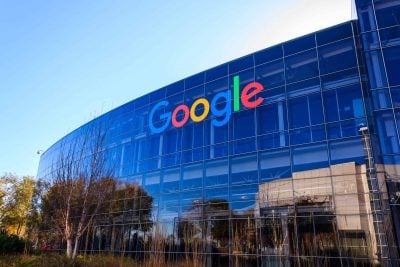
While Berkshire was selling across much of its portfolio, it dramatically increased its investment in Alphabet. According to the13-F filing, the company boosted its holdings in Alphabet’s Class A shares (GOOGL) to 54.2 million shares valued at approximately $15.6 billion. Berkshire also purchased 3.6 million Class C shares (GOOG), worth roughly another $1 billion.
That brings Berkshire’s total Alphabet investment to around $16.6 billion, instantly making it one of the five largest positions in the portfolio.
In other words, Berkshire sees Alphabet as both defensive and growth-oriented at the same time — a rare combination. The logic isn’t hard to see.
Alphabet generated $64.4 billion in free cash flow over the last 12 months, while sitting on more than $126.8 billion in cash and marketable securities. Even if the economy slows, Google’s core advertising machine continues producing enormous cash flow.
At the same time, Alphabet has become one of the leaders in artificial intelligence. Its Gemini AI platform now competes directly with offerings from Microsoft (NASDAQ:MSFT) and OpenAI, while Google Cloud revenue rose 63% year over year in the latest quarter. Operating income from the cloud division rose threefold to $6.6 billion.
It suggests Abel may be worried about the next 12 months economically, but he apparently believes Alphabet can keep expanding regardless.
Why Smaller Investors May Still Want to Own Alphabet
Granted, Alphabet stock is no longer cheap by historical standards. Shares have climbed 25% year to date and 138% over the past year. Still, compared to other AI leaders, Alphabet remains surprisingly reasonable.
| Company | Forward P/E Ratio | 1-Year Stock Gain |
| Alphabet | ~27 | 138% |
| Microsoft | ~22 | -7% |
| Nvidia (NASDAQ:NVDA) | ~20 | 67% |
| Amazon | ~26 | 29% |
Alphabet also repurchased $7.7 billion worth of stock over the last year and recently initiated a dividend, which now yields roughly 0.2%. That won’t make income investors rich, but it signals management’s confidence in the durability of its cash generation.
That matters because AI spending is exploding. Many companies are investing billions without producing meaningful profits yet. Alphabet already has both — rapid AI growth and a mature cash-printing business.
In any case, investors should recognize the risks. Regulatory pressure remains intense in both the U.S. and Europe, AI competition is escalating, and advertising budgets can weaken during recessions.
That said, Berkshire’s buying spree suggests Abel believes those risks are manageable compared to Alphabet’s long-term advantages.
Key Takeaway
Berkshire Hathaway’s latest moves tell a very clear story. Abel appears cautious about the economy, which helps explain the nearly $400 billion cash reserve and the sweeping portfolio cuts across banks, industrials, energy, and consumer-facing businesses. But he still found one place worth deploying billions: Alphabet.
For smaller investors, that’s worth paying attention to. Alphabet combines AI leadership, enormous free cash flow, a fortress balance sheet, and a valuation that is still attractive considering its growth trajectory. Regardless of whether the economy slows later this year, Alphabet looks positioned to keep generating cash while expanding its role in AI.
Berkshire’s message seems simple enough: if you’re going to own growth during uncertain times, own the companies already funding the future with today’s profits.
Contact [email protected] for any questions or corrections.
After two decades of patrolling the dark corners of suburbia as a police officer, Rich Duprey hung up his badge and gun to begin writing full time about stocks and investing. For the past 20 years, he’s been cruising the markets looking for companies to lock up as long-term holdings in a portfolio while writing extensively on the broad sectors of consumer goods, technology, and industrials. Because his experience isn’t from the typical financial analyst track, Rich is able to break down complex topics into understandable and useful action points for the average investor. His writings have appeared on The Motley Fool, InvestorPlace, Yahoo! Finance, Money Morning, and, of course, 24/7 Wall St. He has been featured in both U.S. and international publications, including MarketWatch, Financial Times, Forbes, Fast Company, and USA Today.