Nvidia Won Back Access to China’s AI Market. So Why Is Beijing Slamming the Door Again?
For years, Nvidia (NASDAQ:NVDA | NVDA Price Prediction) treated China as one of its most important growth engines. At one point, the country accounted for roughly 20% of Nvidia’s data center revenue. Then geopolitics stepped in. First under the Biden…


For years, Nvidia (NASDAQ:NVDA | NVDA Price Prediction) treated China as one of its most important growth engines. At one point, the country accounted for roughly 20% of Nvidia’s data center revenue. Then geopolitics stepped in.
First under the Biden administration, and later under President Trump, Washington tightened restrictions on exporting advanced AI chips to China. The goal was straightforward: slow China’s technological progress. But the policy appears to have achieved the opposite result. That’s the question investors now need to wrestle with after China once again seems to have shut the door again on renewed Nvidia chip sales.
Nvidia’s China Business Went From Boom to Bust
The deterioration happened fast. Beginning in 2022, the Biden administration imposed export controls on advanced semiconductors and AI accelerators, including Nvidia’s A100 and H100 GPUs. Those restrictions expanded over time to include modified chips Nvidia specifically designed for China, such as the H800.
By early 2025, Nvidia’s China business had largely dried up. CEO Jensen Huang said in prior earnings discussions that China revenue had fallen to low single digits as a percentage of total sales. That is a stunning reversal for a market that once represented billions in annual demand.
Meanwhile, Nvidia’s overall business kept expanding because AI spending exploded elsewhere. Revenue surged 126% in fiscal 2024 to $60.9 billion, then climbed another 134% through fiscal 2025’s first nine months. That growth masked the hole China left behind.
Still, investors shouldn’t underestimate the long-term strategic loss. China remains the world’s second-largest economy and one of the largest AI infrastructure markets on the planet.
Trump Opened the Door, but China Didn’t Rush Through It
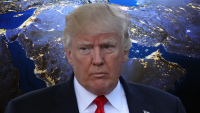
Last week, after Trump met with Chinese President Xi Jinping, the U.S. reportedly approved renewed shipments of Nvidia’s H200 GPUs to China. That sparked immediate interest from Chinese technology giants including Alibaba (NYSE:BABA), JD.com (NASDAQ:JD), Lenovo, and ByteDance. On paper, it looked like a major win for Nvidia shareholders.
But China appears far less eager than expected to reopen the floodgates. Now we may know the reason why.
During the years U.S. restrictions were in place, Beijing aggressively pushed domestic companies toward local chip suppliers. China used necessity to build its own semiconductor ecosystem and the strategy may have worked better and faster than many expected.
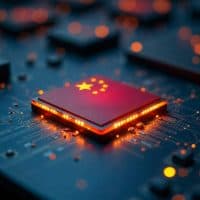
According to Morgan Stanley data reported by Bloomberg, China’s self-sufficiency ratio for AI chips reached 41% this year, four times greater than where it stood five years ago. Morgan Stanley expects that figure to more than double again by 2028 and hit 85%. That changes the entire equation.
China Doesn’t Need Nvidia the Way It Once Did
The biggest beneficiary of the restrictions may not have been Nvidia’s competitors in the U.S. It may have been China’s own semiconductor industry, led by companies like Huawei Technologies.
Huawei’s Ascend AI chips increasingly power domestic AI workloads, while Chinese cloud providers and data center operators have adapted their software stacks around local hardware. Granted, Nvidia’s GPUs still lead in performance and software ecosystem support. CUDA remains deeply entrenched across AI development. And as we saw, when Chinese companies have the chance to get access to Nvidia chips, they jump at it.
That said, governments rarely spend years building domestic supply chains only to reverse course overnight.
In any case, China now has leverage it lacked three years ago. If domestic suppliers can meet even 70% to 85% of local demand within a few years, Nvidia’s pricing power and negotiating position weaken.
For Nvidia investors, this does not suddenly derail the AI boom. The company still dominates globally, with gross margins of 75% and free cash flow that exceeded $96 billion over the past year. Few companies possess that kind of scale.
But regardless of how you look at it, China increasingly resembles a permanently smaller opportunity than Wall Street once imagined.
Key Takeaway
In short, the U.S. effort to curb China’s AI ambitions may have accelerated China’s push toward semiconductor independence instead. Nvidia remains the dominant AI chipmaker globally, and demand from U.S. hyperscalers like Microsoft (NASDAQ:MSFT), Amazon (NASDAQ:AMZN) and Meta Platforms (NASDAQ:META) continues to fuel enormous growth.
But investors should recognize that China is no longer the guaranteed growth market it once was for Nvidia. The market didn’t disappear because demand vanished. It disappeared because customers learned to survive without American chips.
Contact [email protected] for any questions or corrections.
After two decades of patrolling the dark corners of suburbia as a police officer, Rich Duprey hung up his badge and gun to begin writing full time about stocks and investing. For the past 20 years, he’s been cruising the markets looking for companies to lock up as long-term holdings in a portfolio while writing extensively on the broad sectors of consumer goods, technology, and industrials. Because his experience isn’t from the typical financial analyst track, Rich is able to break down complex topics into understandable and useful action points for the average investor. His writings have appeared on The Motley Fool, InvestorPlace, Yahoo! Finance, Money Morning, and, of course, 24/7 Wall St. He has been featured in both U.S. and international publications, including MarketWatch, Financial Times, Forbes, Fast Company, and USA Today.