Prediction. The Warsh Fed Trade Is Just Getting Started and These 3 Bank Stocks Under $55 Have the Most to Gain
Treasury yields are climbing as traders position for the Kevin Warsh appointment to the Federal Reserve, with markets pricing in a more growth-friendly path that could steepen the yield curve and reprice fixed-rate bank assets at higher levels. The 10Y-2Y…

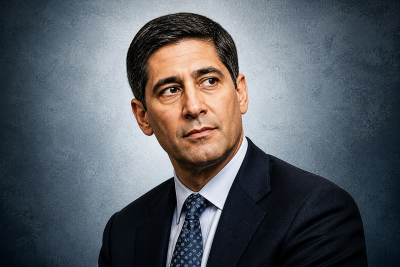
Treasury yields are climbing as traders position for the Kevin Warsh appointment to the Federal Reserve, with markets pricing in a more growth-friendly path that could steepen the yield curve and reprice fixed-rate bank assets at higher levels. The 10Y-2Y spread sat at 0.47% on May 14, 2026, with the 2-year yield rising 0.12% over two weeks versus just 0.01% on the 3-month, a textbook steepening that historically widens net interest margins for lenders. Bank stocks trading under $55 are a logical place to scan for upside before that re-rating plays out.
With that backdrop in mind, here are three bank stocks trading under $55 that analysts and recent earnings suggest are positioned to benefit if the Warsh trade keeps pressuring Treasury yields higher.
Truist Financial (NYSE: TFC)
Truist Financial (NYSE:TFC | TFC Price Prediction) is a Charlotte-based top-10 U.S. commercial bank covering consumer, commercial, wealth, and investment banking. Shares recently closed above $47, well under the $55 ceiling and giving retail investors a sub-$50 entry into a $549 billion-asset franchise.
Q1 2026 was a clean beat. Truist reported EPS of $1.09 versus a $1.0002 estimate, a 25% YoY EPS jump, and 250 basis points of positive operating leverage. Investment banking and trading revenue surged 36.3% YoY to $372 million, and management raised the buyback authorization to $5 billion from $4 billion. CEO Bill Rogers said the company is “establishing a long-term ROTCE target of 16% to 18%”.
The bull case rests on fixed-rate asset repricing into a steeper curve, plus accelerating capital return. The risk: nonperforming loans ticked up to 0.50% from 0.48% sequentially, and shares are down 2.24% YTD despite the earnings beat. For investors researching regional bank exposure, TFC offers a credible setup at a discount to recent levels.
Bank of Chile (NYSE: BCH)
Bank of Chile (NYSE:BCH) is the largest Chilean bank by most measures, running retail, wholesale, wealth, and payments operations including Banchile Pagos. The ADR traded at $36.40 on May 14, 2026, comfortably under the ceiling and offering geographic diversification away from the U.S. rate cycle.
Q1 2026 was mixed. EPS estimates sat at $0.6296, and reported results missed at $0.57 on inflation-linked income compression. But management raised FY2026 ROAC guidance to 21.5%-22.5% from 19-21%, with an industry-best cost-to-income ratio of 38.4% versus an industry average of 46.1%. Higher expected Chilean inflation (~4.3%) is becoming a tailwind for inflation-indexed assets.
The bull case combines the upgraded ROAC, an 84.7% dividend payout ratio, and a dominant local franchise. The risk: Chilean GDP forecasts were trimmed to 2.1%, and proposed corporate tax changes could pressure earnings. Shares are up 21.92% over the past year, suggesting the upgrade cycle is already drawing attention.
Bank of America (NYSE: BAC)
Bank of America (NYSE:BAC) is the diversified mega-cap with consumer banking, Merrill wealth, global banking, and global markets under one roof. Even at scale, shares trade at $49.85 as of May 14, 2026, slipping under the $55 ceiling after an 8.84% YTD decline.
The Q1 2026 numbers were broad-based. Revenue rose 7% YoY to $30.272 billion, net income climbed 17% to $8.584 billion, and EPS hit $1.11. NII grew 9% to $15.74 billion, equities trading rose 30%, and investment banking fees climbed 21%. CEO Brian Moynihan noted “healthy client activity, including solid consumer spending and stable asset quality, indicating a resilient American economy.” The bank returned $9.30 billion to shareholders, including $7.2 billion in buybacks.
The bull case is a diversified franchise compounding on multiple fronts with the Warsh-driven curve steepening as kicker. The risk is symmetric: a 100 basis point parallel decline in rates would shave roughly $2.0 billion off NII over 12 months, so a dovish surprise cuts both ways.
The Warsh narrative and recent Treasury yield action are tailwinds for bank net interest margins, but they are not guarantees, and each of these names carries idiosyncratic credit, macro, and rate-sensitivity risk. Investors should pair this framework with their own research before acting.
Contact [email protected] for any questions or corrections.
Alex Sirois is a financial writer with experience spanning both retail and institutional investing. He has written for InvestorPlace and held roles at BNY Mellon and Bernstein, giving him a perspective that bridges Main Street portfolios and Wall Street analysis.
Alex holds an MBA from George Washington University and has built his career across multiple industries, including e-commerce, education, and translation — a breadth of experience that informs how he breaks down complex financial topics for everyday investors. His writing is conversational, actionable, and grounded in long-term, buy-and-hold investing principles.
At 247 Wall St., Alex focuses on delivering analysis that is both accessible and useful, with a clear emphasis on helping readers make more informed decisions with their money.