The Professor Who Tracks Every US IPO Just Issued a Warning on SpaceX: “Most of the Time, Things Don’t Go According to Plan.”
Wall Street braces for what could be the largest stock market debut in history, but the most cited academic on US IPO performance is warning buyers to sit on their hands. SpaceX is reportedly targeting a valuation of roughly $1.75…

Wall Street braces for what could be the largest stock market debut in history, but the most cited academic on US IPO performance is warning buyers to sit on their hands.
SpaceX is reportedly targeting a valuation of roughly $1.75 trillion in its planned offering, and Reuters this morning lined the deal up against three historical mega-IPOs: Alibaba Group (NYSE:BABA | BABA Price Prediction), Visa (NYSE:V), and Facebook (now Meta Platforms (NASDAQ:META)) Alibaba, Visa, and Facebook (now Meta Platforms).
The professor who tracks every US IPO ever filed is unimpressed with the comparison set.
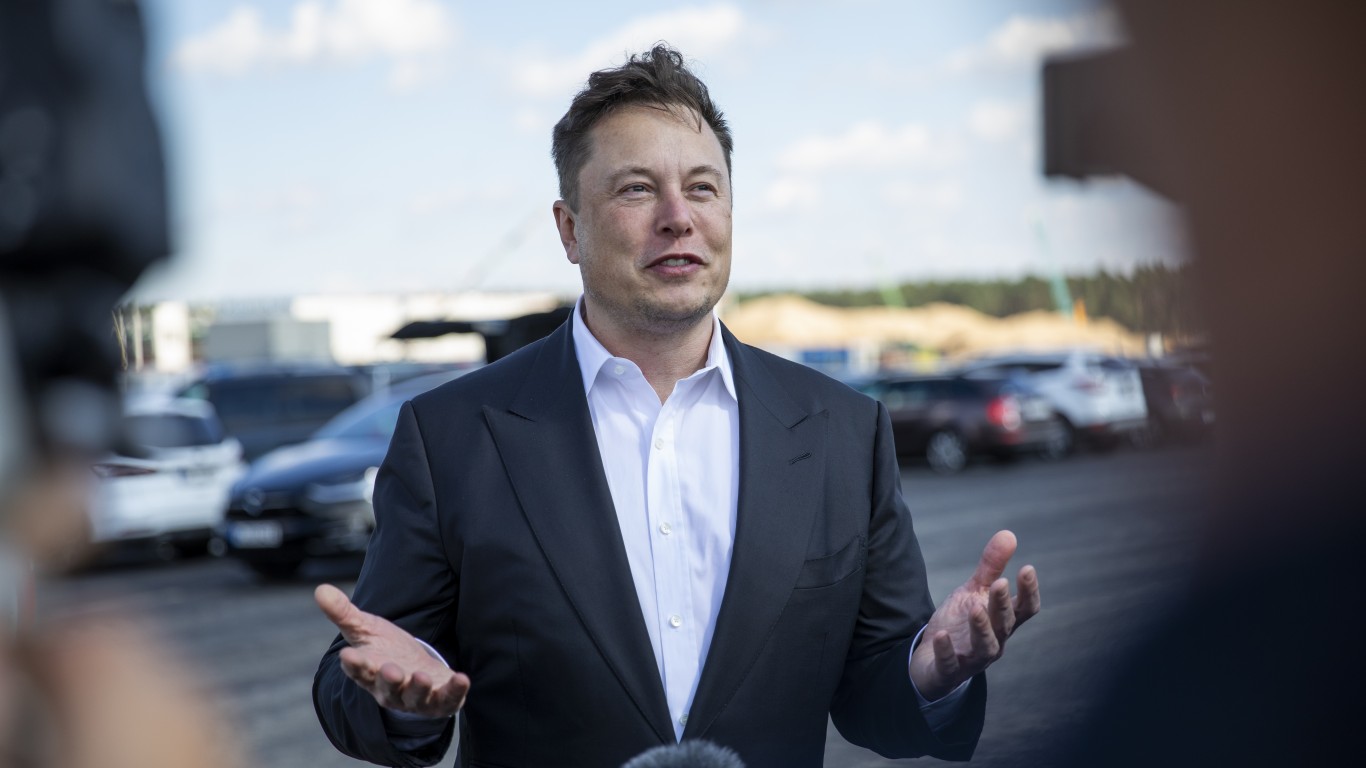
His name is Jay Ritter, the Cordell Professor of Finance at the University of Florida’s Warrington College of Business, often called “Mr. IPO” in academic finance for maintaining the most comprehensive public database of US offerings.
“All of these companies have had a compelling story for why rapid growth and big future profits might happen. But when a company goes public at such a high valuation, lots of things have to go right,” Ritter said. “Revenue has to grow enormously, and costs have to grow more slowly. Most of the time, things don’t go according to plan.”
Ritter pointed at three specific names. Let’s test his claim against the actual numbers.
The Test: Three Mega-IPOs, Three Different Endings
Reuters chose these comps for a reason. Each priced as one of the biggest debuts of its era, each carrying a story that justified a premium. Here is the verified, dividend-adjusted total return from IPO day to May 14, 2026, alongside the S&P 500 over the same window.
| Company | IPO Date | Return to Date | SPY Same Window |
|---|---|---|---|
| Visa | March 19, 2008 | +2,502% | +474% |
| Meta | May 18, 2012 | +1,530% | +477% |
| Alibaba | September 19, 2014 | +58% | +273% |
Two generational winners. One painful laggard.
Visa: A Great Business Priced Into a Crisis
Visa priced at $44 in March 2008, then the largest US IPO ever at $17.9 billion. Six months later, Lehman Brothers collapsed. Anyone who bought at the open got an immediate macro gut-punch. The eventual outcome was extraordinary. Visa today carries a market cap of $609 billion, a trailing P/E of 28, and a operating margin of 67%. The most recent quarter logged $10.90 billion in net revenue, up 14.6% year over year, and CEO Ryan McInerney described the company as a “payments hyperscaler.”
Ritter’s warning was right in the short run and wrong in the long run.
Meta: The Most Famous Botched IPO in Modern History
Meta Platforms priced at $38 on May 18, 2012, drowned in Nasdaq trading glitches on debut day, and bottomed near $17.55 in September 2012. The stock traded below its IPO price for more than a year. I’ve been holding Meta since December 2022 and watched the long-memory crowd on this name slowly get rewarded. The company now sits at a $1.36 trillion market cap with a P/E of 22, last quarter posting EPS of $10.44 against a $6.66 consensus and revenue of $56.31 billion, up 33.1% year over year.

Mark Zuckerberg described last quarter as “a milestone quarter with strong momentum across our apps and the release of our first model from Meta Superintelligence Labs.” Same story as Visa. Brutal opening act. Beautiful third act for anyone who could stomach a 16-month underwater stretch.
Alibaba: The Stock That Proves Ritter’s Point
Alibaba is where the warning lands cleanly. It priced at $68 on September 19, 2014, in what was then the largest IPO in world history at $25 billion. It peaked above $300 in October 2020, then a Chinese regulatory crackdown sent the stock packing. Nearly 12 years in, a buyer is up only 58% while the S&P 500 returned 273% on the same dollars.
The fundamentals tell you why patience is still hard. Last quarter showed EPS of just $0.09, an operating loss of $123 million, and free cash flow of negative $2.51 billion as the company races to fund AI infrastructure.
Where Ritter Is Right, and Where He’s Too Broad
Ritter’s claim that “most of the time, things don’t go according to plan” survives this test with one qualifier. In the short run, he is almost always right, even on the eventual winners. Visa got Lehman. Meta got the glitch and a year underwater. Alibaba got Beijing. The early years are usually rough.
In the long run, the outcome bifurcates. You get a Visa or a Meta, or you get an Alibaba that lags the index for over a decade. Ritter’s own research documents that IPOs as a class tend to underperform style-matched portfolios over three to five years post-IPO. The headline winners are real. The median experience looks a lot more like Alibaba.
What This Means for a SpaceX Buyer at $1.75 Trillion
A buyer on day one of a $1.75 trillion SpaceX IPO is making two distinct bets. The first is that SpaceX lands on the Visa-Meta side of the bifurcation rather than the Alibaba side. The second is that the buyer can sit through the early-years drawdown that even the eventual winners delivered. Long term, Wall Street still heads higher, and a handful of mega-IPOs still mint generational wealth. The honest read of the receipts is that Ritter has earned the right to be heard, and the data on his desk is the data on this page.
Contact [email protected] for any questions or corrections.
I've been writing about stocks and personal finance for 20+ years. I believe all great companies are tech companies in the long run, and I invest accordingly.