Forget SpaceX: These IPOs Turned Every $10,000 Into More Than $1 Million
Big IPOs have a way of making investors dream big. And few offerings have generated more anticipation than SpaceX, which is expected to begin trading on June 12. The leading space company could raise roughly $25 billion at a valuation…


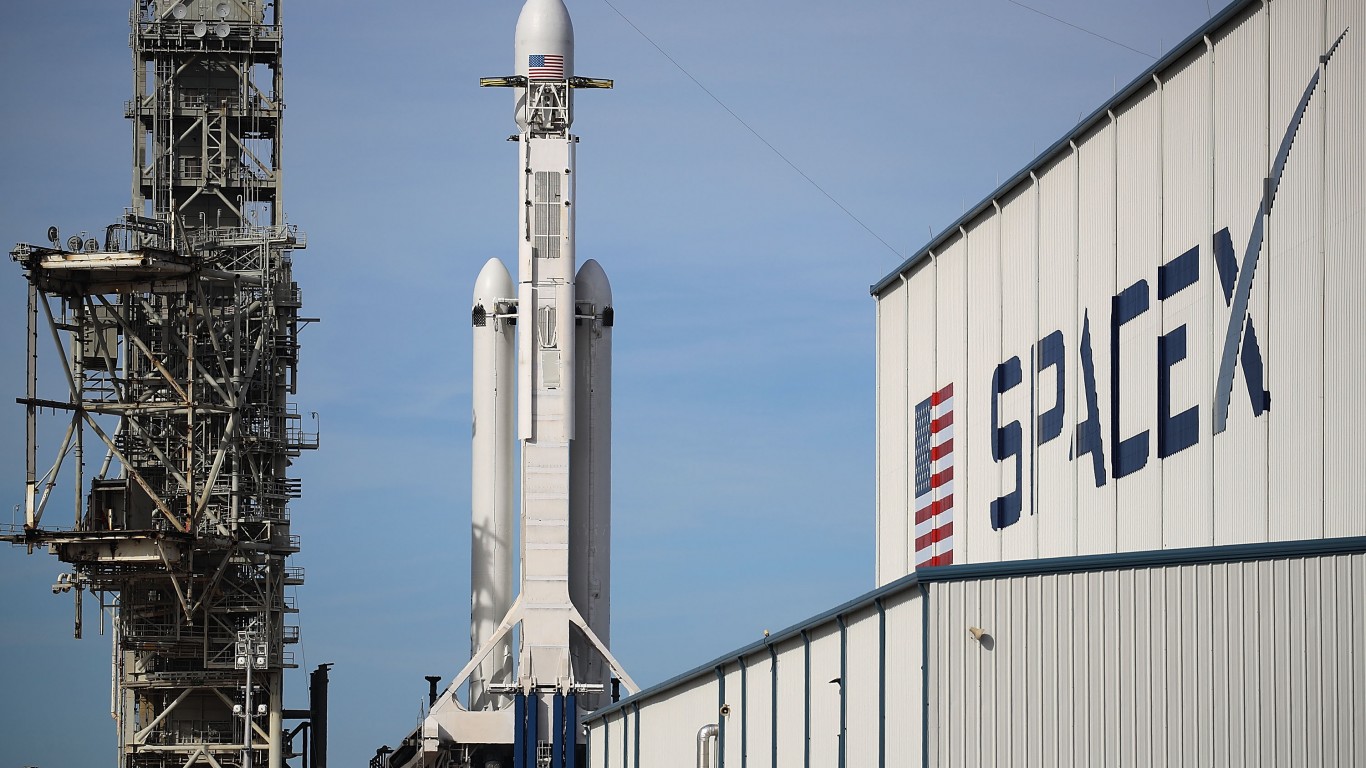
Big IPOs have a way of making investors dream big. And few offerings have generated more anticipation than SpaceX, which is expected to begin trading on June 12. The leading space company could raise roughly $25 billion at a valuation approaching $2 trillion, making it the largest public debut ever.
That size matters. Historically, mega IPOs often struggle to outperform after listing because so much future growth is already priced into the shares. The bigger the valuation, the harder it becomes to keep delivering market-beating returns. That doesn’t mean SpaceX can’t succeed. It just means investors expecting another overnight Nvidia-style run may want to reset expectations.
Still, history shows smaller, innovative IPOs have occasionally turned modest investments into fortunes. Let’s look at six that transformed every $10,000 invested at their IPO into more than $1 million today.
The IPOs That Created Millionaires
Here’s what the numbers tell us:
| Company | IPO Year | IPO Investment Worth Today |
| Walmart (NYSE:WMT | WMT Price Prediction) | 1970 | $489 million |
| Coca-Cola (NYSE:KO) | 1919 | $186 million |
| McDonald’s (NYSE:MCD) | 1965 | $91 million |
| Home Depot (NYSE:HD) | 1981 | $85 million |
| Nvidia (NASDAQ:NVDA) | 1999 | $56 million |
| Microsoft (NASDAQ:MSFT) | 1986 | $42 million |
Microsoft debuted at roughly $780 million. Nvidia entered public markets valued below $700 million.
Compare that with SpaceX potentially debuting near $2 trillion. Investors aren’t buying an undiscovered growth story. They’re buying a company already considered one of the world’s most valuable enterprises.
Why These Companies Became Monster Winners
What stands out is that these companies weren’t flashy trillion-dollar giants when they debuted. They were category disruptors entering massive markets with plenty of room to expand.
Walmart and Coca-Cola Focus on Consumers
Walmart practically reinvented retail logistics. The company built a distribution network competitors couldn’t match, allowing it to expand aggressively into rural America before moving upscale. Today, Walmart generates more than $725 billion in trailing revenue.
Coca-Cola became one of the most recognizable consumer brands in history by pairing global distribution with a product that costs pennies to make but sells billions of servings annually. That business model helped Coca-Cola raise its dividend for 64 consecutive years.
McDonald’s and Home Depot Mastered Dominant, Scalable Business Models
McDonald’s mastered franchising. That means it figured out how to expand globally while having franchisees shoulder much of the restaurant-level operating cost. The result is a business that produced $12.7 billion in trailing operating income.
Home Depot capitalized on the rise of do-it-yourself home improvement and professional contractor demand. Since its 1981 IPO, the company expanded from four Atlanta stores into more than 2,300 locations across North America.
Nvidia and Microsoft Dominate the Tech Landscape
Then there’s Nvidia and Microsoft — two companies that effectively became digital infrastructure.
Microsoft’s Windows operating system became the backbone of personal computing during the PC boom. Nvidia’s graphics processors evolved from gaming chips into the foundation powering artificial intelligence data centers. Nvidia alone generated over $253 billion in revenue over the past 12 months.
SpaceX Faces a Different Challenge
SpaceX absolutely has advantages. It dominates commercial rocket launches through Falcon 9, completing 167 launches last year — more than every other major launch provider combined. It also controls the largest satellite internet network via Starlink.
That said, investors should recognize the math becomes harder at larger valuations. A company worth $2 trillion reaching $10 trillion requires creating $8 trillion in additional shareholder value. That is larger than the entire current market capitalization of most global stock exchanges.
Granted, billionaire investor Ron Baron remains bullish. Baron recently said he believes SpaceX could eventually reach a valuation between $10 trillion and $30 trillion over the next 10 to 15 years because of Starlink, launch dominance, and future Mars-related businesses.
He may be right. Elon Musk has a habit of making impossible timelines merely difficult ones.
Key Takeaway
History’s greatest IPO winners started smaller, grew faster, and entered industries with enormous untapped markets. SpaceX checks many of those boxes — but not the “small” one.
Regardless, smart investors shouldn’t assume a massive IPO automatically produces massive returns. Some do. Many don’t. SpaceX may become one of the most important companies of the next generation, but investors chasing millionaire-making returns should remember that the biggest gains in market history often came before everyone already knew the company’s name.
Contact [email protected] for any questions or corrections.
After two decades of patrolling the dark corners of suburbia as a police officer, Rich Duprey hung up his badge and gun to begin writing full time about stocks and investing. For the past 20 years, he’s been cruising the markets looking for companies to lock up as long-term holdings in a portfolio while writing extensively on the broad sectors of consumer goods, technology, and industrials. Because his experience isn’t from the typical financial analyst track, Rich is able to break down complex topics into understandable and useful action points for the average investor. His writings have appeared on The Motley Fool, InvestorPlace, Yahoo! Finance, Money Morning, and, of course, 24/7 Wall St. He has been featured in both U.S. and international publications, including MarketWatch, Financial Times, Forbes, Fast Company, and USA Today.