Will The Stock Market Crash Before Summer? – 6 Moves For Boomer Investors to Do Now
The “Buy the Dip” financial news teleprompter readers and the 30-year-old portfolio managers who have never seen a market crash are always insisting that stocks are going to the moon. Market veterans and “Hey Boomer” professionals have seen this show…


The “Buy the Dip” financial news teleprompter readers and the 30-year-old portfolio managers who have never seen a market crash are always insisting that stocks are going to the moon. Market veterans and “Hey Boomer” professionals have seen this show before. In 1987, the DJIA plunged by a stunning 22% in a single day. Today, a comparable drop in the venerable index would be 11,013 points. With bond yields at their highest level in over a year, inflation relentlessly rising, profligate government spending, and a stock market way overbought, these issues and others could lead to serious trouble.
From 2007 to 2009, during the height of the mortgage and real estate collapse, which brought us dangerously close to another depression, the market dropped a massive 57%. When the S&P 500 finally bottomed at an ominous intraday low of 666 on March 9th, 2009, we set the floor for the longest bull market in history, which ended in January 2022, but picked right back up in June of that year. Except for the recent 10% decline that began when the war with Iran started, we have been in a huge bull market for almost 4 years, led by technology stocks and Artificial Intelligence hype.
So, where do we stand now? We may be on the precipice of a much more significant decline than we have seen since earlier this year, even as all major indices trade at all-time highs. One positive is that consumers and businesses are generally in reasonably good financial shape. Stock portfolios and home prices have increased dramatically over the last few years, and the economy isn’t teetering on the brink as it was globally in 2008, when Bear Stearns and Lehman Brothers collapsed. To avoid a similar fate, Merrill Lynch was bought by Bank of America. But that all could change, and change fast.
Between the issues with private credit, a potential AI bubble, and an overbought stock market, which is really being forced higher by a handful of stocks, it makes sense to take some precautions now. Boomers are at a juncture in their investing lives where taking a major market crash could destroy the future they worked so hard for. Here are six positive steps for those worried the stock market could crash.
Start building a cash stash now:
One positive is that consumers and businesses are generally in reasonably good financial shape. Stock portfolios and home prices have increased dramatically over the last few years, and the economic system isn’t teetering on the abyss as it was globally in 2008. Matching current losses against gains, even if they are short-term, makes sense to help build up a cash supply. The proverbial dry powder may come in handy down the road. High-yield money market savings pay as much as 5% and are insured up to $250,000. Here are the HYSA’s paying the most from Bankrate.com
- Varo Bank (5.00% APY): Offers 5.00% on balances up to $5,000, requiring qualifying direct deposits.
- AdelFi (5.00% APY): Available to members on balances up to $5,000.
- Pibank (4.40% APY): High rate with no minimum balance, but limits on transaction methods (no ACH).
- Axos Bank (4.21% APY): Offers a high rate, often requiring direct deposits.
- CIT Bank (4.10% APY): Requires a $5,000 minimum balance to earn the top rate.
- Vio Bank (4.03% APY): Strong rate with low minimum balance requirements.
Close out any margin positions immediately:

Margin is the money borrowed from a broker to purchase an investment. When times are good, using margin loans to buy more stock is a bad plan for individual investors, especially when those margin positions are high-volatility momentum stocks. If the market collapses, a highly leveraged margin account could be wiped out.
Gold and Silver still make sense:
Gold is the most popular precious metal investment and has been on a strong upward trend over the last few years. As we have recommended for years at 24/7 Wall St., a gold position helps mitigate the downside, and it always makes sense to keep 3%-5% in stock portfolios. One outstanding way to own physical gold is through the SPDR Gold Shares ETF (NYSE: GLD), which is one of the best pure plays on Gold for investors. The trust that sponsors the fund holds physical gold bullion and a portion of cash. Each share represents one-tenth of an ounce of gold. However, the fund does not pay a dividend.
Make sure investments are reinvested in more shares:
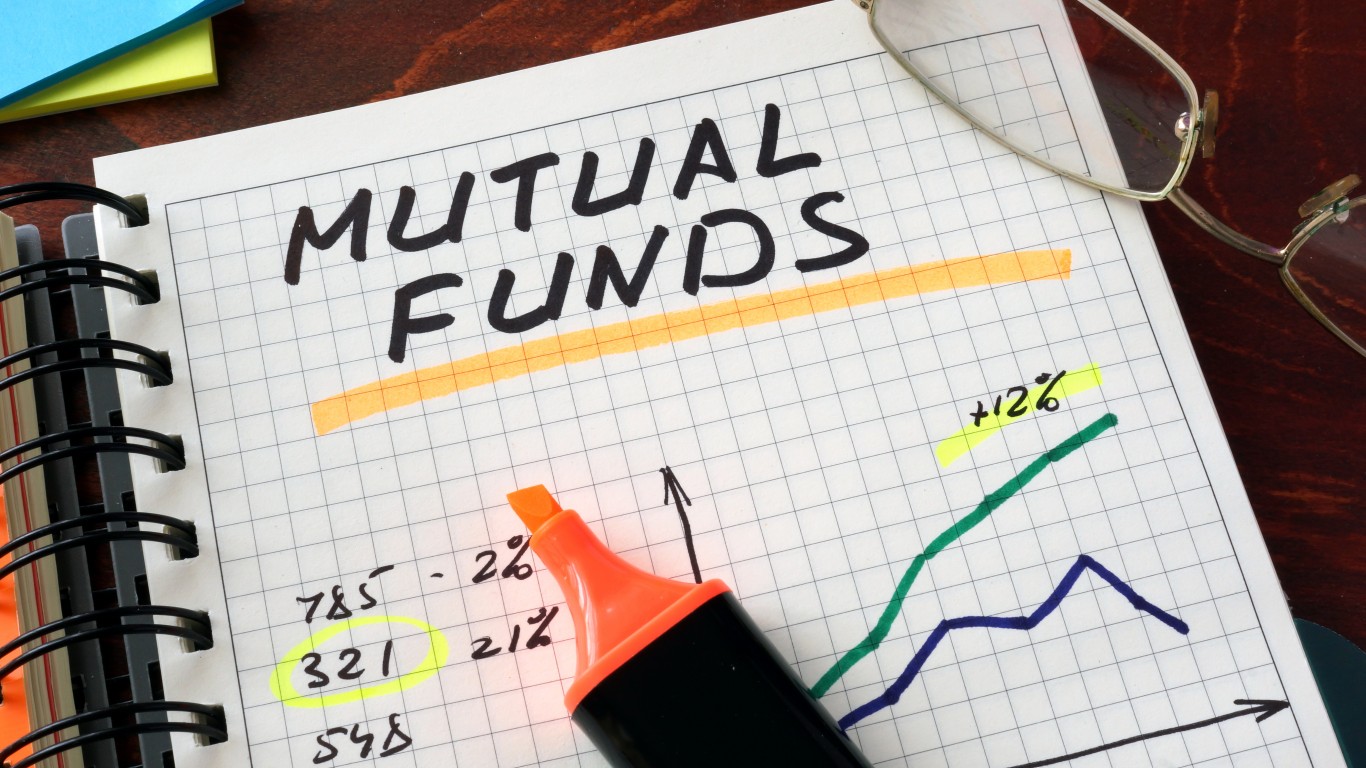
Dividend reinvestment is a great way for investors to grow their wealth steadily. Ensure that all the dividend-paying stock and mutual funds in personal and retirement accounts are coded to reinvest all capital gains and dividends, if possible. This allows you to buy more shares when prices are hit hard. The second quarter is half over, and many stocks and funds pay dividends on a calendar quarterly basis; therefore, be sure to check your accounts today.
Real Estate can help:
Buying and owning real estate is a strategic investment that can be both satisfying and lucrative. Consider real estate instead of the stock market if you have the good fortune to come into a windfall, like an inheritance or something similar. While mortgage rates have increased over the last two years, the 30-year fixed rate reached 7.25% at one point. However, it has fallen back to 6.47% for a 30-year FHA mortgage, and while still reasonable on a historical basis, it’s the highest since the late 1980s and early 1990’s. Owning a cash-generating, passive-income rental property always makes sense if located in the right area.
U.S. Treasury bonds are starting to look very good:
Treasury bonds include a range of debt securities issued and backed by the US government. Sell high-volatility stocks and look at the short end of the Treasury market. The 2-year note, like all Treasury debt, is guaranteed by the full faith and credit of the United States and yields a solid 4.07%. One-year Certificates of Deposit yield as high as 4.05%-4.75%, depending on the deposit amount.
One of the funds we highly recommend at 24/7 Wall St. is the SPDR Bloomberg 1-3 Month T-Bill ETF (NYSE: BIL), which currently yields 3.91%. The fund invests substantially all, but at least 80%, of its total assets in the securities comprising the index and in securities that the Adviser determines to have economic characteristics substantially identical to the financial characteristics of the securities comprising the index. The index measures the performance of U.S. Treasury public obligations with a remaining maturity of 1 month or more but less than 3 months.
Contact [email protected] for any questions or corrections.
Lee Jackson has covered Wall Street analysts' equity and debt research and equity strategy daily for 24/7 Wall St. since 2012. His broad, diverse career, including a stint as creative services director at an NBC affiliate in Austin, Texas, gives him unique insight into the financial industry.
Lee Jackson's journey in the financial industry spans more than 30 years, including nearly two decades as an institutional equity salesperson at Bear Stearns, Lehman Brothers, and Morgan Stanley. His career spanned pivotal sell-side Wall Street events, from the dot-com rise and bubble to the Long-Term Capital Management debacle, 9/11, and the Great Recession of 2008. This reflects his resilience and adaptability amid market volatility.
Lee Jackson’s practical financial industry experience, gained through a career at some of the biggest banks and brokerage firms, is complemented by a lifetime of writing across various platforms. This unique combination allows him to shed light on the intricacies of Wall Street in a way only someone with deep insider experience and knowledge can. Moreover, his extensive network across Wall Street continues to provide direct access for him and 24/7 Wall St., a privilege few firms enjoy.
Since 2012, Jackson’s work for 24/7 Wall St. has been featured in Barron’s, Yahoo Finance, MarketWatch, Business Insider, TradingView, Real Money, The Street, Seeking Alpha, Benzinga, and other media outlets. He attended the prestigious Cranbrook Schools in Bloomfield Hills, Michigan, and has a degree in broadcasting from the Specs Howard School of Media Arts.