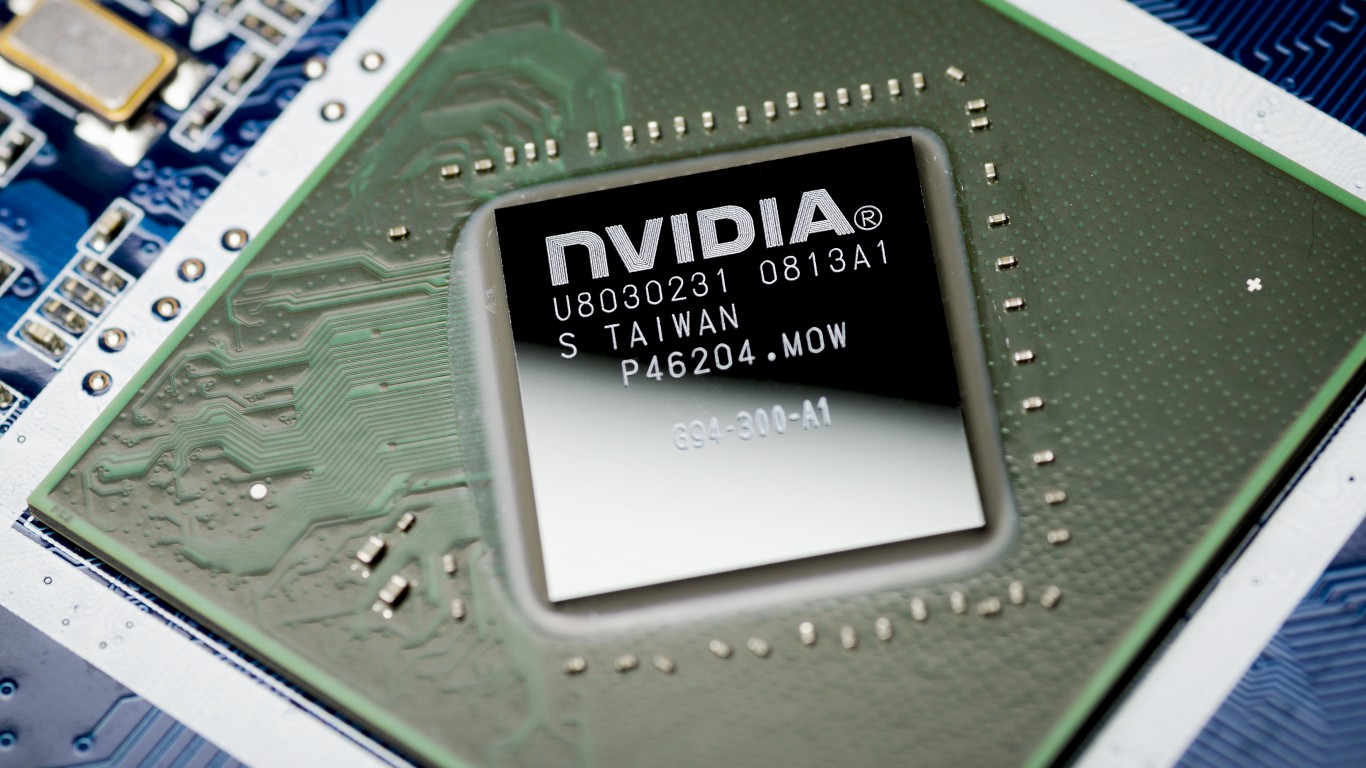
Bill Ackman’s Microsoft Buy Just Told Everyone The Real Story on Nvidia’s Geopolitical Risk
NVIDIA (NASDAQ:NVDA | NVDA Price Prediction) is the stock everyone wants to talk about right now, riding a 65.53% one-year run and a $5.46 trillion market cap into another blockbuster earnings cycle. The setup underneath that run is more fragile…

NVIDIA (NASDAQ:NVDA | NVDA Price Prediction) is the stock everyone wants to talk about right now, riding a 65.53% one-year run and a $5.46 trillion market cap into another blockbuster earnings cycle.
The setup underneath that run is more fragile than the headline numbers suggest.
The NVDA Trade Is Crowded and Exposed
Jensen Huang is calling this an “AI industrial revolution” and saying “Blackwell sales are off the charts.” That is peak-cycle language, and seasoned investors have seen this movie before. The numbers behind the narrative are spectacular: $68.13 billion in Q4 revenue, Data Center growth of 75% year over year, and a 75.2% non-GAAP gross margin that any company on earth would envy.
The fundamentals underneath those numbers carry meaningful risk.
NVIDIA’s Q1 FY2027 guidance of roughly $78 billion in revenue explicitly excludes any Data Center compute revenue from China. When management itself zeroes out a major geography in forward guidance, that is the company telling you the regulatory picture is too murky to model. Add an $8 billion H20 revenue hit in Q2, a $4.5 billion charge before it, and the bulk of Blackwell production still tied to TSMC in Taiwan, and you have a stock trading at a 46x trailing P/E with the most concentrated geopolitical risk in mega-cap tech. Until there is clarity on Washington’s Taiwan posture and the export-controls regime, paying up here is paying for a story the company cannot fully underwrite.
Why Ackman Is Building a Microsoft Position
Bill Ackman’s Pershing Square has reportedly been building a position in Microsoft (NASDAQ:MSFT), and the setup looks more durable for long-duration investors: more durable, less reliant on a single foundry an ocean away, and trading at a forward P/E of 21 after a 11.26% drawdown year to date.
Three reasons Microsoft screens more favorably on the fundamentals right now:
- A contracted backlog underpins growth. Microsoft’s commercial remaining performance obligation hit $627 billion, up 99% year over year. That is signed customer money. Compare that to NVIDIA’s revenue, which has to be re-won every product cycle.
- A diversified moat. Azure grew 40% year over year, the AI business hit a $37 billion annual run rate, up 123%, and Microsoft 365 Copilot is now at over 20 million paid seats. Office, LinkedIn, GitHub, Dynamics, and Xbox keep the cash flowing even if AI cap-ex digestion gets ugly. NVIDIA gets roughly 91% of revenue from one segment.
- The OpenAI deal captures AI upside without Taiwan risk. Microsoft holds a stake worth roughly $135 billion, has a contracted $250 billion incremental Azure commitment from OpenAI, and Satya Nadella confirmed “a frontier model royalty-free with all the IP rights that we will have access to all the way to ’32.” That is AI exposure that does not depend on a single fab in Hsinchu.
Microsoft also pays you to wait, returning real capital through a $3.56 annual dividend versus NVIDIA’s nominal $0.04. Operating margins of 46.3%, return on equity of 34%, and a debt-to-equity ratio of 0.33 describe a fortress balance sheet.
The Action
Microsoft offers a more diversified setup for Magnificent 7 exposure, while NVIDIA’s risk/reward may look clearer once Washington’s Taiwan posture is no longer a guessing game.
Contact [email protected] for any questions or corrections.
Alex Sirois is a financial writer with experience spanning both retail and institutional investing. He has written for InvestorPlace and held roles at BNY Mellon and Bernstein, giving him a perspective that bridges Main Street portfolios and Wall Street analysis.
Alex holds an MBA from George Washington University and has built his career across multiple industries, including e-commerce, education, and translation — a breadth of experience that informs how he breaks down complex financial topics for everyday investors. His writing is conversational, actionable, and grounded in long-term, buy-and-hold investing principles.
At 247 Wall St., Alex focuses on delivering analysis that is both accessible and useful, with a clear emphasis on helping readers make more informed decisions with their money.