Xi Warns Trump of Possible “Clash” Over Taiwan Just Hours Before Banquet Toast
Hours before lifting a glass with President Trump at a state banquet in Beijing’s Great Hall of the People on Thursday, Chinese leader Xi Jinping delivered a pointed warning about Taiwan. If the issue is “handled poorly,” Xi said, the…

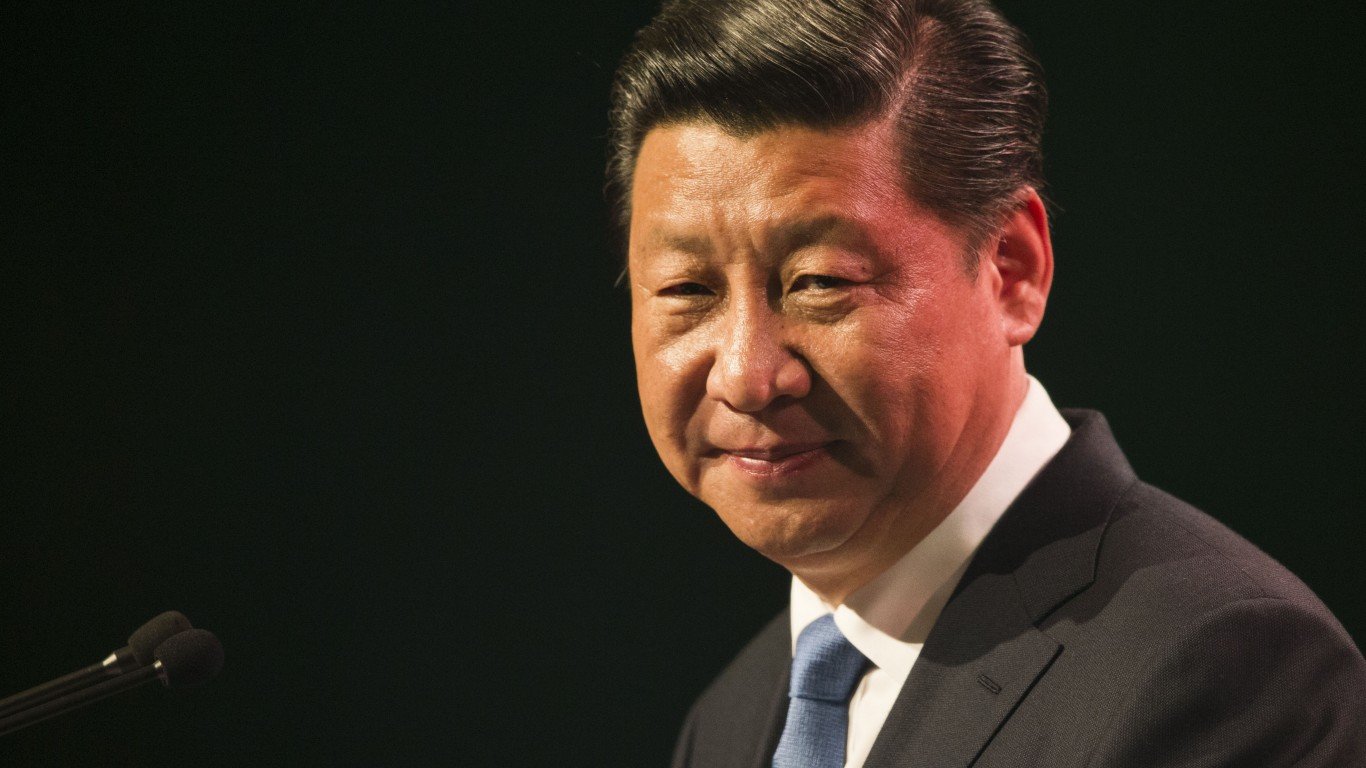
Hours before lifting a glass with President Trump at a state banquet in Beijing’s Great Hall of the People on Thursday, Chinese leader Xi Jinping delivered a pointed warning about Taiwan. If the issue is “handled poorly,” Xi said, the two countries could “collide or even clash,” putting the entire U.S.-China relationship in “an extremely dangerous situation.”
The remarks, carried by Xinhua, China’s official news agency, came during the first U.S. presidential visit to China in nearly a decade. By evening, the tone had shifted to toasts and choreographed warmth, with Trump inviting Xi to the White House on Sept. 24. But the daylight warning is the part that matters for American businesses, investors, and consumers.
Why Taiwan Sits at the Center of the U.S. Economy
Most Americans think of Taiwan as a geopolitical flashpoint. It is also one of the country’s most important economic partners. Taiwan was the fifth-largest U.S. goods trading partner in 2025, according to data from the Congressional Research Service, with $256.1 billion in two-way goods trade. U.S. imports from Taiwan totaled $201.4 billion that year, up 73.3% from 2024.
Taiwan is also the 10th-largest foreign holder of U.S. Treasuries, with $310.6 billion in holdings as of December 2025.
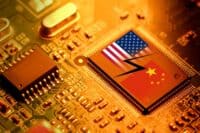
The bigger story sits inside the supply chain. Taiwan produces the chips that power nearly every advanced device in American life, from iPhones to data center servers running artificial intelligence.
The TSMC Chokepoint
Taiwan Semiconductor Manufacturing Company, known as TSMC, captured roughly 70% of the global foundry market in 2025, according to research firm TrendForce. Its closest competitor, Samsung, sat at about 7%.
TSMC manufactures the most advanced chips on the planet, and the list of its customers reads like a roster of America’s largest companies. Apple (AAPL) builds its A-series and M-series chips at TSMC’s facilities. NVIDIA (NVDA), which is poised to overtake Apple as TSMC’s top customer in 2026 according to analyst estimates cited by CNBC, relies on TSMC to make the graphics chips driving the AI boom. AMD (AMD), Broadcom, and Qualcomm also depend on TSMC for their most advanced products.
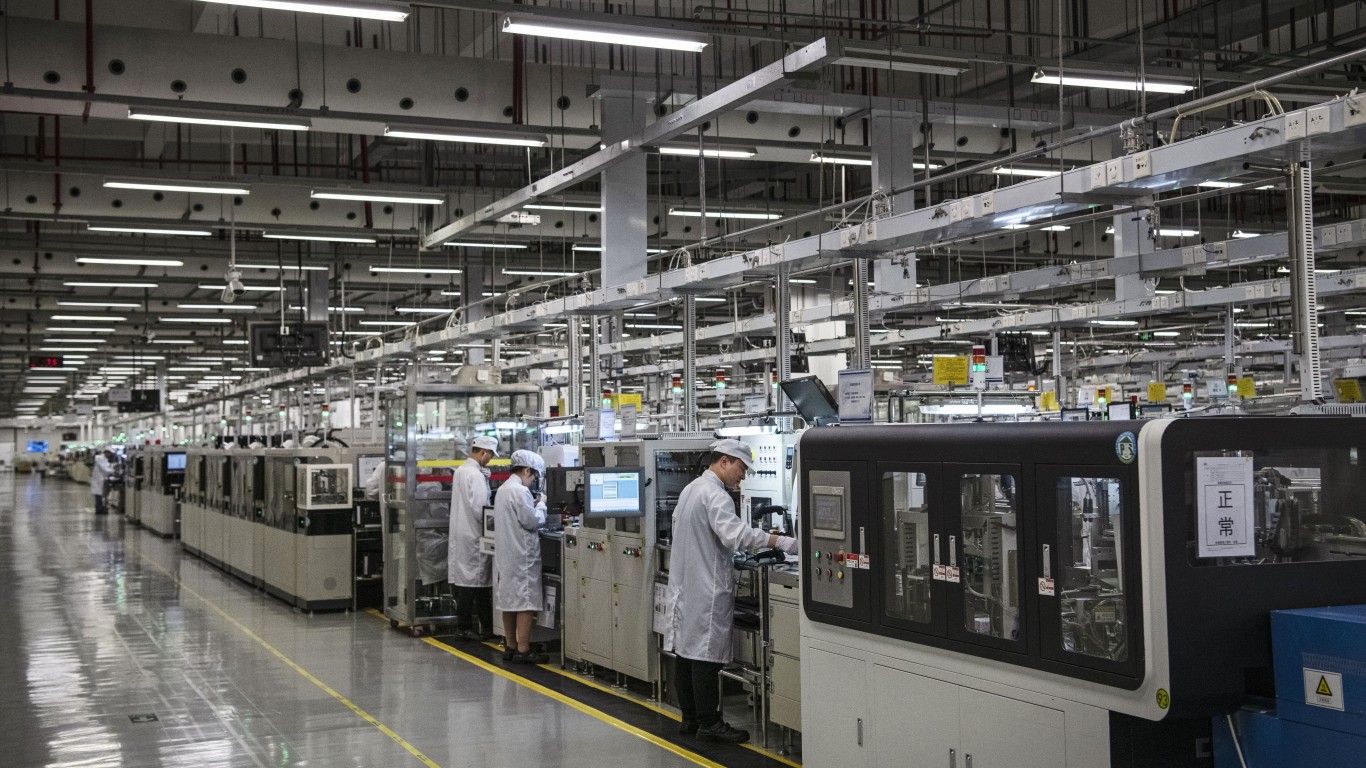
The concentration is geographic as well. Many of TSMC’s most advanced lines sit about 100 miles from mainland China.
The Arizona Hedge
That dependence is one reason Washington and TSMC have moved aggressively to build chip capacity on American soil. TSMC has committed $165 billion to its Arizona complex outside Phoenix, which the company calls the largest foreign direct investment in a greenfield project in U.S. history. The project includes six fabrication plants, two advanced packaging facilities, and a research and development center.
The first Arizona facility is already producing chips for Apple and NVIDIA. But shifting the full leading edge of global chipmaking takes years, and Taiwan remains the critical node for the most advanced production.
The Stakes in the Room
That context helps explain who was at the banquet. Tim Cook of Apple, Jensen Huang of NVIDIA, and Elon Musk of Tesla all attended. Each runs a company with deep operational ties to Taiwan or mainland China, or both. Huang received a last-minute invitation, which underscored how much the relationship matters to the AI supply chain.
The Trump administration has emphasized a desire to expand U.S. agricultural exports to China, secure market access for American firms, and increase Chinese investment in U.S. industries. Beijing, in turn, has long sought a softer U.S. posture on Taiwan.
Xi’s warning made clear that the Taiwan question has not been parked while the trade conversation moves forward. For the U.S. economy, the day’s pageantry was the easy part. The harder math is what happens to American companies, jobs, and prices if the warning ever becomes more than words.
Contact [email protected] for any questions or corrections.
Don Lair writes about options income, dividend strategy, and the kind of boring-but-durable investing that actually funds retirement. He's the founder of FITools.com, an independent contributor to 24/7 Wall St., and a former writer for The Motley Fool.