Forget Boeing. Every Plane Trump Just Sold to China Needs a GE Engine and GE Is Already Making Money
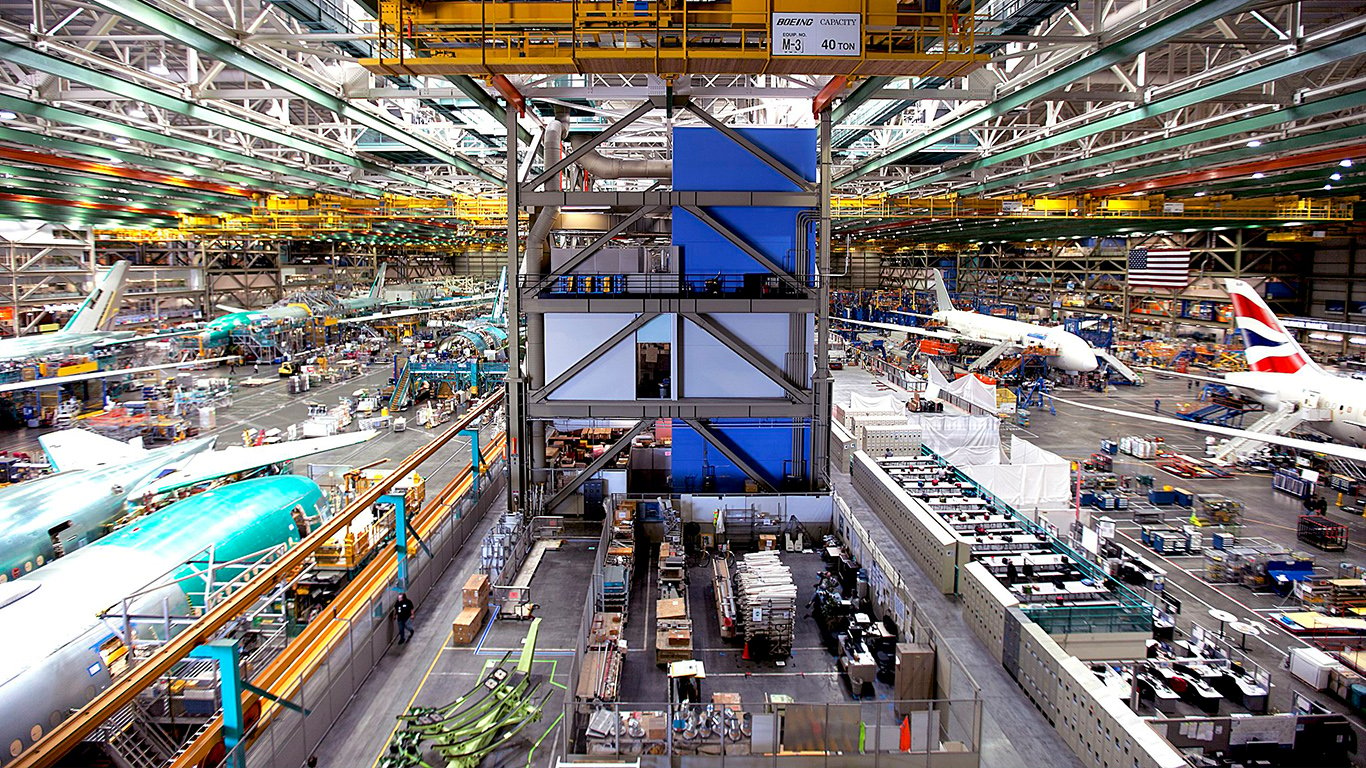
Everyone is talking about Boeing (NYSE:BA | BA Price Prediction) after President Trump’s China trip produced headlines about an initial order for 200 aircraft, with the possibility of expanding the deal to 750, the first major Boeing sale to China…


Everyone is talking about Boeing (NYSE:BA | BA Price Prediction) after President Trump’s China trip produced headlines about an initial order for 200 aircraft, with the possibility of expanding the deal to 750, the first major Boeing sale to China in nearly a decade. The financials tell a different story.
The Boeing story sounds great in a press release. Read the actual financials and the picture changes fast. In the most recent quarter, Boeing posted a core loss per share of $0.20 and burned $1.454 billion in free cash flow, while still carrying $47.2 billion in consolidated debt. The Commercial Airplanes segment, the part of the business that’s supposed to benefit from the China headlines, is still running at a negative 6.1% operating margin. Certification of the 737-7 and 737-10 has slipped, with first deliveries pushed into 2027, and the 777-9’s first delivery has slid into 2027 as well.
So even if every announced jet eventually gets built, the cash doesn’t show up for years. Meanwhile, the shares already trade at a forward multiple north of 900x earnings. That’s a lot to pay for a story that still has to survive certification, production ramps, and the small matter of China actually signing firm contracts. Right now there is little indication Boeing can convert the headline number into the volume of firm deals the market is pricing in. The risk is that the order count shrinks the closer you look.
Here is the smarter angle for a retirement-focused investor: every Boeing narrow-body that eventually flies needs engines, and most of them carry an engine built by the CFM joint venture, half-owned by GE Aerospace (NYSE:GE). GE Aerospace also powers a huge slice of the Airbus fleet. It is the picks-and-shovels play on global aviation, and it does not need Boeing’s certification calendar to cooperate.
Three reasons GE Aerospace is the better seat on this flight.
First, the cash is real and the beats keep coming. GE has beaten on EPS for four consecutive quarters, most recently delivering $1.86 against a $1.59 estimate. Q1 free cash flow was $1.658 billion, up 27.44%, and management is guiding full-year FCF to $8.0 billion to $8.4 billion while trending toward the high end of the range. Boeing, by contrast, is still burning cash.
Second, the aftermarket is the moat. GE Aerospace sits on a $170 billion commercial services backlog, with services revenue up 39% and total engine deliveries up 43% year over year. Once an engine is on a wing, GE collects high-margin maintenance dollars for decades. That recurring revenue does not care which OEM wins the next press conference.
Third, the customer list keeps getting longer. Recent wins include 300-plus LEAP-1A engines for American Airlines, 300 GEnx for United, 60 GEnx for Delta, a Ryanair long-term materials deal covering roughly 2,000 CFM56 and LEAP engines, and the U.S. Air Force GEK1500 contract for Collaborative Combat Aircraft. Defense and propulsion revenue is growing 19%, giving the business a cycle-resistant second leg.
If Boeing does eventually convert the China headlines into firm orders, GE Aerospace benefits anyway, since the analyst note tied to the deal pegs 400 to 450 engines and long-term maintenance contracts for GE. You get the upside without owning the cash-burning airframer.
The action: skip the Boeing headline and put GE Aerospace on your research short list instead.
Contact [email protected] for any questions or corrections.
Alex Sirois is a financial writer with experience spanning both retail and institutional investing. He has written for InvestorPlace and held roles at BNY Mellon and Bernstein, giving him a perspective that bridges Main Street portfolios and Wall Street analysis.
Alex holds an MBA from George Washington University and has built his career across multiple industries, including e-commerce, education, and translation — a breadth of experience that informs how he breaks down complex financial topics for everyday investors. His writing is conversational, actionable, and grounded in long-term, buy-and-hold investing principles.
At 247 Wall St., Alex focuses on delivering analysis that is both accessible and useful, with a clear emphasis on helping readers make more informed decisions with their money.