Billionaire Stanley Druckenmiller Dumped Every Share of Alphabet. He Bought AI Memory Stocks Up 525% to 3,400% Instead
Stanley Druckenmiller's Duquesne Family Office sold its entire 385,000-share position in Alphabet (NASDAQ:GOOGL) during the first quarter of 2026, redeploying capital into three memory and storage plays: SanDisk (NASDAQ:SNDK), Micron Technology (NASDAQ:MU), and Seagate Technology (NASDAQ:STX), according to the fund's…

This post may contain links from our sponsors and affiliates, and Flywheel Publishing may receive compensation for actions taken through them.

The Trade at a Glance
Stanley Druckenmiller’s Duquesne Family Office sold its entire 385,000-share position in Alphabet (NASDAQ:GOOGL | GOOGL Price Prediction) during the first quarter of 2026, redeploying capital into three memory and storage plays: SanDisk (NASDAQ:SNDK), Micron Technology (NASDAQ:MU), and Seagate Technology (NASDAQ:STX), according to the fund’s Q1 2026 13F filing disclosed in mid-May. For a money manager whose 30-year track record rivals any active investor still working today, walking away from a Magnificent Seven winner to chase commodity hardware looked deliberately contrarian at the time.
The numbers have vindicated the call. As of September 7, 2026, SanDisk trades around $1,734, up roughly 525% year to date and sporting a 52-week range stretching from $64 to $2,354. Micron sits near $1,015, up approximately 252% on the year, with a market capitalization above $1.15 trillion. Seagate trades around $848, up more than 200% year to date. Alphabet returned roughly 50% during Druckenmiller’s holding period. He bought the bottleneck behind the AI winners, wagering that whoever captures the AI workload still needs gigabytes of DRAM to process it, petabytes of NAND to serve it, and exabytes of spinning disk to archive it.

Three Layers of the Memory Stack
Each position targets a distinct physical chokepoint in the AI data center. SanDisk supplies NAND flash memory. The company’s fiscal Q3 2026 results (quarter ended April 3, 2026) delivered a landmark beat: revenue hit $5.95 billion, far exceeding guidance of $4.4 to $4.8 billion and jumping 251% year over year. Datacenter revenue reached $1.47 billion, up 645% year over year, as hyperscalers flooded the company with orders for high-speed enterprise SSDs to support AI inference workloads. CEO David Goeckeler called it a fundamental inflection point, describing a shift from volatile spot NAND sales to multi-year contracted supply agreements that now carry roughly $42 billion in remaining performance obligations.
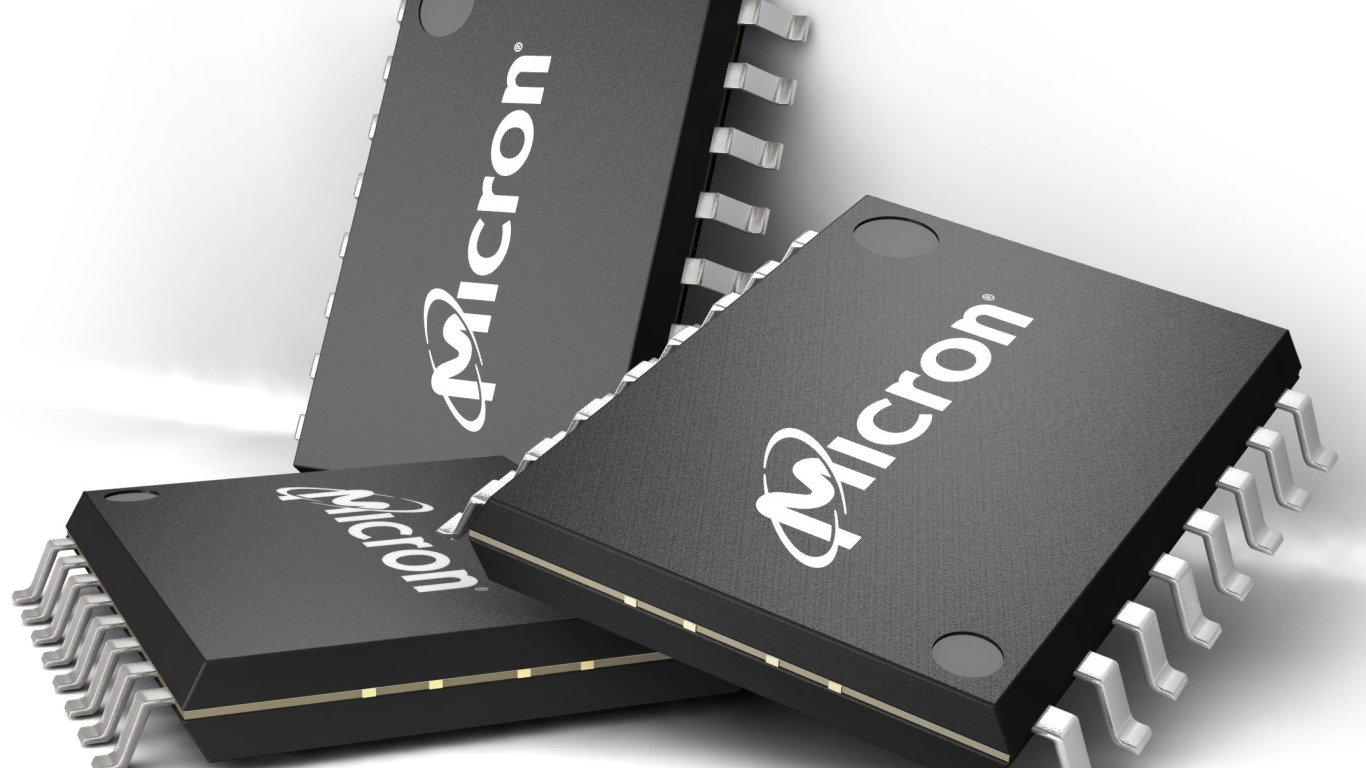
Micron produces DRAM and high-bandwidth memory (HBM), the critical components that sit directly next to AI accelerators. Fiscal Q2 2026 revenue (quarter ended February 27, 2026) reached $23.86 billion, up 196% year over year and 75% sequentially. The Cloud Memory Business Unit alone generated $5.28 billion, nearly doubling year over year at a 66% gross margin. CEO Sanjay Mehrotra has consistently described Micron as an essential AI enabler and the only US-based memory manufacturer at a time when supply constraints span the entire industry. Analysts polled by S&P Global carry a consensus Strong Buy rating with an average 12-month price target of $1,513, roughly 49% above the current share price. The company is scheduled to report fiscal Q3 2026 results on September 30.
Seagate sells high-capacity hard disk drives. Training data, model checkpoints, and archived datasets need to live somewhere cheap and dense. The company’s fiscal year 2026, ended July 3, was its best on record: full-year revenue came in at $12.2 billion, up 34% from $9.1 billion, with free cash flow of $3.1 billion and debt retirement of $1.4 billion. The fiscal Q4 alone produced revenue of $3.63 billion (up 48% year over year) and non-GAAP EPS of $5.71, both surpassing the high end of management’s own guidance. Looking ahead, Seagate guided fiscal Q1 2027 revenue to $4.1 billion and non-GAAP EPS of $7.30, its strongest forward guidance on record, underpinned by the HAMR-based Mozaic platform’s continued ramp with major cloud providers.
The thesis connecting all three is straightforward. Whichever foundation model wins, whichever hyperscaler captures the workloads, every token generated needs DRAM to train it, NAND to serve it, and HDD to archive it. Druckenmiller bet on the infrastructure layer rather than the application layer.
New Catalysts Since the Original Trade Was Disclosed
The three months following the 13F disclosure have brought a wave of new developments that reinforce the original thesis while also raising the stakes for anyone entering at current levels.
SanDisk held its “In Focus” investor day on August 13, 2026, sending shares up more than 10% in a single session. Management outlined a multi-year financial framework targeting mid-to-high teens revenue growth, non-GAAP gross margins of approximately 80%, and non-GAAP operating margins near 75% from fiscal 2028 through 2030. The company committed to returning 100% of excess cash to shareholders after reinvesting in the business. SanDisk has signed its new business model (NBM) agreements with eight customers, locking in roughly half of FY2027 bits and two-thirds of FY2028 bits under committed volumes and minimum financial guarantees. That demand visibility is the structural feature that most differentiates SanDisk from a typical commodity memory producer. Adding to the momentum, SanDisk was announced as a new member of the S&P 100, with inclusion effective September 21, 2026. Bernstein raised its price target to $3,000, and JPMorgan reinstated coverage with an Overweight rating and a $2,250 target.
Seagate drew its own spotlight. After reporting blowout Q4 results at the end of July, CEO Dave Mosley described fiscal 2026 as “an outstanding year” and pointed to AI-driven cloud demand as a structural force rather than a cyclical spike. CNBC’s Jim Cramer called Seagate “the key to this market” following the earnings call, reflecting how decisively the company has repositioned from a sleepy hard-drive maker to a core AI infrastructure holding.
Momentum, Pullbacks, and Cyclical Reality
The parabolic moves have been punctuated by sharp pullbacks, a reminder that memory stocks have always been boom-and-bust trades at heart. From their respective peaks in late June 2026 (SanDisk near $2,354, Micron near $1,255, Seagate near $1,145), all three have corrected meaningfully, with SanDisk now trading roughly 26% below its all-time high. Each pullback has so far attracted fresh buyers, but the corrections are real and the volatility is elevated.
Insider activity adds another note of caution. Micron executives, including CEO Mehrotra, executed 27 separate sell transactions on May 1, 2026, across a price range of $511.91 to $545.39, totaling tens of millions in proceeds. More recently, Seagate insiders made high-profile sales in August 2026. These transactions do not necessarily signal a bearish outlook from management, but they are a reminder that the people closest to the business have been reducing exposure near highs.
Druckenmiller’s reported 13F positions reflect March 31, 2026 holdings, disclosed six weeks later in mid-May. His entry prices came well before the vertical moves in April and May. Investors evaluating these stocks today are paying triple-digit year-to-date premiums on top of enormous prior-year gains, betting the memory upcycle extends through at least 2028 without an inventory correction or a demand pause from hyperscalers. Memory stocks are cyclical. Stretched positioning, extended valuations, and insider sales combine to signal elevated risk even when the fundamental backdrop remains strong.
Worth Following?
The structural case for memory and storage in the AI era has only strengthened since Druckenmiller’s positions were disclosed. AI data centers continue absorbing every available gigabyte of capacity. Pricing remains firm, supply remains constrained, and hyperscaler capital expenditure commitments stay aggressive. The earnings confirm it: gross margins are expanding across all three companies, free cash flow is surging, and forward guidance continues to point to sequential records. Druckenmiller’s signal was never about the precise entry price. It was about recognizing where AI compute economics ultimately flow: into the physical infrastructure that no model can run without.
The entry price is still the practical problem for anyone looking at these names today. Memory and storage stocks have already run hundreds to thousands of percent from their 2025 lows. Valuations have compressed on a forward basis as earnings estimates have climbed, but cyclical risk has not disappeared. With Micron reporting at the end of September and SanDisk set to join the S&P 100, near-term catalysts exist in both directions. A pullback that resets the risk-reward to more reasonable levels would offer a cleaner setup than chasing stocks that have already delivered most of their cycle returns.
Editor’s note: Stock prices, year-to-date performance figures, and analyst price targets have been refreshed to September 7, 2026. This update also adds Seagate’s fiscal Q4 2026 results ($3.63 billion revenue, non-GAAP EPS of $5.71), SanDisk’s August 13 investor day targets (80% gross margins, 75% operating margins through FY2030), SanDisk’s pending S&P 100 inclusion effective September 21, the Bernstein $3,000 and JPMorgan $2,250 price targets on SanDisk, and the Micron consensus analyst price target of $1,513.
Contact [email protected] for any questions or corrections.
Joel South covers large-cap stocks, dividend investing, and major market trends, with a focus on earnings analysis, valuation, and turning complex data into actionable insights for investors.
He brings more than 15 years of experience as an investor and financial journalist, including 12 years at The Motley Fool, where he served as an investment analyst, Bureau Chief, and later led the Fool.com investing news desk. He has also co-hosted an investing podcast and appeared across TV and radio discussing market trends.