John Deere and Starlink: How the Iconic Tractor Maker Quietly Became a SpaceX Partner
I’ve been following Deere (NYSE:DE | DE Price Prediction) for years as a slow-moving industrial bet, and the most interesting line in agriculture right now sits buried inside SpaceX’s S-1 filing, where the iconic green-and-yellow brand shows up as a…


I’ve been following Deere (NYSE:DE | DE Price Prediction) for years as a slow-moving industrial bet, and the most interesting line in agriculture right now sits buried inside SpaceX’s S-1 filing, where the iconic green-and-yellow brand shows up as a Starlink customer.
The partnership hiding in plain sight
SpaceX’s S-1 names John Deere directly. The filing states the company has “partnered with land mobility operators, including John Deere and the California Fire Department” to provide remote monitoring and management of fleets. Starlink’s industrial pitch is straightforward: serve as “a connectivity backbone for connected equipment and telemetry-driven workflows, enabling real-time monitoring and remote operations in agriculture, energy, and logistics environments.”
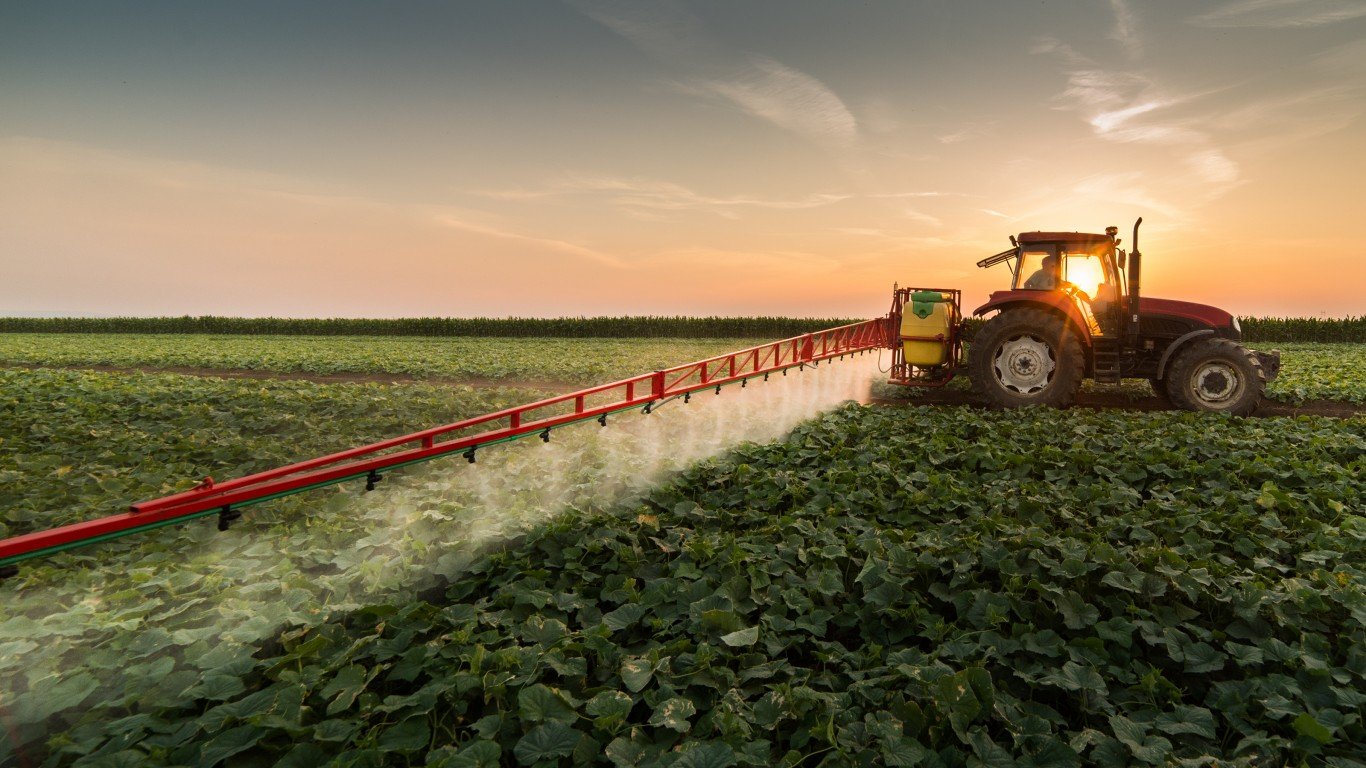
That matters because terrestrial networks cover only approximately 20% of global land mass, and the most valuable acres a Deere combine touches sit firmly outside that footprint. A tractor running See & Spray AI or Harvest Settings Automation is useless if it can’t phone home.
Why connectivity is now Deere’s product
CFO Josh Jepsen put numbers on this shift during the Q1 FY2026 call. Deere hit 500 million engaged acres, with approximately 25% growth in “highly engaged” acres. Jepsen tied that directly to satellite: “Nearly 1/3 of those engaged acres are highly engaged… which speaks to what we’re doing on connectivity and making sure we’re reaching deeper into the fleet.”
Customer behavior is following. 99% of combines ordered through the Early Order Program include some level of harvest automation, with nearly 80% taking the highest “ultimate package.” Think of Starlink as the toll bridge connecting that software to the field.
The financials beneath the bet
Deere posted Q1 FY2026 EPS of $2.42 against a $2.10 consensus on revenue of $9.61 billion, and raised FY2026 net income guidance to $4.5 billion to $5.0 billion. CEO John May framed the cycle bluntly: “2026 represents the bottom of the current cycle and provides us with a strong foundation for accelerated growth going forward.”

Shares are up 21% year-to-date to $560.46, with a market cap near $151 billion.
AGCO’s open-system counterpunch
AGCO (NYSE:AGCO) is attacking from below with PTx Trimble retrofit autonomy. CEO Eric Hansotia said the company “outpaced the market, particularly in high-horsepower equipment and precision agriculture.” AGCO posts Q1 2026 adjusted EPS of $0.94 against a $0.44 estimate, and is targeting $2 billion in precision ag sales by 2029. Its strategy is Android-like openness across mixed fleets. Deere’s is Apple-like vertical integration, now with a Starlink uplink.
What I’m watching
The Starlink line in the S-1 is one sentence. The implication is a decade of moat. If precision agriculture is a software business that ships in green paint, Deere’s SpaceX tie-up is the connectivity layer that makes the rest defensible. If farmers revolt over right-to-repair and pick open ecosystems, AGCO’s retrofit play wins. Either way, the tractor is now a node on a satellite network, and that changes the unit of competition.
Contact [email protected] for any questions or corrections.
I've been writing about stocks and personal finance for 20+ years. I believe all great companies are tech companies in the long run, and I invest accordingly.