Why I Can’t Stop Buying This Dividend Stock
I keep clicking buy on NextEra Energy (NYSE:NEE | NEE Price Prediction), and my brokerage statements prove it. One housekeeping note before the case: the dividend pays on a quarterly schedule, and I want that on the record. What keeps…

I keep clicking buy on NextEra Energy (NYSE:NEE | NEE Price Prediction), and my brokerage statements prove it. One housekeeping note before the case: the dividend pays on a quarterly schedule, and I want that on the record.
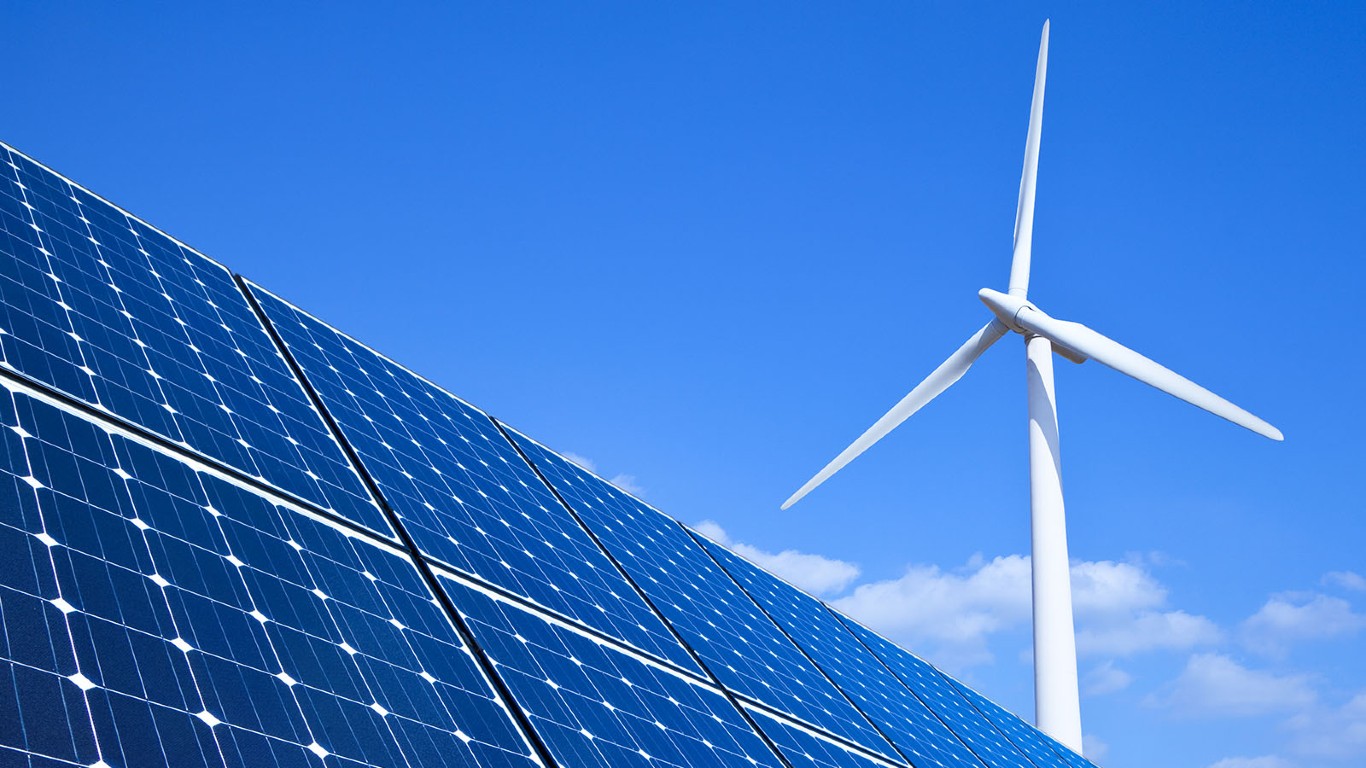
What keeps me adding shares is the pairing underneath the ticker. A regulated Florida utility serving one of the fastest-growing states sits next to the country’s largest renewables and storage developer feeding the AI data center boom. That combination earns the repeated tap on buy.
The dividend growth I can actually count on
The most recent quarterly payout came in at $0.6232 per share, up from $0.5665 the quarter before. Management guides to roughly 10% annual dividend growth through 2026 off a 2024 base, then 6% per year from year-end 2026 through 2028.
The trailing yield prints at 2.63%. For a retirement-focused account, the slope of the payout matters more than the starting number, and this slope compounds on top of a real utility.
The earnings engine is doing the work
Q1 2026 adjusted EPS came in at $1.09, up 10% year over year from $0.99. Revenue grew to $6.70 billion. Full-year 2025 adjusted EPS finished at $3.71, above the top end of prior guidance. Management now targets $3.92 to $4.02 for 2026 and an 8% plus compound annual growth rate through 2032, with the same trajectory framed out to 2035.

CEO John Ketchum put it directly: “NextEra Energy is off to a terrific start for the year, delivering strong first-quarter results, with adjusted earnings per share increasing by 10% year-over-year.”
The moat is wider than the chart shows
Florida Power & Light has an approved four-year rate agreement supporting $90 billion to $100 billion in infrastructure investment through 2032, and FPL regulatory capital employed grew 8.8% year over year in Q1.
NextEra Energy Resources sits on a 33 GW backlog, added 4 GW in a single record quarter, and was selected by the U.S. Department of Commerce to build 9.5 GW of new gas-fired generation in Texas and Pennsylvania under the U.S.-Japan trade deal. A 25-year Google PPA to restart the 615 MW Duane Arnold nuclear plant in Iowa is projected to add up to $0.16 in annual adjusted EPS over its first decade. Few S&P names own all of that under one roof.

The honest risk
The capital plan is enormous and the regulatory dependence is real. Full-year 2025 capex landed at $24.6 billion, and any pullback in federal clean-energy incentives or new tariffs on solar and storage equipment would pressure NEER project economics.
Interest rate access matters here, which is why the company runs a $43 billion interest rate hedging program. I take this seriously. The thesis still holds because FPL’s rate framework is locked in, solar panel and battery storage supply is secured through 2029, and the data center demand wave moves on its own clock.
Why the buy button stays active
Shares closed at $88.55, up 36.21% over the past year and 281.19% over ten. Trailing P/E sits at 23. That is a fair price for a regulated utility compounding earnings at 8% plus alongside the largest renewables backlog in the country. The next decade of American electricity has to be built by somebody, and the receipts in my account say that somebody is NextEra.

Contact [email protected] for any questions or corrections.
Vandita Jadeja is a financial publisher with over a decade of experience writing about financial topics, including investment, savings, retirement, insurance and banking. Vandita is a Chartered Accountant who loves to debunk financial concepts for readers.
Her work has appeared on sites that include The Motley Fool, InvestorPlace, and Benzinga. She covers investing and focuses on stock picks and price prediction for 24/7 Wall St.
When not looking for the next stock investment opportunity, she can be found traveling, reading, chasing sunsets and enjoying her iced latte.