Mark Cuban Made More Money Hedging Yahoo Stock Than From the $5.7 Billion Sale Itself
Mark Cuban sold Broadcast.com to Yahoo in April 1999 for $5.7 billion in stock. He then made more money hedging that Yahoo stock than he did from the sale itself. Read that twice. The hedge beat the headline. Cuban’s collar…

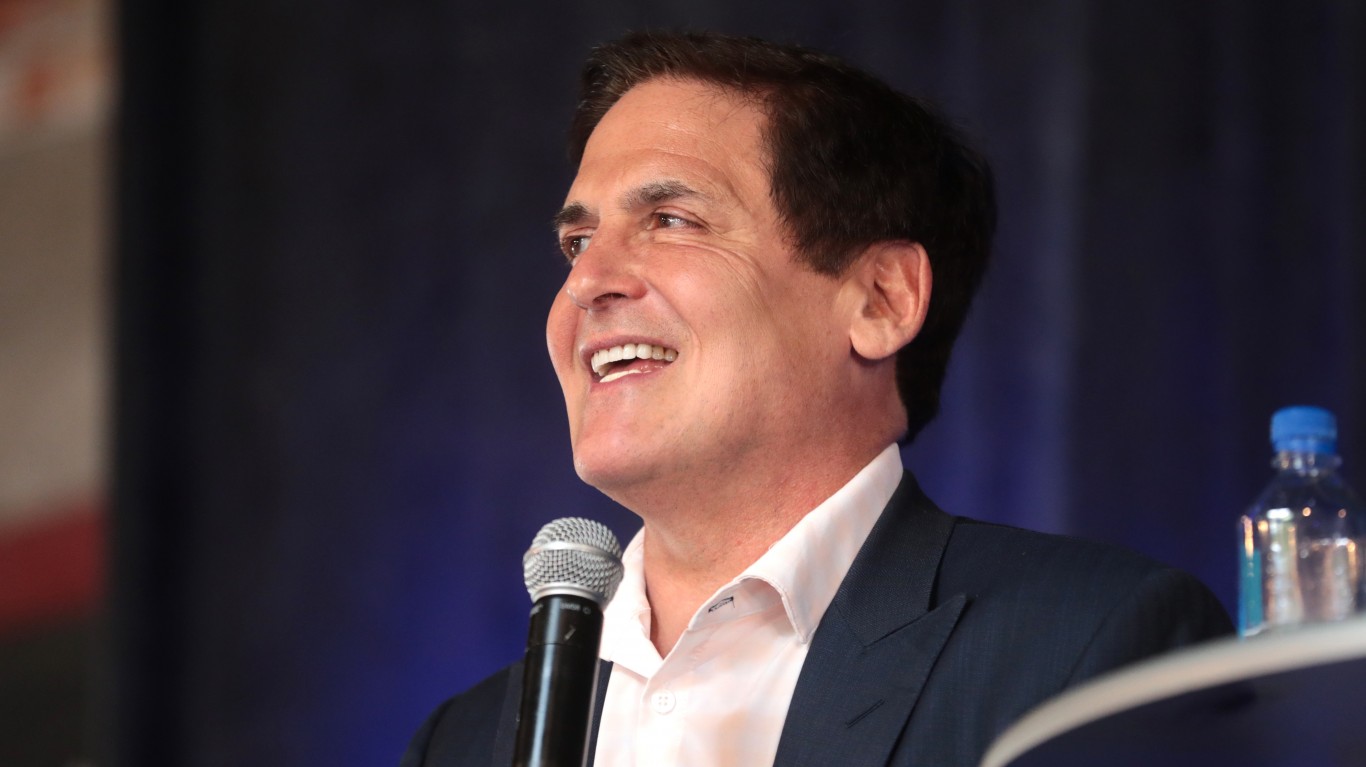
Mark Cuban sold Broadcast.com to Yahoo in April 1999 for $5.7 billion in stock. He then made more money hedging that Yahoo stock than he did from the sale itself. Read that twice. The hedge beat the headline.
Cuban’s collar is the one story I keep coming back to whenever a megacap rips into nosebleed territory. He told the Earn Your Leisure podcast that “I actually made more from it than I got originally because of the value of the puts.” The trade, he said, was “called one of the top 10 trades on Wall Street of all time.”
How the collar actually worked
Cuban described the mechanics in plain English on the show: “I bought puts against the stock, which means if it goes down, I make money, and I sold calls against it, which means if it goes up, I made some money, but I don’t make as much.”
That structure is called a protective collar. You own the stock. You buy a put (a contract that pays off if the stock falls below a set price). You partly finance that put by selling a call (which caps your upside above a set price). The premium you collect from the call helps pay for the insurance on the put. Done right, the collar can cost almost nothing out of pocket. Your downside is bounded. Your upside is bounded. Your nest egg sits inside a fence.
For an all-stock sale where the seller is locked up and cannot dump the shares freely, a collar is the closest thing to a financial seatbelt.
The payoff: Yahoo went from $118 to $8
Then the dot-com bubble broke. Yahoo stock fell from $118 to $8, a 93% drop. Anybody holding naked Yahoo shares through that window watched a life-changing fortune evaporate. Cuban’s puts, by contrast, became enormously valuable as the stock crashed through the strike. The further Yahoo fell, the more the puts paid. That is the math that turned a hedge into the headline-beating trade.
The mindset: pigs get fat, hogs get slaughtered
Cuban’s framing is the part retirement-focused investors should tattoo on the inside of their eyelids. “Pigs get fat, hogs get slaughtered. You don’t need to get 100% of every nickel.” The collar gives up some upside on purpose. That is the cost of sleeping at night.
He also said “You can’t predict where the stock market’s going” and “Everybody’s a genius in a bull market. Until you’re not.” Even when a hedge costs you a bit, “you protected the nest egg.”
It is hard to read those lines in 2026 without thinking about today’s concentration risk. NVIDIA (NASDAQ:NVDA | NVDA Price Prediction) is up about 59% over the past year and 1,222% over five years, carrying a roughly $5.1 trillion market cap. Tesla (NASDAQ:TSLA) trades on a trailing P/E near 400. Plenty of retirees are sitting on appreciated single-stock positions that look exactly like Cuban’s Yahoo bag in 1999. The lesson rhymes.
The Mavericks footnote
For color: Cuban bought the Dallas Mavericks for $285 million in January 2000, right as Yahoo started its slide. He has joked that a single day’s gain on his Yahoo position “paid for all the Mavericks.” The hedge bought the team. Twice over, in a sense.
Why this still matters in 2026
Cuban says he still maintains hedges on his current portfolio today. He has not named the positions, and I will not put words in his mouth. The principle is what travels. Anyone with a giant unrealized gain in a single ticker, an employer’s stock, or an all-stock buyout consideration can study the collar and decide whether bounded upside is a fair trade for a bounded floor.
You can hear Cuban tell the story in his own words on the Earn Your Leisure interview. The number to remember is the one in the headline: the hedge beat the $5.7 billion sale. The discipline did the heavy lifting. The genius part was choosing to stop being a hog.
Contact [email protected] for any questions or corrections.
I've been writing about stocks and personal finance for 20+ years. I believe all great companies are tech companies in the long run, and I invest accordingly.