XRP (Ripple) vs Stellar (XLM): Which Wins the Cross-Border Payments Race?
XRP (CRYPTO: XRP) and Stellar (CRYPTO: XLM) were both built to solve the same remittance problem. International payments are slow, expensive, and routed through a chain of correspondent banks that each add delays and take a cut.Both networks settle transactions…

This post may contain links from our sponsors and affiliates, and Flywheel Publishing may receive compensation for actions taken through them.

XRP (CRYPTO: XRP) and Stellar (CRYPTO: XLM) were both built to solve the same remittance problem. International payments are slow, expensive, and routed through a chain of correspondent banks that each add delays and take a cut.
Both networks settle transactions in seconds for fractions of a cent, and both have spent years trying to convince the financial system to use them. In 2026, Wall Street has finally weighed in on each, and the verdicts are different.
XRP Has the Volume and Institutional Depth

Ripple’s On-Demand Liquidity service uses XRP as a bridge between two fiat currencies to settle cross-border payments in three to five seconds. The service processed over $15 billion in volume in 2024, a 32% annual increase. Over 300 financial institutions use RippleNet infrastructure, but only about 40% are actively settling in XRP. The rest use Ripple’s messaging rails without any XRP exposure.
Cumulative Ripple Payments volume crossed $95 billion as of January 2026. The network now spans more than 70 currency corridors and covers an estimated 80% of major global remittance routes. The corridors generating most of that volume run through Japan, the Philippines, and Mexico, where legacy banking costs are high and demand for fast remittances is consistent.
Moreover, the CLARITY Act passed the Senate Banking Committee on May 14 and would permanently write XRP’s commodity classification into federal law. The March 17 SEC-CFTC interpretive ruling already gave XRP commodity status, but an agency ruling can be reversed by the next administration, while a law cannot. But even with the volume, the corridors, and the regulatory clarity, XRP still has one unresolved problem.
Banks are using the XRP Ledger without necessarily buying the token itself. A good example was the pilot on May 6, where JPMorgan, Mastercard, Ondo, and Ripple cleared a cross-border tokenized U.S. Treasury trade on the XRP Ledger in under five seconds. The pilot proved the ledger works for institutional settlement at scale. But the settlement ran through RLUSD, Ripple’s dollar stablecoin, while XRP only covered minimal network fees of around $0.00001 per transaction.
RLUSD adoption strengthens Ripple’s business and proves the XRPL’s technical capacity, but it does not directly create XRP demand the way ODL does. As long as banks can use the ledger without holding the token, ledger activity and XRP price stay disconnected.
Stellar Just Got Its Biggest Institutional Endorsement
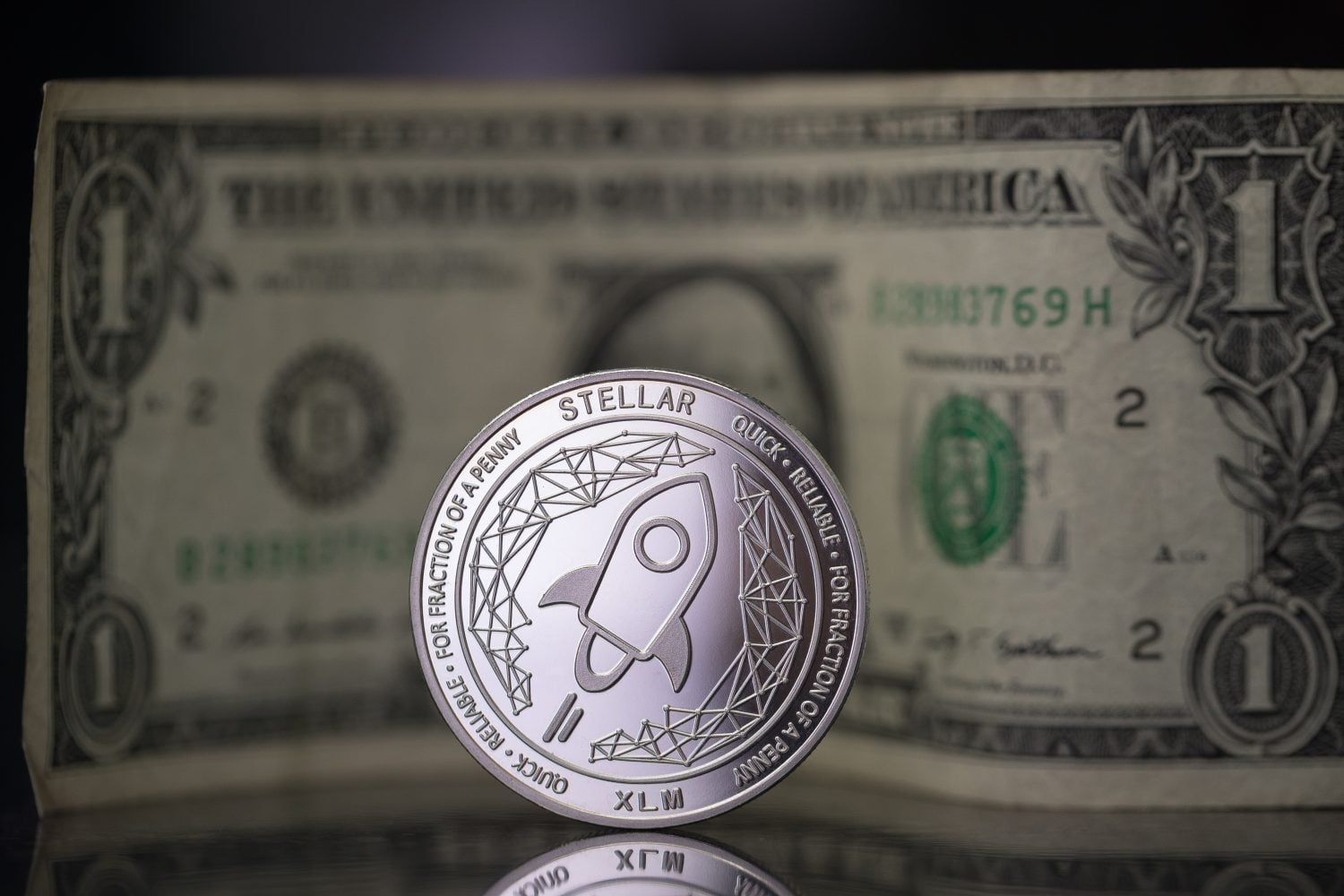
Stellar processed $5.5 billion in payment volume in Q1 2026, a 72% increase compared to the same period last year. Stellar’s tokenized real-world asset value also grew from $796 million at the end of 2025 to over $2 billion by mid-April. XLM received the same March 17 SEC-CFTC commodity classification that covered Bitcoin, Ethereum, and XRP, ending the legal uncertainty that had kept many institutional funds on the sidelines.
On May 27, the Depository Trust & Clearing Corporation (DTCC) and the Stellar Development Foundation announced plans to enable tokenization of DTC-custodied assets on the Stellar network, with availability targeted for the first half of 2027.
The initiative will initially focus on highly liquid assets, including Russell 1000 equities, major index ETFs, and US Treasuries. DTCC oversees more than $114 trillion in assets across US capital markets, and this marks the first time DTC-custodied securities will live on a public blockchain.
XLM surged 28% across the trading day following the announcement. The initial reaction was around 8% before the rally extended further. The broader crypto market fell sharply that same day.
However, the DTCC patent issued in May 2025 had already identified both the XRP Ledger and Stellar among compatible blockchain networks for its cross-ledger framework. According to the patent, XRP is designed for large-scale institutional settlement, while Stellar is designed for low-cost transactions, fiat-to-blockchain conversions, and stablecoins.
XRP vs. XLM: Which One Is Actually Winning?
XRP is winning the commercial cross-border payments race on volume and institutional depth right now, while Stellar is winning the tokenized securities infrastructure race after securing the biggest single institutional endorsement of 2026.
Ripple’s ODL network has real payment volume growing at 30 to 40% annually with direct XRP demand built into every transaction. Stellar’s DTCC partnership is a landmark, but production testing does not begin until July, and broader availability is not targeted until 2027. So, the token demand implications are still months away.
The more important question for investors is which catalyst arrives first. XRP has the CLARITY Act moving through the full Senate, ETFs with $1.41 billion in cumulative inflows, and payment volume that generates direct token demand today.
Stellar has the DTCC partnership, which is the biggest long-term market infrastructure endorsement any of these tokens has received. But the network does not yet have the institutional layers in place that would turn a one-off rally into a sustained price move. If Stellar’s July 2026 production testing runs smoothly and the October commercial launch proceeds on schedule, the comparison shifts significantly before year-end.
Contact [email protected] for any questions or corrections.
Sam Daodu is a crypto analyst who's spent nearly a decade making blockchain understandable—no easy task when most whitepapers read like fever dreams. He writes for 24/7 Wall St., covering Bitcoin, altcoins, and crypto market analysis for investors. Before crypto, he was a tech writer (back when explaining "the cloud" was peak innovation). Since 2018, he's written for CoinTelegraph, Yahoo Finance, The Block, Cryptonews, Zypto, Rain, and more—basically anywhere people want crypto news without the headache. Sam runs MacLabs Marketing, a content agency for crypto brands tired of sounding like AI wrote their website. He also publishes free crypto education on his site for Web3 enthusiasts who think "gas fees" is a typo. When he's not writing or staring at charts, Sam's either: - Watching anime (currently convinced One Piece has better tokenomics than most altcoins) - At the gym sculpting himself into a Greek god - Listening to the music your mum warned you only bad boys listen to Connect: LinkedIn | Email | MacLabs Marketing