Apple Loses Big Because Of Nvidia PC Chips
Nvidia (NASDAQ: NVDA | NVDA Price Prediction) stunned the tech world when it launched its RTX Spark chip for PCs. The company called it “the most efficient PC chip ever built.” In its announcement, it said it has partnerships with…

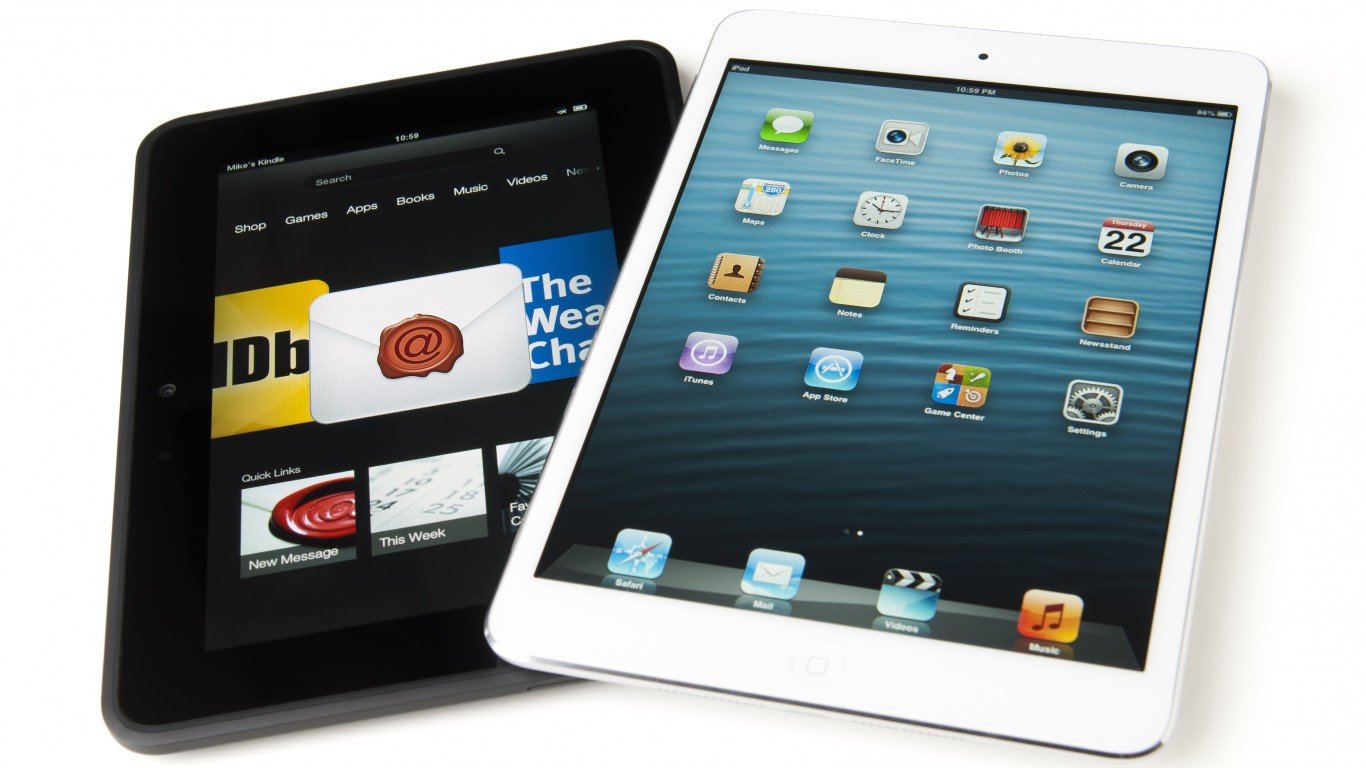
Nvidia (NASDAQ: NVDA | NVDA Price Prediction) stunned the tech world when it launched its RTX Spark chip for PCs. The company called it “the most efficient PC chip ever built.” In its announcement, it said it has partnerships with PC companies Dell Technologies, Lenovo, Microsoft (NASDAQ: MSFT), HP, Asus, and MSI. Apple (NASDAQ: AAPL) was not on the list. For this reason, it is the largest loser due to the launch.
Kari Briski, Nvidia’s vice president for generative AI software, said the period of AI adoption, which involved EV app downloads, is ending. He commented, “That era is ending. Agents are the new workload. They will run everywhere, from the data center to the edge.” Nvidia also said that the period when AI was simply used as a search engine replacement is also ending. Many experts thought AI would replace Google. Google combated this by launching its own Gemini AI app and distributing it across its search, Gmail, Maps, Sheets, and Docs ecosystems.
At first, it appeared the biggest losers following the announcement were Intel (NASDAQ: INTC) and AMD (NASDAQ: AMD), which dominate the PC chip market. Intel has between 60% and 70% of this market. AMD has more than 20%. The stocks of both companies sold off after the Nvidia announcement.
Nvidia has quickly moved beyond the AI chip market. It has even moved into the self-driving car sector. It announced these plans earlier this year. Writing about Nvidia CEO Jensen Huang’s plans, the BBC reported, “He said Nvidia was working with Mercedes to produce a driverless car powered by the tech, which would be released in the US in the coming months before being rolled out in Europe and Asia.” This is a potential challenge for Tesla’s “Full Self-Driving (FSD) (Supervised)” and Google’s Waymo.
Apple, however, is the biggest loser. Investor thought it had dodged the AI bullet when it decided to use Google’s Gemini to power its Siri and the “intelligence” system in iOS. The cost of the deal for Apple was only $1 billion a year. It meant Apple had decided not to spend the hundreds of billions of dollars to build AI data centers, which is still considered risky because there is no way to forecast AI adoption. Nvidia’s PC plan will compete with Apple’s M-series chips.
Apple has a great deal at stake. In the most recent quarter, its revenue was $111.2 billion. Of this, Mac was $8.4 billion. iPad revenue was $6.9 billion. Although these do not rival the iPhone’s $57 billion, they are still critical to Apple’s hardware footprint and revenue.
Apple believed its Gemini deal would solve its AI problems. That is clearly not the case anymore.
Contact [email protected] for any questions or corrections.
Douglas A. McIntyre is the co-founder, chief executive officer and editor in chief of 24/7 Wall St. and 24/7 Tempo. He has held these jobs since 2006.
McIntyre has written thousands of articles for 24/7 Wall St. He is an expert on corporate finance, the automotive industry, media companies and international finance. He has edited articles on national demographics, sports, personal income and travel.
His work has been quoted or mentioned in The New York Times, The Wall Street Journal, Los Angeles Times, The Washington Post, NBC News, Time, The New Yorker, HuffPost USA Today, Business Insider, Yahoo, AOL, MarketWatch, The Atlantic, Bloomberg, New York Post, Chicago Tribune, Forbes, The Guardian and many other major publications. McIntyre has been a guest on CNBC, the BBC and television and radio stations across the country.
A magna cum laude graduate of Harvard College, McIntyre also was president of The Harvard Advocate. Founded in 1866, the Advocate is the oldest college publication in the United States.
TheStreet.com, Comps.com and Edgar Online are some of the public companies for which McIntyre served on the board of directors. He was a Vicinity Corporation board member when the company was sold to Microsoft in 2002. He served on the audit committees of some of these companies.
McIntyre has been the CEO of FutureSource, a provider of trading terminals and news to commodities and futures traders. He was president of Switchboard, the online phone directory company. He served as chairman and CEO of On2 Technologies, the video compression company that provided video compression software for Adobe’s Flash. Google bought On2 in 2009.