Alphabet’s Best Day Ever
Alphabet jumped to the head of the AI pack with the release of Gemini 3. Its AI chips are providing a boost as well.

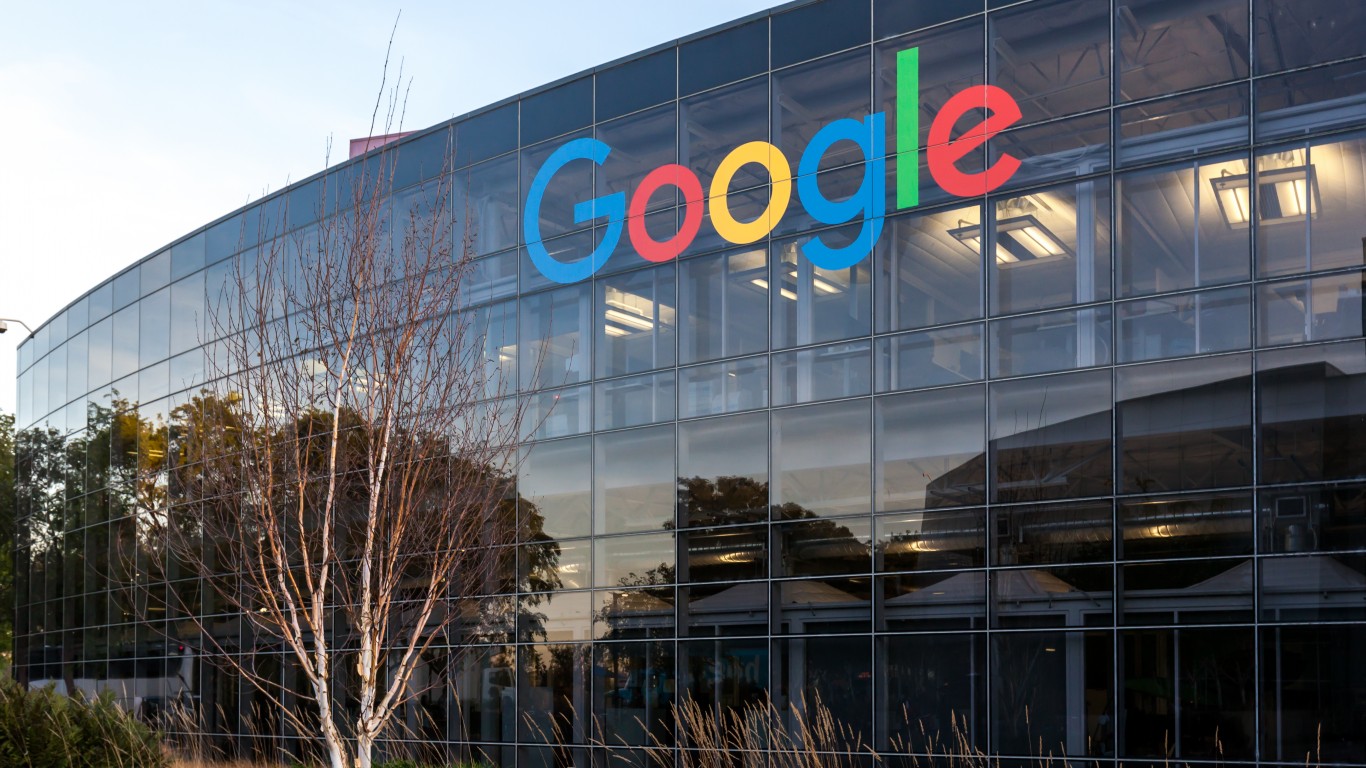
Now a part of Alphabet Inc. (NASDAQ: GOOGL | GOOGL Price Prediction), Google began its ascent in the search engine business in the 1990s, and by the turn of the century, it was the dominant company in the sector. Except in Russia and China, its market share rose to 90% across most of the rest of the world. Despite some antitrust challenges, it remains one of the world’s greatest money machines.
Google bought YouTube in 2006 for $1.65 billion in Google stock. Then a site for goofy videos, it has since become by far the dominant streaming platform in America. It is larger than second-place Netflix based on market share. And, it has begun to compete directly, and successfully, with other paid subscription services. It has gone from a novelty to a major division of Alphabet, which was the umbrella company created in 2015 to hold all of Google’s divisions. In the most recent quarter, YouTube had revenue of $10.3 billion, against the company’s total of $102.4 billion. That was nearly as large as Cloud Services, which had revenue of $15.2 billion
Alphabet dominates search, video streaming, email (with Gmail), online maps, and the browser sector with Chrome.
However, doubts about Alphabet include whether it could keep pace with the next generation of technologies. In cloud computing, it ranked third (on a good day) behind Microsoft’s Azure and Amazon’s AWS. It was not a force in artificial intelligence (AI), which many believe is the most important invention in two decades, maybe longer. OpenAI’s ChatGPT outflanked it and the rest of the industry. So had Anthropic, Elon Musk’s xAI’s Grok, and Microsoft’s Copilot.
Alphabet suddenly jumped to the head of the AI pack with the release of Gemini 3. By many measures, it performed better than OpenAI’s GPT-5. Axios reported, “Analysts, users, and industry insiders say Gemini 3’s superior benchmarks, integration into Google’s ecosystem, and cost efficiencies are pressuring OpenAI, especially after GPT-5’s underwhelming August release.”
Gemini 3 was only part of the huge leap Alphabet took forward last week. Its new TPU chips have been compared favorably to Nvidia’s GPU. The product is so good that it appears Meta may adopt it, giving Alphabet a huge win over Nvidia. It appeared that Alphabet had fallen behind the other mega-tech companies in AI, and, like the rest of the industry, it would be hostage to Nvidia’s chip business. Today, neither is the case.
Last week, Alphabet leapfrogged over Microsoft to become the third most valuable company in the world, with a market cap of $3.9 trillion.
Alphabet dominated much of the tech world from 2000 to early in this decade. It has begun to dominate again.
Alphabet’s secret portfolio just bought two stocks. Should you buy them too?
Contact [email protected] for any questions or corrections.
Douglas A. McIntyre is the co-founder, chief executive officer and editor in chief of 24/7 Wall St. and 24/7 Tempo. He has held these jobs since 2006.
McIntyre has written thousands of articles for 24/7 Wall St. He is an expert on corporate finance, the automotive industry, media companies and international finance. He has edited articles on national demographics, sports, personal income and travel.
His work has been quoted or mentioned in The New York Times, The Wall Street Journal, Los Angeles Times, The Washington Post, NBC News, Time, The New Yorker, HuffPost USA Today, Business Insider, Yahoo, AOL, MarketWatch, The Atlantic, Bloomberg, New York Post, Chicago Tribune, Forbes, The Guardian and many other major publications. McIntyre has been a guest on CNBC, the BBC and television and radio stations across the country.
A magna cum laude graduate of Harvard College, McIntyre also was president of The Harvard Advocate. Founded in 1866, the Advocate is the oldest college publication in the United States.
TheStreet.com, Comps.com and Edgar Online are some of the public companies for which McIntyre served on the board of directors. He was a Vicinity Corporation board member when the company was sold to Microsoft in 2002. He served on the audit committees of some of these companies.
McIntyre has been the CEO of FutureSource, a provider of trading terminals and news to commodities and futures traders. He was president of Switchboard, the online phone directory company. He served as chairman and CEO of On2 Technologies, the video compression company that provided video compression software for Adobe’s Flash. Google bought On2 in 2009.