If You Invested $1,000 in Alphabet 15 Years Ago, This Is How Much You Have Now (and It’s a Masterclass in 1 Vital Investing Lesson)
If you bought Alphabet (NASDAQ:GOOGL) 15 years ago and never touched it, you would be sitting on one of the cleaner compounding stories in mega-cap tech. The company you bought in 2011 was an ad-revenue machine bolted to a dominant…


If you bought Alphabet (NASDAQ:GOOGL | GOOGL Price Prediction | GOOGL Price Prediction) 15 years ago and never touched it, you would be sitting on one of the cleaner compounding stories in mega-cap tech. The company you bought in 2011 was an ad-revenue machine bolted to a dominant search engine. The company you own today is something far more complex: a cloud hyperscaler, an AI infrastructure builder, a robotaxi operator, and still the undisputed king of search.
From Search Monopoly to AI Hyperscaler
In 2011, Google was pre-Alphabet, pre-Waymo, and largely an afterthought in cloud computing. The October 2015 restructuring into Alphabet reorganized the empire into a holding company structure with a cleaner division between the core business and the longer-horizon bets. Pandemic-era digital ad demand then fueled outsized gains in 2020 and 2021. The arrival of ChatGPT in late 2022 briefly made Google look flat-footed on AI and rattled the stock.
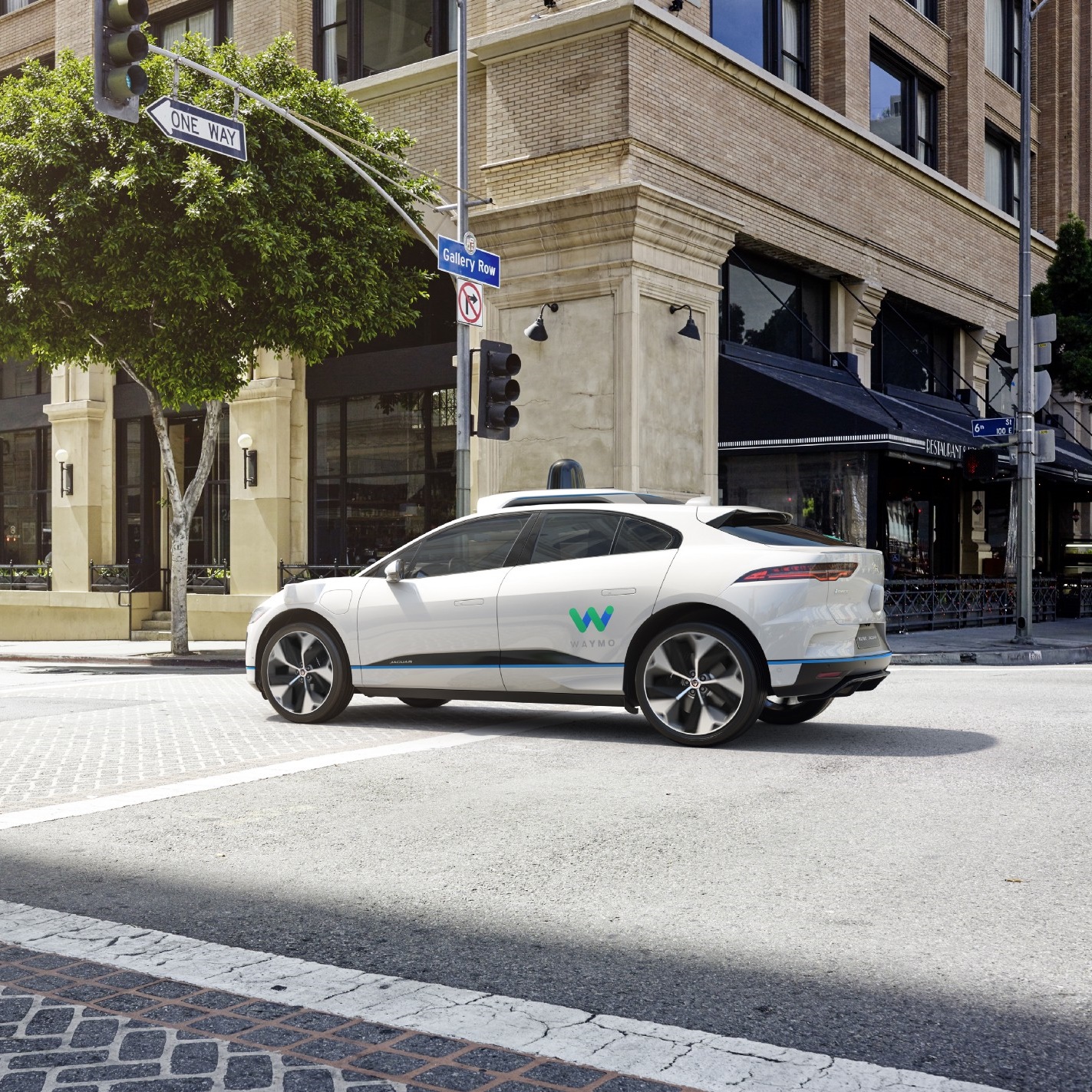
The pivot worked. Gemini launched, cost discipline kicked in, and Google Cloud matured into a genuine profit engine. By Q1 2026, Cloud revenue had surged 63% to $20.0 billion, with the contract backlog topping $460 billion. Q2 2026 then accelerated the story further: Cloud grew 82% to $24.8 billion, crushing analyst forecasts of roughly $22.4 billion, while Cloud operating income tripled to $8.8 billion and the segment margin expanded to nearly 36%. The backlog climbed to $514 billion, a figure larger than the GDP of Belgium and up more than $50 billion sequentially. Gemini models now process 22 billion API tokens per minute. Nearly 90% of the Fortune 100 has adopted Gemini Enterprise. Waymo, operating across 14 U.S. cities after adding Denver, San Diego, and Tampa in September 2026, crossed 500,000 fully autonomous rides per week. Full-year 2025 revenue hit $402.8 billion, the first time Alphabet crossed the $400 billion threshold.
Company Snapshot
Your $1,000 Turned Into Nearly $29,000
1-Year Return
- Initial Investment: $1,000
- Current Value: $2,199
- Total Return: 119.91%
- S&P 500 (same period): $1,287 (28.7%)
5-Year Return
- Initial Investment: $1,000
- Current Value: $3,202
- Total Return: 220.17%
- Annualized Return: 26.2%
- S&P 500 (same period): $1,805 (80.46%)
10-Year Return
- Initial Investment: $1,000
- Current Value: $10,314
- Total Return: 931.44%
- Annualized Return: 26.3%
- S&P 500 (same period): $3,607 (260.73%)
15-Year Return
- Initial Investment: $1,000
- Current Value: $28,658
- Total Return: 2,765.78%
- Annualized Return: 25.1%
Alphabet has beaten the S&P 500 at every horizon, and the margin widens the longer you hold. The cost of holding through it was real: investors had to survive the 2022 ad-spend recession, the ChatGPT panic that rattled the stock in early 2023, a Q3 2025 European Commission fine of $3.5 billion for ad technology practices, and the EU Court of Justice’s July 2026 confirmation of a separate 4.1 billion euro Android penalty. The past year alone, with shares more than doubling, did most of the heavy lifting on the 5-year return figure.
The Bull Case, With Eyes Open
The bull case rests on the AI infrastructure wager paying off at scale. Cloud revenue growing 82% in Q2 2026 against a $514 billion contracted backlog is not a speculative forecast. It is a booked order book, with roughly half expected to convert to recognized revenue within 24 months. Add 350 million paid subscriptions and a consolidated operating margin that expanded to 34% in Q2, and the growth story has tangible underpinnings. For context, AWS grew 37% and Azure grew 43% over the same quarter, meaning Alphabet’s Cloud unit is outpacing its two larger rivals by a wide margin.
The bear case centers on capital allocation and free cash flow. Alphabet raised its full-year 2026 capex guidance to $195 billion to $205 billion, up from the prior guidance of $180 billion to $190 billion. That spending sent Q2 free cash flow deeply negative, to -$5.9 billion. The stock slipped after the Q2 announcement despite beating revenue expectations, signaling that the market is scrutinizing the return on that capital closely. AI-native search competitors chipping away at query volume and the ongoing integration of the $29.5 billion Wiz acquisition add further complexity to the picture. At a forward P/E of roughly 23 for a business still growing revenue at 24%, the valuation appears reasonable, but there is limited cushion if Cloud monetization disappoints or the capex cycle extends further.
On balance, the trajectory is constructive. The 15-year track record is earned, the AI pivot is showing up in accelerating revenue and expanding margins, and Waymo remains an embedded option on autonomous transport that carries no incremental cost to the existing shareholder. Repeating 26% annualized returns from a base this large would require conditions that are genuinely difficult to model with confidence, but the underlying businesses are performing well ahead of where the market expected them to be a year ago.
Editor’s note: The European Commission ad technology fine was corrected to $3.5 billion (from $3.4 billion) based on Alphabet’s Q3 2025 SEC filing, and the operating margin was updated to 34% to reflect Q2 2026 consolidated results. The forward P/E was revised to approximately 23 based on current consensus data, and new context was added on Cloud operating income tripling to $8.8 billion, Q2 free cash flow turning negative at -$5.9 billion, the completed $29.5 billion Wiz acquisition, and Waymo’s expansion to 14 U.S. cities as of September 2026.
Contact [email protected] for any questions or corrections.
Alex Sirois is a financial writer with experience spanning both retail and institutional investing. He has written for InvestorPlace and held roles at BNY Mellon and Bernstein, giving him a perspective that bridges Main Street portfolios and Wall Street analysis.
Alex holds an MBA from George Washington University and has built his career across multiple industries, including e-commerce, education, and translation — a breadth of experience that informs how he breaks down complex financial topics for everyday investors. His writing is conversational, actionable, and grounded in long-term, buy-and-hold investing principles.
At 247 Wall St., Alex focuses on delivering analysis that is both accessible and useful, with a clear emphasis on helping readers make more informed decisions with their money.