Only One Man Can Kill the AI Boom: Fed Chair Kevin Warsh
The artificial intelligence boom has survived just about everything investors have thrown at it. Concerns over China, export restrictions, sky-high valuations, and even recession fears have failed to derail a rally that has added trillions of dollars in market value…

The artificial intelligence boom has survived just about everything investors have thrown at it. Concerns over China, export restrictions, sky-high valuations, and even recession fears have failed to derail a rally that has added trillions of dollars in market value to companies like Nvidia (NASDAQ:NVDA | NVDA Price Prediction), Microsoft (NASDAQ:MSFT), Broadcom (NASDAQ:AVGO), and Meta Platforms (NASDAQ:META).
Yet there is one risk that could bring the entire trade to a halt far faster than any competitor or technological disruption: monetary policy.
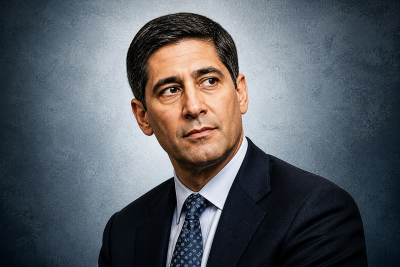
That is why investors should be paying close attention to newly appointed Federal Reserve chair Kevin Warsh. While most discussions about AI focus on chips, data centers, and software, the reality is that the boom has been fueled by something much less exciting — money.
The AI Boom Has Been Swimming in Liquidity
According to Federal Reserve data, U.S. M2 money supply recently climbed to more than $22.8 trillion, a new record level. More money circulating through the financial system tends to find its way into assets, including stocks.
That backdrop has been especially favorable for AI companies. Investors have been willing to pay premium valuations because abundant liquidity makes future earnings more valuable today. Most aren’t cheap stocks. Investors are paying for years of anticipated growth. The higher those future expectations extend into the future, the more sensitive valuations become to interest rates.
That’s where Warsh gains prominence.
The Decision That Matters More Than Anything Else
Many investors assume a Warsh-led Federal Reserve would automatically cut rates to support economic growth. Surprisingly, his public comments suggest the opposite could happen.
Warsh has repeatedly argued that the Fed must preserve its inflation-fighting credibility. If inflation remains stubbornly above the Federal Reserve’s 2% target, he could choose to maintain elevated rates or even raise them.
That would create a problem for AI stocks. Higher interest rates increase the discount rate investors use when valuing future cash flows. In other words, profits expected five or ten years from now become worth less today.
For mature businesses generating large current profits, the impact is manageable. For growth-driven AI companies, the effect can be dramatic.
A move from a 4% to 5% Treasury yield may not sound like much. Yet it can alter valuation models across the entire technology sector. Stocks trading at 35x, 40x, or 50x earnings often feel that pressure first.
Granted, AI demand itself would not disappear. Companies would still need computing power. Data centers would still be built. Enterprises would still invest in automation. The question is not whether AI survives, but whether investors remain willing to pay today’s prices.
Why Investors Should Watch the Fed More Than Nvidia
The irony is that Nvidia CEO Jensen Huang may have less influence over Nvidia’s stock price than the next Fed chair.
Nvidia can launch faster chips. Microsoft can build larger AI infrastructure networks. Broadcom can expand its custom silicon business. None of them control the cost of money, and nearly every major bull market has depended on some combination of earnings growth and favorable liquidity conditions. AI currently enjoys both. Remove one of those pillars — or move too quickly — and valuations become much harder to justify.
That said, investors should avoid assuming a rate hike automatically ends the AI story. The internet revolution survived multiple Fed tightening cycles. Cloud computing endured rising rates as well.
What changes is the pace of returns investors can expect.
Key Takeaway
In short, Kevin Warsh is not a threat to artificial intelligence itself. AI adoption is already spreading across nearly every industry and appears likely to remain a powerful economic force for years. What Warsh could threaten is the valuation premium investors have attached to AI stocks.
If he embraces tighter monetary policy to control inflation, some of today’s richest technology valuations could face a harsh reality check. Ultimately, the biggest risk to the AI boom may not be technological, competitive, or geopolitical.
It may be a single interest-rate decision made inside the Federal Reserve.
Contact [email protected] for any questions or corrections.
After two decades of patrolling the dark corners of suburbia as a police officer, Rich Duprey hung up his badge and gun to begin writing full time about stocks and investing. For the past 20 years, he’s been cruising the markets looking for companies to lock up as long-term holdings in a portfolio while writing extensively on the broad sectors of consumer goods, technology, and industrials. Because his experience isn’t from the typical financial analyst track, Rich is able to break down complex topics into understandable and useful action points for the average investor. His writings have appeared on The Motley Fool, InvestorPlace, Yahoo! Finance, Money Morning, and, of course, 24/7 Wall St. He has been featured in both U.S. and international publications, including MarketWatch, Financial Times, Forbes, Fast Company, and USA Today.