$20 Billion: Inside Nvidia’s VERA CPU Bet to Break the Intel-AMD Duopoly
You can argue about almost every line in a NVIDIA (NASDAQ:NVDA | NVDA Price Prediction) earnings release. The size, the margins, the customer concentration, the China hole. What you cannot argue about is what happens when a company that did…


You can argue about almost every line in a NVIDIA (NASDAQ:NVDA | NVDA Price Prediction) earnings release. The size, the margins, the customer concentration, the China hole. What you cannot argue about is what happens when a company that did zero CPU revenue last year tells you it expects to do $20 billion in CPU revenue this fiscal year.
That figure, surfaced on a recent Motley Fool Money podcast segment about whether Nvidia’s new Vera CPU threatens the Intel (NASDAQ:INTC) and Advanced Micro Devices (NASDAQ:AMD) duopoly, is the number that should stop a long-term holder cold. The $20 billion is small for Nvidia against an $81,615,000,000 quarter, and the implied trajectory rewrites how the company gets paid. A GPU company is becoming a full-stack compute company in real time, and that is the part the duopoly cannot easily price.
The number that matters
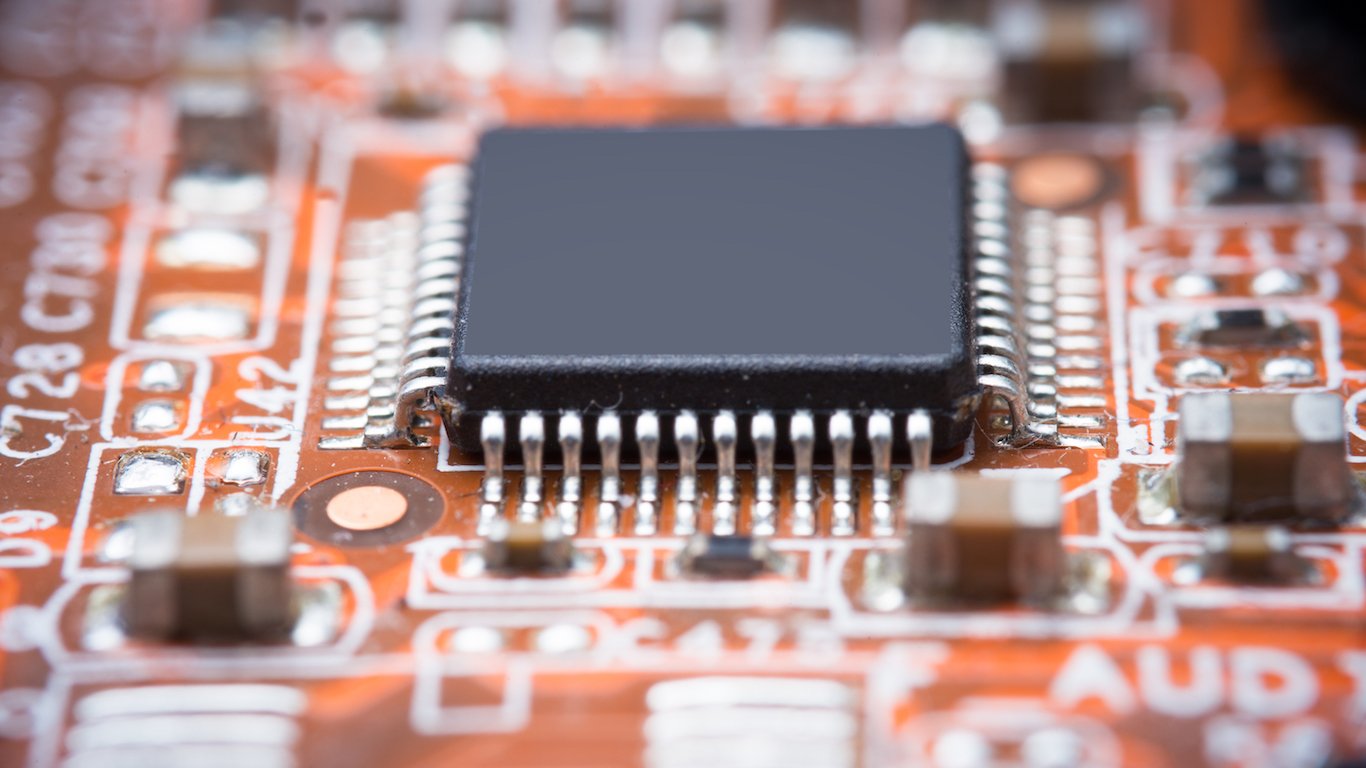
The anchor is straightforward. Nvidia is targeting $20 billion in CPU revenue this fiscal year from a standing start, according to the Motley Fool Money panel. The chip in question is the Vera CPU, an ARM-based processor designed in partnership with MediaTek that combines a Blackwell GPU with an ARM-based processor and slots into the broader Vera Rubin platform. Nvidia formally introduced the package in its Q1 FY27 update, “Announced the NVIDIA Vera Rubin platform, including the Vera CPU purpose-built for agentic AI and BlueField-4 STX accelerated storage infrastructure.” Treat the $20 billion as a fiscal-year projection rather than a reported result. It is forward-looking, and worth flagging as such.
What $20 billion in new CPU revenue means
Intel and AMD together hold over 90% of the PC CPU market on x86, a moat built over decades. Nvidia is bundling instead of mounting a frontal assault. The Vera CPU comes really tightly integrated into the hyper-advanced Vera Rubin platforms via proprietary connections, which means hyperscalers buying Rubin racks are essentially buying CPUs by default. That is how you go from nothing to billions in revenue inside a single fiscal year.
The performance pitch helps. Independent benchmarks cited by the Motley Fool panel show Nvidia’s design outperforms Intel’s flagship design by over 55% and edges out AMD’s top chip by 11%, with Nvidia claiming the chip runs 2 times faster than traditional alternatives in agentic AI workloads. The structural argument is even more interesting. As one analyst put it, “legacy CPUs crumble under that heavy coordination workload and it leaves these very expensive GPUs waiting around idly.” Idle GPUs are an economic disaster at $40,000-plus per accelerator, and that is the wedge.
The supporting context is unfriendly to bears. Data Center revenue last quarter ran $75.2 billion, up 92% year over year, with networking alone up 199%. Non-GAAP gross margin sits at 75.0%, well above the prior year’s 60.8%. Nvidia returned roughly $20 billion to shareholders in the quarter, and the board added an $80 billion buyback authorization with no expiration. The quarterly dividend moved from $0.01 to $0.25 per share.
Bull case
The bull case rests on the bundle, not the benchmark. Nvidia is doing what Apple did to the PC industry in miniature. It is integrating silicon vertically so customers stop choosing components and start choosing platforms. The four largest cloud providers are AWS, Google Cloud, Microsoft Azure and Oracle Cloud Infrastructure, all lined up as early Vera Rubin deployers. Total supply-related commitments sit at $119 billion, which is a forward bookings backdrop that makes a $20 billion CPU number look conservative. Q2 FY27 revenue guidance of $91 billion, plus or minus 2% implies sequential acceleration.

Jensen Huang framed it himself. “Agentic AI has arrived, doing productive work, generating real value and scaling rapidly across companies and industries.” Agentic workloads are the precise use case Vera is purpose-built for, and the orchestration overhead is what makes a tightly coupled CPU more than a checkbox feature.
AMD has its own AI runway, with Data Center revenue of $5.8 billion growing 57%, so this hits Intel harder than AMD. Intel’s Data Center and AI segment ran $5 billion last quarter, growing 22%, and Intel is now selling Xeon 6 as the host CPU for NVIDIA’s DGX Rubin NVL8 systems, a partnership that doubles as a tell about where the gravitational center has moved.
Bottom line
For a retirement-focused investor, the question is not whether Nvidia takes share from Intel in laptops next quarter. The Motley Fool panel itself predicted a single-digit share at least in the next few years, noting Qualcomm’s ARM chips still hold only 10% of the $800+ laptop market. The question is whether Vera CPU revenue, layered onto a Data Center business already growing 92% at 75% gross margins, extends the duration of Nvidia’s earnings power. The next data point is Q2 FY27 earnings, and the next cash event for current shareholders is the dividend payment on June 26, 2026. Going from zero to twenty billion in one year is a move that buys an incumbent another decade.
Contact [email protected] for any questions or corrections.
Omor Ibne Ehsan is a writer at 24/7 Wall St. He is a self-taught investor with a focus on growth, cyclical, and dividend equities that have strong fundamentals, value, and long-term potential. He also has an interest in high-risk, high-reward investments such as penny stocks.