Why Petrobras’ 16% Yield in ECOW Masks a Dangerous Bet on Brazil’s New Export Taxes
The Pacer Emerging Markets Cash Cows 100 ETF (NYSEARCA:ECOW) screens developing-market companies for high free cash flow yield, then funnels that cash back to holders through quarterly distributions. ECOW trades around $27 after a 34% one-year gain, and the income…

This post may contain links from our sponsors and affiliates, and Flywheel Publishing may receive compensation for actions taken through them.

The Pacer Emerging Markets Cash Cows 100 ETF (NYSEARCA:ECOW) screens developing-market companies for high free cash flow yield, then funnels that cash back to holders through quarterly distributions. ECOW trades around $27 after a 34% one-year gain, and the income question matters more than the price question: are the underlying businesses actually generating the cash that ECOW is distributing, or is the yield a backward-looking artifact of one strong commodity year? Below is what the top holdings reveal.
Where ECOW’s Income Actually Comes From
ECOW tracks an index that ranks emerging-market large- and mid-caps by trailing free cash flow yield, caps single-name exposure, and rebalances semi-annually. The distribution is a pass-through of dividends and interest collected from the 100 underlying stocks, so the safety of ECOW’s payout is the weighted safety of its holdings’ payouts. That makes the top names the entire ballgame.
UMC: The Fab That Funds Itself
United Microelectronics (NYSE:UMC | UMC Price Prediction) paid an annual dividend of $0.48 per ADR in 2025, up from $0.14 in 2020. April sales rose 11% year over year and the new 14nm embedded FinFET platform extends UMC’s mature-node moat. Taiwan annual dividends track prior-year earnings, so the next payout will reflect today’s strength. The catch is concentration: UMC stock is up 189% in a year, which compresses the forward yield even if the cash payment grows.
Petrobras: A 16% Yield With Visible Pressure Points
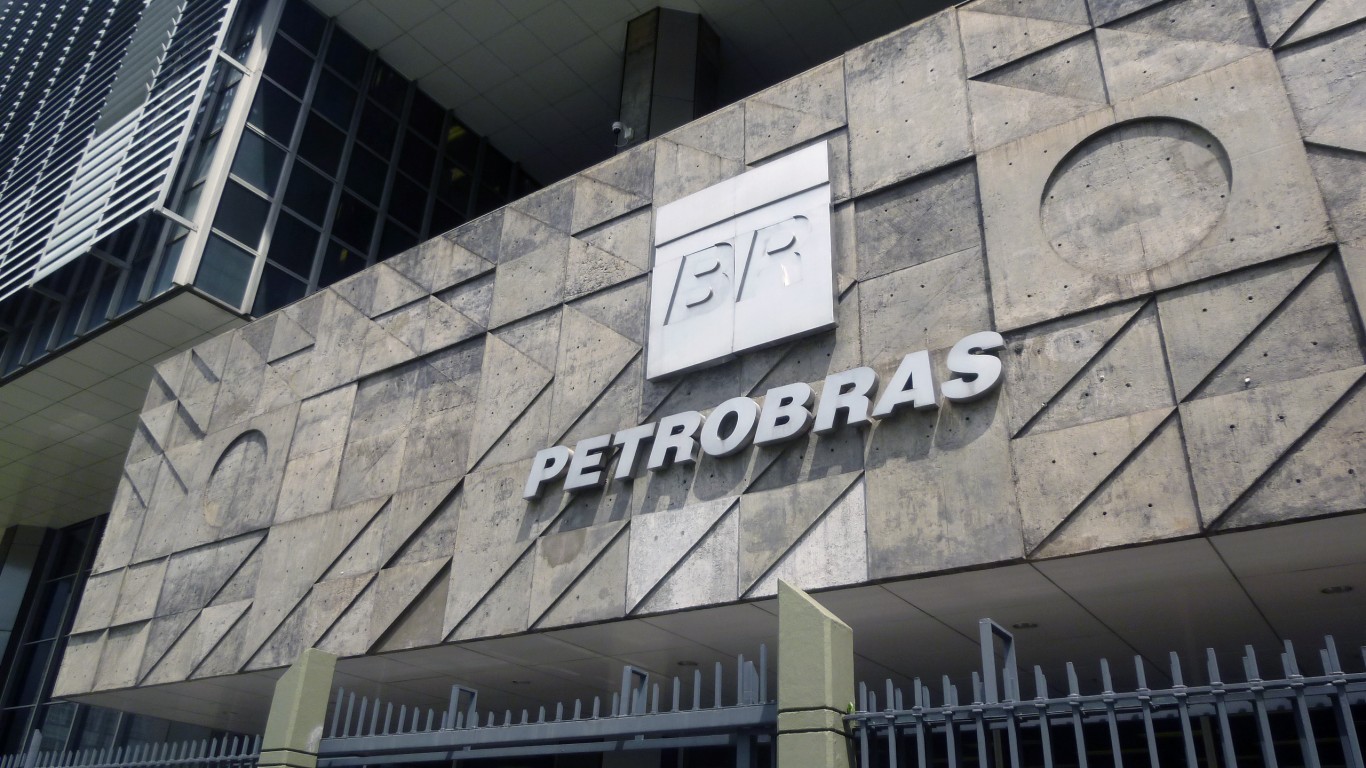
This is the holding that pays the bills and carries the most risk. Petrobras (NYSE:PBR) trades at a trailing P/E of 6 with a 16.2% trailing yield. Q2 free cash flow of $3.86 billion covered the most recent payment, but 2026 distributions of $0.14 and $0.12 are roughly half of the 2024 cadence and a small fraction of the $2.59 paid in August 2022. WTI sits near $96, but Brazil’s new 12% crude export tax and 50% diesel tax under PM 1,340/2026 directly threaten the variable portion of the payout. The base dividend looks safe; the headline yield does not.
Ambev, América Móvil, and Vale
Ambev (NYSE:ABEV) yields 4.9% at a P/E of 16, and FY2025 net income of BRL 15.5 billion already allocated BRL 10.9 billion to interest on capital and dividends. That allocation is locked in, but the BRL/USD rate of 0.1975 means every centavo of weakness shows up in ECOW’s ADR distribution.
América Móvil (NYSE:AMX) is the safest payer of the group. Q1 net income grew 25%, free cash flow swung positive to MXN 3.27 billion, and the company added a MXN 10 billion buyback. The headline yield is only 2.1%, but it is the most durable number in the basket.
Vale (NYSE:VALE) paid $1.26 per share over the trailing year, a step down from $1.56 in a single September 2021 payment. Vale’s policy ties payouts to net debt and iron ore realization, which is why the quarterly figures swing from $0.09 to $0.55. Investors should treat any single Vale dividend as commodity-cycle dependent.
Total Return and the Verdict
ECOW has delivered a 12% YTD price gain on top of distributions, so the income is not being funded by NAV erosion. The blended dividend stream is structurally lumpy: AMX and UMC provide a stable floor, while PBR and VALE deliver the headline yield in exchange for commodity and political volatility. For income investors who can tolerate Brazilian tax policy and FX swings, the distribution is sustainable in aggregate even if any single quarter disappoints. Those wanting smoother emerging-market dividend exposure can compare ECOW against the WisdomTree Emerging Markets High Dividend fund, which trades lower yield for less commodity beta.
Contact [email protected] for any questions or corrections.
After 15 years on Wall Street with 7 of them as Director of Corporate and Municipal Bond Trading for a NYSE member firm, I started my own project and corporate finance consultancy. Much of the work involves writing business plans, presentations, white papers and marketing materials for companies seeking budgetary allocations for spinoffs and new initiatives or for raising capital for expansion or startup companies and entrepreneurs. On financial topics, I have been published under my own byline at The Motley Fool, 247wallst.com, DealFlow Events’ Healthcare Services Investment Newsletter and The Microcap Newsletter, among others. Additionally, I have done freelance ghostwriting writing and editing for several financial websites, such as Seeking Alpha and Shmoop Financial. I have also written and been published on a variety of other topics from music, audiophile sound and film to musical instrument history, martial arts, and current events. Publications include Copper Magazine, Fidelity (Germany), Blasting News, Inside Kung-Fu, and other periodicals.