Mizuho Strategist: Healthcare Is Now a Value Sector as Pharma Stocks Underperform Tech
After years of lagging the market, healthcare may be taking on a new role in investor portfolios. Speaking on CNBC, Mizuho healthcare strategist Jared Holz reframed the sector, arguing that years of underperformance have turned drug stocks from a defensive…

This post may contain links from our sponsors and affiliates, and Flywheel Publishing may receive compensation for actions taken through them.

After years of lagging the market, healthcare may be taking on a new role in investor portfolios.
Speaking on CNBC, Mizuho healthcare strategist Jared Holz reframed the sector, arguing that years of underperformance have turned drug stocks from a defensive holding into something more interesting for growth-heavy portfolios. “I think you just have to look at health care as almost like a value sector,” Holz said, pointing to drug pricing pressure and managed care headwinds that have dragged on large-cap pharma while tech ripped higher.
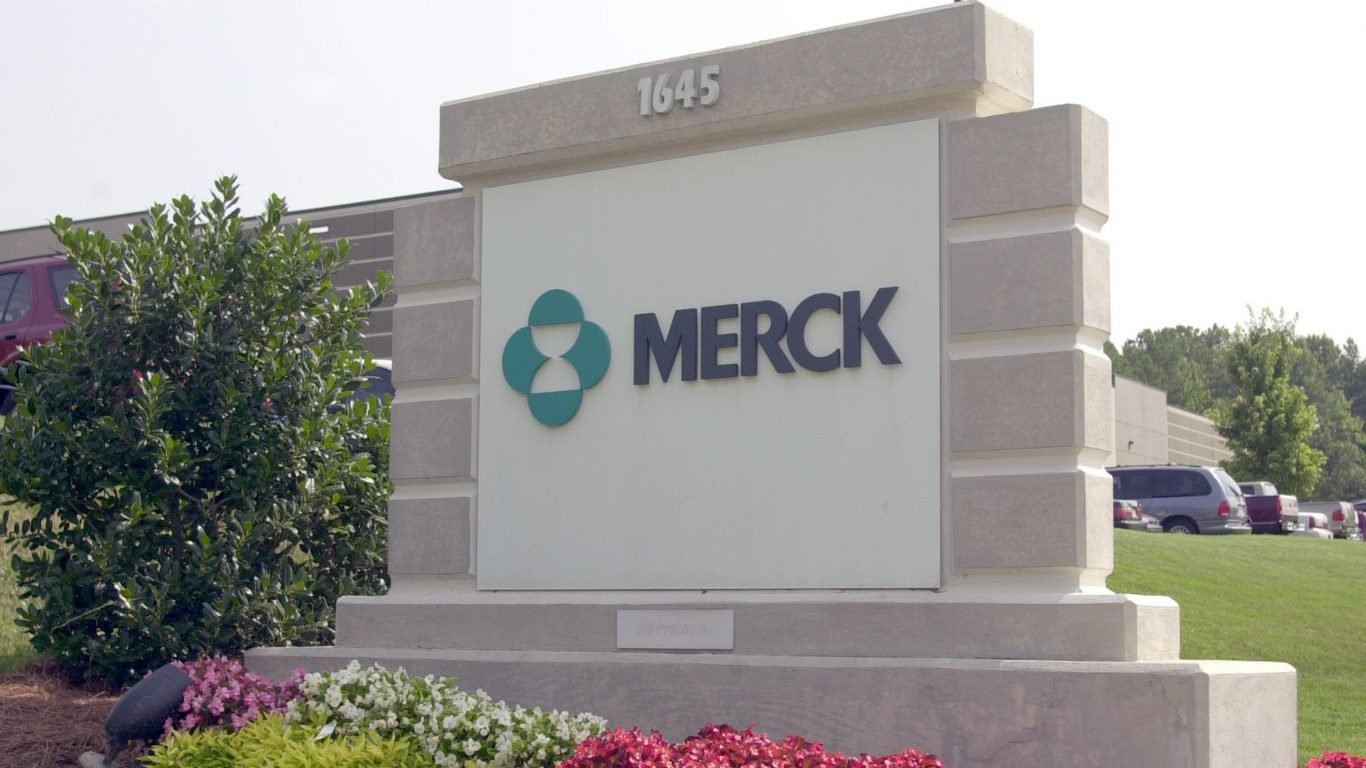
The performance gap is hard to argue with. The Nasdaq-100 is up 63.91% over the past two years, while Merck stock has slipped 4.32% over the same window.
The Case for Healthcare as Value
Many investors have spent the past several years concentrating heavily in technology, particularly AI-related stocks. As those positions have grown, healthcare has increasingly become the place where valuations appear more reasonable, and expectations have fallen.
“If you’re very, very full to the gills with growth and you want to take a little bit off and you’re trying to find some names that have underperformed, that’s really what it’s come down to,” Holz said.
He stopped short of predicting a major healthcare rally: “It’s sort of like it’s cheap. I’m not sure what it’s going to do. But if you want to take a small position as an offset, I guess.”
Holz is suggesting healthcare may serve as a counterbalance for investors whose portfolios have become heavily tilted toward growth and AI-related names.
Merck Could Be Interesting for Its Keytruda Franchise
For investors looking at large-cap pharmaceuticals, Holz pointed to Merck (NYSE:MRK | MRK Price Prediction) as one of the clearest examples of a value opportunity. The stock trades at a forward P/E of 23 and carries a 2.74% dividend yield, while Wall Street’s average analyst price target of $129.74 sits above the current $115.17 price.
The bigger story, however, remains Merck’s flagship immunotherapy drug, Keytruda. “The thing that is sort of most resonating, maybe, is just the power of Merck’s Keytruda and the fact that there are so many companies that are using Keytruda as the backbone for their therapy. No one can seem to get the results that they want in monotherapy,” Holz said at ASCO. That dynamic forces would-be challengers into partnership rather than head-on competition.
Merck’s Q1 2026 revenue came in at $16.29 billion, beating the $15.82 billion estimate, with Keytruda franchise sales of $8.03 billion, up 12%. Merck raised its 2026 guidance to $65.8 billion to $67.0 billion in revenue and $5.04 to $5.16 in non-GAAP EPS.

Summit Represents a Higher-Risk Alternative
Summit Therapeutics (NASDAQ:SMMT) sits at the other end of the spectrum, as a $12.48 billion market cap clinical-stage biotech trying to build a Keytruda challenger with ivonescimab, a bispecific PD-1/VEGF antibody licensed from Akeso. Shares are down 13.75% over the past year, with the analyst average target at $28.47 against a $15.71 close.
Summit presented HARMONi-6 overall survival data at the ASCO 2026 Plenary on May 31, and an FDA PDUFA decision on ivonescimab for EGFR-mutated NSCLC is set for November 14, 2026. Holz highlighted one of the key debates surrounding the story. Much of the company’s strongest data has come from studies conducted in China, raising questions about how those results will translate to Western patient populations and regulators. With $598.7 million in cash against a quarterly burn of $114.7 million, the runway is adequate, but the binary risk is real.
What to Watch
Analyst Jared Holz sees value emerging after years of underperformance.
For investors whose portfolios have become increasingly concentrated in AI, software, and mega-cap technology stocks, healthcare offers exposure to a different set of drivers at valuations that often look more reasonable. Merck represents the higher-quality, cash-generating version of that idea, while Summit represents the higher-risk, catalyst-driven version.
Contact [email protected] for any questions or corrections.
Thomas Richmond is a financial writer and content strategist with 5+ years of experience covering stocks and financial markets. He has published over 500 articles focused on individual stock analysis, helping investors better understand business fundamentals, stock valuations, and long-term opportunities.
Thomas previously served as a Content Lead at TIKR, a stock research platform, where he helped scale the company’s blog to hundreds of articles per month and contributed to a weekly newsletter reaching more than 100,000 investors.
Outside of work, Thomas enjoys weight lifting and soccer.