The 2 Catalysts That Will Determine NUKZ’s Next 12 Months
The Range Nuclear Renaissance Index ETF (NYSEARCA:NUKZ) has done what almost no thematic fund managed in the prior cycle: turned a niche utility trade into a high-growth AI derivative. Shares of NUKZ closed near $72 on Friday, putting the fund…


The Range Nuclear Renaissance Index ETF (NYSEARCA:NUKZ) has done what almost no thematic fund managed in the prior cycle: turned a niche utility trade into a high-growth AI derivative. Shares of NUKZ closed near $72 on Friday, putting the fund up roughly 44% over the past year and about 14% year to date. With assets pushing past $784 million and a steady drumbeat of hyperscaler power purchase agreements, NUKZ has become the cleanest single-ticker way to play the nuclear renaissance, which is exactly why the next 12 months demand sharper attention.
What NUKZ actually owns, and why it has worked
NUKZ tracks the Range Nuclear Renaissance Index and spans the full value chain: uranium miners, reactor builders, advanced small modular reactor (SMR) developers, and utilities operating existing fleets. The portfolio leans on names like Cameco, Constellation Energy, GE Vernova, Quanta Services, BWX Technologies, and Lockheed Martin, which is why it has outpaced uranium-only peers. The 0.85% expense ratio is steep for a passive vehicle, but investors have paid it because the basket captures the industrial buildout, not just the fuel.
The macro factor: hyperscaler power purchase agreements
The single most important macro variable for NUKZ over the next year is the pace and size of nuclear power purchase agreements signed by Microsoft, Amazon, Google, and Meta. ETF Database has described the move as a shift from utility play to high-growth thematic opportunity, and that re-rating only holds if hyperscalers keep writing checks. The concrete trigger to monitor is announced contracted gigawatts: each new utility deal adds roughly 1 to 2 GW of long-dated, above-market revenue to a utility holding that flows directly into NUKZ.
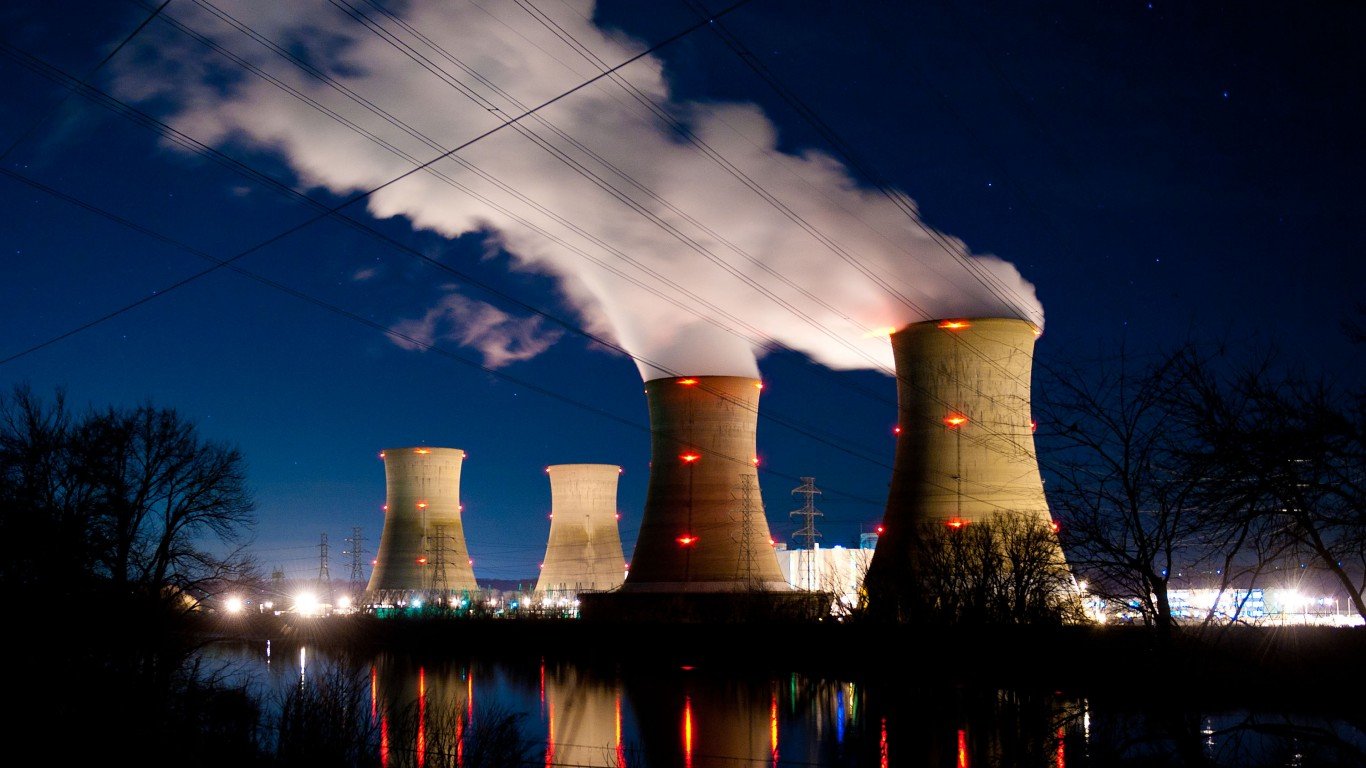
Track it weekly through hyperscaler 8-K filings and quarterly cloud capex guidance from Microsoft, Alphabet, Amazon, and Meta, plus the EIA’s monthly electricity report for nuclear capacity factor and grid demand. A useful historical analog: the 2024 Three Mile Island restart deal with Microsoft triggered a roughly 22% single-day move in the partnering utility and dragged the entire basket higher. Conversely, any deceleration in AI capex guidance (the metric that re-rated this whole basket) would compress multiples fastest on the utility names that have done the heaviest lifting.
The fund-specific factor: concentration and the Range index rebalance
NUKZ’s biggest internal risk is concentration. Yahoo Finance flagged in January that top holdings like Cameco represent a disproportionate portfolio weight, and the index methodology rebalances on a set schedule under VettaFi, which acquired the Range nuclear index suite in October 2025. That matters because the index has a constructive bias toward winners: as top holdings run, their weights climb until rebalance day forces a trim.
The factor to monitor is the next scheduled NUKZ reconstitution on VettaFi’s index page, plus the uranium spot price (UxC weekly indicator) since miner earnings sensitivity to spot is roughly linear above $80 per pound. If the rebalance trims uranium miners and adds more SMR or grid-infrastructure names, NUKZ’s correlation to uranium will fall and its correlation to AI capex will rise. That is a structural change holders should price in before it shows up in performance.
What to watch next
If hyperscaler nuclear PPAs keep landing at the 2025 to 2026 pace, NUKZ’s earnings base compounds and the premium is defensible. The single signal that would change the thesis: a miner-heavy rebalance combined with softer AI capex guidance from any two of the four hyperscalers. That combination would hit both the macro tailwind and the fund’s concentration cushion at once, and it is the scenario worth setting an alert for.
Contact [email protected] for any questions or corrections.
Marc Guberti is a personal finance writer who has written for US News & World Report, Business Insider, Newsweek and other publications. He also hosts the Breakthrough Success Podcast which teaches listeners how to use content marketing to grow their businesses.