Nuclear Power Is the Only Real Answer to AI Electricity Demand and These 3 ETFs Own the Trade
The hyperscalers have a math problem. US power generation from data centers is projected to climb from about 5% of the total to roughly 15% over a five-year span, a step change on a grid that has barely grown since…

The hyperscalers have a math problem. US power generation from data centers is projected to climb from about 5% of the total to roughly 15% over a five-year span, a step change on a grid that has barely grown since 2000. Wind and solar cannot solve it alone. AI training clusters need 24/7 firm power, the kind only a reactor can deliver at scale. That is why this article focuses on three funds built around the only zero-carbon baseload source that scales: the Range Nuclear Renaissance Index ETF (NYSEARCA:NUKZ), the Themes Uranium & Nuclear ETF (NASDAQ:URAN), and the Global X Uranium ETF (NYSEARCA:URA).
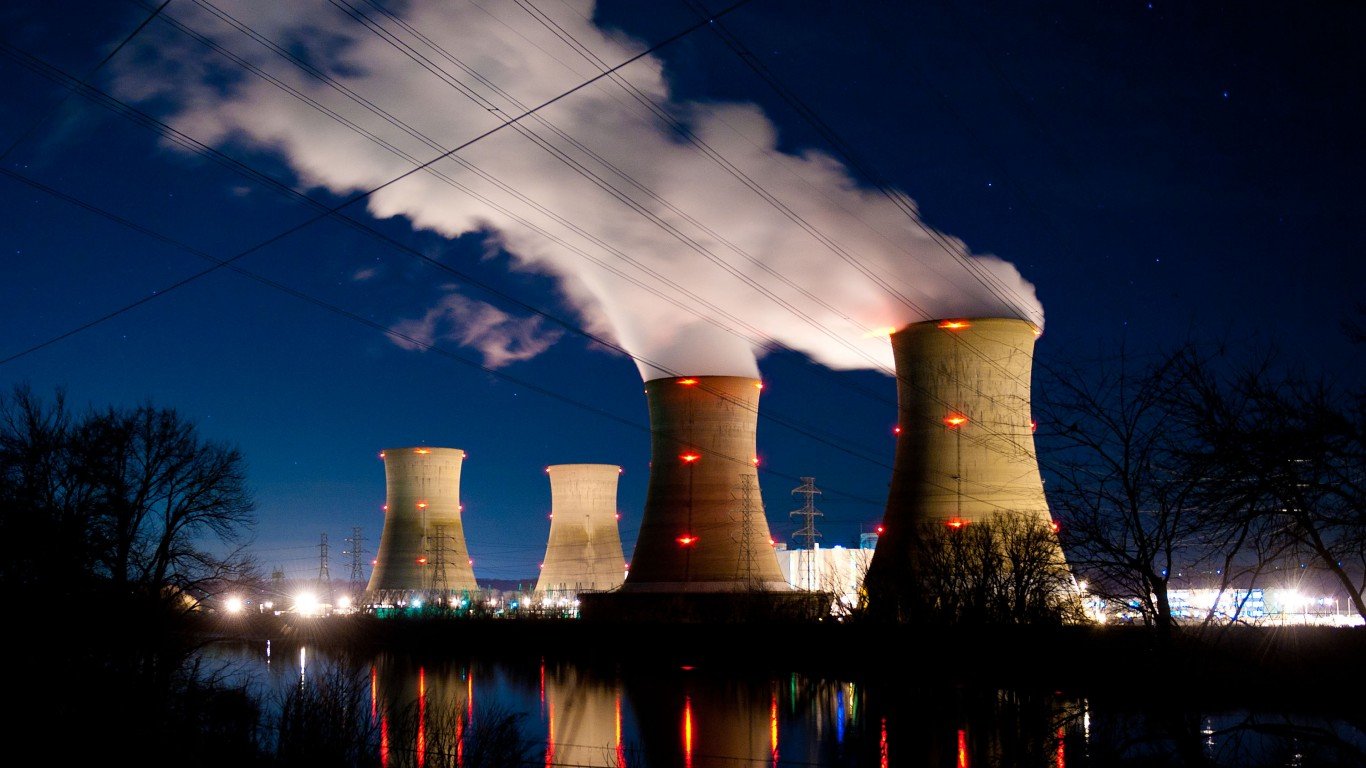
The thesis is no longer hypothetical. Microsoft signed a 20-year, 835 MW power purchase agreement with Constellation Energy in September 2024 to restart Three Mile Island Unit 1, a $1.6 billion project now targeting a 2027 startup. Amazon bought a data center campus next to Talen Energy’s Susquehanna nuclear plant in Pennsylvania. Google contracted with Kairos Power for small modular reactors. The buyers of last resort for nuclear electrons are now the cloud companies, and they are paying premiums for capacity.
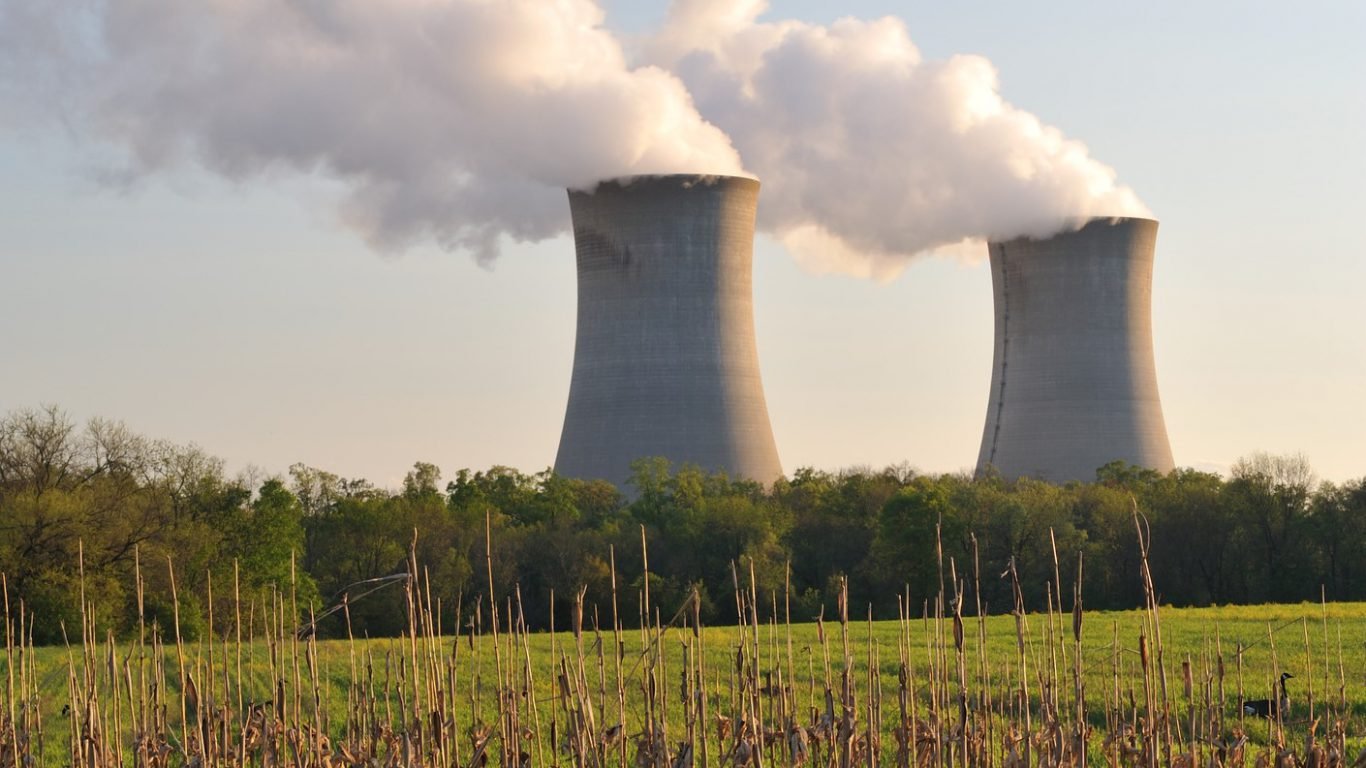
Why nuclear, and why now
A modern hyperscale data center wants gigawatt-scale, high-density, always-on power in a footprint small enough to colocate with the facility. Renewables fail two of those tests. A 1 GW reactor occupies a fraction of the land of an equivalent solar build and runs at capacity factors north of 90%. That structural fit, plus the political tailwind of bipartisan support for reactor restarts and SMR licensing, is what is repricing every public security with a nuclear revenue stream. The question for investors is which wrapper captures it best.
NUKZ: the purpose-built nuclear renaissance trade
NUKZ is the fund most directly aligned with the AI-electricity thesis, and it is the one most investors get wrong by assuming nuclear exposure means uranium miners. The Range Nuclear Renaissance Index pulls in three buckets at once: utilities operating existing reactor fleets, reactor developers and SMR builders, and uranium miners. That spans the entire value chain end to end.
The portfolio reads like a who’s who of the AI power deals. Top weights have included Talen Energy at roughly 3% and Dominion Energy near 3%, alongside Cameco, GE Vernova, and Constellation. These are the companies actually signing the offtake agreements with Microsoft, Amazon, and Google. The fund carries an expense ratio of 0.85% with assets of roughly $841 million, which makes it small but no longer micro.
Performance reflects the broader sector revaluation. NUKZ has returned about 52% over the past year and roughly 11% year to date through late May, with shares near $71. The tradeoff: NUKZ holds equipment companies and utilities whose nuclear exposure is a slice of a bigger business, so when the market falls in love with pure uranium, this fund will lag. In return, it is the cleanest way to own the actual counterparties to AI power deals.
URAN: the cheap, overlooked second mover
URAN is the contrarian pick on this list. It launched in late October 2025, runs at a net expense ratio of 0.59%, and is positioned as the lower-cost competitor to URA. The portfolio is a blend of pure-play uranium miners and nuclear equipment makers, with Cameco around 16%, Oklo near 8%, NexGen Energy close to 7%, and the Sprott Physical Uranium Trust at roughly 6%. Engineering and reactor-build exposure comes through Mitsubishi Heavy Industries, Hitachi, Samsung C&T, AtkinsRealis, and Jacobs Solutions.
What makes URAN interesting is the structural choice to include Japanese and Korean reactor builders at 22% and 7% geographic weights respectively. Japan is restarting reactors, Korea is exporting them, and both economies have public nuclear champions that US-only funds barely touch. The price has been less forgiving so far, with URAN up roughly 43% over the past year but only 2% year to date, a function of timing and a small asset base near $15.7 million. That AUM is the tradeoff. Spreads will be wider than the larger funds and the fund needs to keep gathering assets to stay viable.
URA: the incumbent uranium play
URA is the default option in the category, and the numbers explain why. The Global X fund manages roughly $6.86 billion in assets at an expense ratio of 0.69%, making it the deepest, most liquid uranium ETF in the market. The portfolio is heavily weighted toward Cameco and the rest of the uranium-miner complex, which is what investors want when they are expressing a direct view on uranium spot prices and the supply-demand squeeze coming out of producer underinvestment.
The returns tell the story of that concentration. URA is up about 80% over the past year, 15% year to date, and roughly 399% over the past decade. Shares trade near $49. The tradeoff is the flip side of that performance. URA gives investors uranium exposure rather than broader nuclear infrastructure exposure. If reactor newbuild stalls but uranium prices keep climbing on supply tightness, URA wins. If the AI buildout accelerates and utilities sign the next round of long-term offtakes, the upside in the fund’s miners will be real but indirect.
How to choose between them
Three funds, three different bets on the same theme. NUKZ is the right choice for investors who believe the AI-electricity story is the dominant driver. It owns the utilities and equipment names that are actually signing the contracts with hyperscalers. URA is the choice for investors who want pure uranium-price exposure with the deepest liquidity in the category. URAN is the call for investors who want a cheaper expense ratio and a portfolio with meaningful Japan and Korea reactor-builder weight, accepting smaller fund size as the cost of entry.
The risks cut across all three. Reactor projects run over budget and over schedule with regularity. SMR commercial deployment timelines could slip past 2030. Uranium supply could surprise to the upside if Kazakh or Namibian production ramps faster than expected, pressuring spot prices. And the entire trade is reflexive: if AI capex disappoints, the power thesis loses urgency overnight. Position size accordingly. The setup is real, but it is also crowded, and the funds that own the picks-and-shovels of nuclear are the ones built to capture what comes next.
Contact [email protected] for any questions or corrections.
After 15 years on Wall Street with 7 of them as Director of Corporate and Municipal Bond Trading for a NYSE member firm, I started my own project and corporate finance consultancy. Much of the work involves writing business plans, presentations, white papers and marketing materials for companies seeking budgetary allocations for spinoffs and new initiatives or for raising capital for expansion or startup companies and entrepreneurs. On financial topics, I have been published under my own byline at The Motley Fool, 247wallst.com, DealFlow Events’ Healthcare Services Investment Newsletter and The Microcap Newsletter, among others. Additionally, I have done freelance ghostwriting writing and editing for several financial websites, such as Seeking Alpha and Shmoop Financial. I have also written and been published on a variety of other topics from music, audiophile sound and film to musical instrument history, martial arts, and current events. Publications include Copper Magazine, Fidelity (Germany), Blasting News, Inside Kung-Fu, and other periodicals.