Wait! Michael Burry Is Right About the Memory Boom Ending? This Analyst Says Yes
The AI infrastructure boom has rewritten the rules of the semiconductor industry. Over the past 18 months, memory chips transformed from commodity products into one of the world’s most valuable bottlenecks. High-bandwidth memory (HBM), DRAM, and enterprise NAND became indispensable…

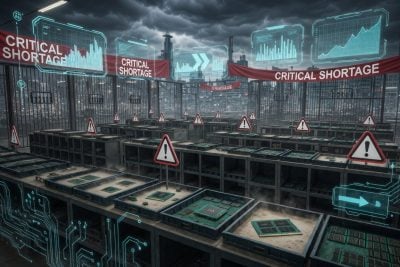
The AI infrastructure boom has rewritten the rules of the semiconductor industry. Over the past 18 months, memory chips transformed from commodity products into one of the world’s most valuable bottlenecks.
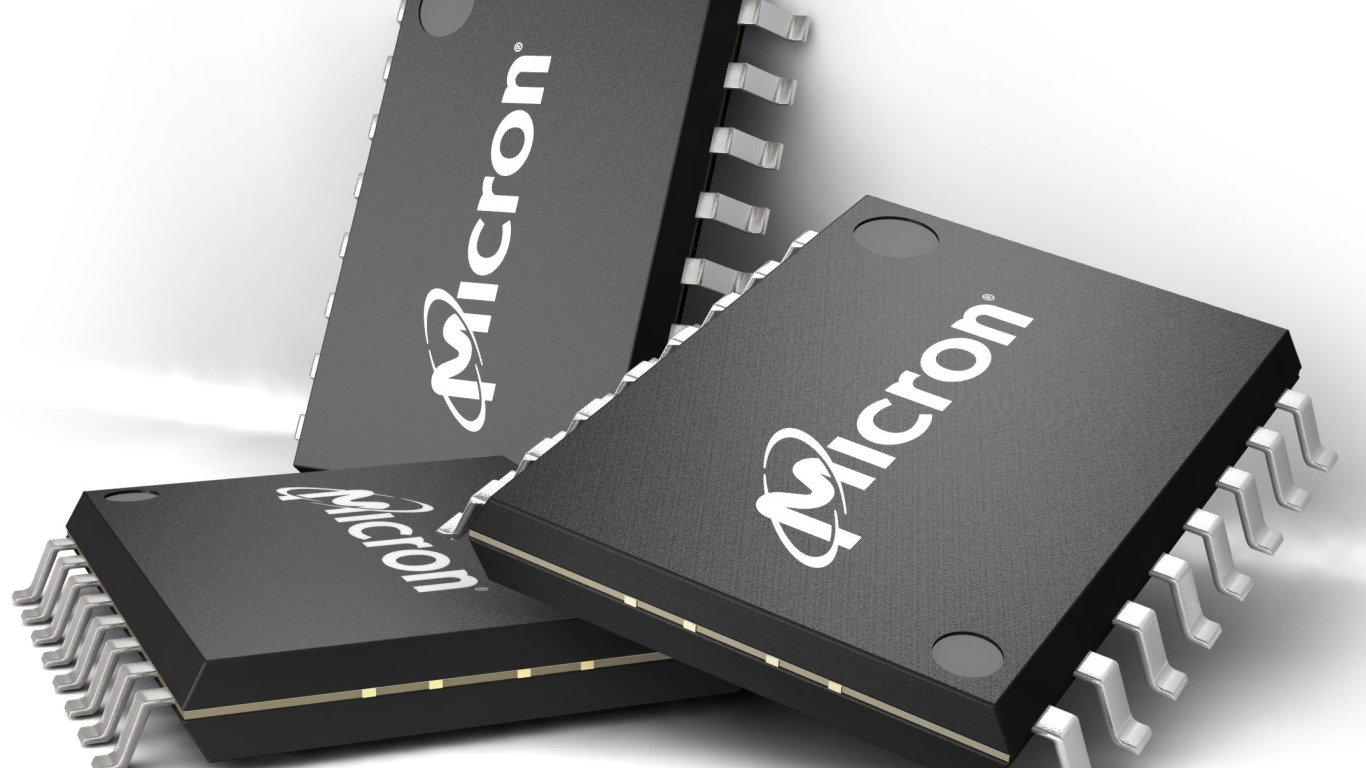
High-bandwidth memory (HBM), DRAM, and enterprise NAND became indispensable for Nvidia‘s (NASDAQ:NVDA | NVDA Price Prediction) AI accelerators, sending memory manufacturers into one of their strongest upcycles in years. Investors rewarded companies like Micron Technology (NASDAQ:MU), Sandisk (NASDAQ:SNDK), and others with enormous gains as prices climbed quarter after quarter. But every semiconductor boom eventually collides with new supply.
Now one prominent analyst believes that moment has arrived — and it happens to align with billionaire investor Michael Burry’s contrarian bet against Micron.
Analyst Says the Shortage Already Peaked
Burry surprised many investors after revealing a sizable short position against Micron, betting the market had become too optimistic about memory demand. In my view, the trade looks premature. Micron repeatedly told investors during earnings calls that AI demand remained unprecedented, while industry reports showed HBM production largely committed through 2026.
Now Bloomberg Intelligence argues Burry may have been looking further ahead than most investors.
According to Shuli Ren, a former investment banker, wrote an article for the investment research service saying the global memory shortage likely peaked during the second quarter of 2026. Her research forecasts conditions easing through the second half of 2026 and into 2027 before the industry potentially swings into oversupply by 2028.
That would be classic semiconductor economics — high prices encourage capacity expansion, which eventually creates too much supply and falling margins. If memory pricing reverses, earnings estimates across the sector would likely follow.
Why Bears Believe the Cycle is Turning
The first reason is simple: manufacturers are responding exactly as economics predicts. Samsung, SK hynix, and Micron are all expanding production after enjoying record pricing. Those investments eventually increase supply.
Second, hyperscalers may not continue buying AI hardware at today’s pace forever. Once Microsoft (NASDAQ:MSFT), Meta Platforms (NASDAQ:META), Amazon (NASDAQ:AMZN), Alphabet (NASDAQ:GOOG), and others complete much of their initial infrastructure buildout, purchasing could normalize instead of accelerating every quarter.
Third, AI hardware demand may shift from shortages to efficiency. Newer chips continue delivering more performance per watt and per dollar, meaning future systems could require fewer memory components for the same computing output.
If those trends overlap, memory pricing could weaken long before investors expect.
Bull Case Still Looks Strong
Granted, the bearish argument rests on one critical assumption — that demand slows faster than supply expands. That remains far from certain.
Industry executives continue describing memory as AI’s biggest bottleneck. Earlier this year, OpenAI Chief Operating Officer Brad Lightcap identified memory — not GPUs — as the industry’s primary constraint. Intel (NASDAQ:INTC) CEO Lip-Bu Tan similarly warned shortages could persist well into 2028.
Demand also continues broadening beyond AI training. AI inference, enterprise storage, sovereign AI projects, robotics, autonomous vehicles, and edge computing all require increasing amounts of memory.
Even if hyperscaler capital spending moderates, entirely new customers could absorb much of the additional capacity. That is important because semiconductor cycles often end when end-market demand disappears. Today’s AI demand appears to be diversifying instead.
Key Takeaway
In short, Michael Burry may ultimately prove correct that today’s extraordinary memory pricing cannot last forever. Semiconductor history suggests every shortage eventually becomes an oversupply.
The stronger argument, however, is that the timeline remains uncertain. Bloomberg Intelligence makes a compelling case that supply growth will catch demand by 2028, but today’s AI infrastructure buildout still appears to be in its early innings, and multiple industry leaders continue warning that memory remains the limiting factor. Investors should probably expect pricing to cool rather than collapse.
For shareholders, that means treating memory stocks less like permanent growth stories and more like cyclical businesses riding an unusually powerful AI wave. The boom will eventually fade. The evidence suggests it simply may not be over yet.
Contact [email protected] for any questions or corrections.
After two decades of patrolling the dark corners of suburbia as a police officer, Rich Duprey hung up his badge and gun to begin writing full time about stocks and investing. For the past 20 years, he’s been cruising the markets looking for companies to lock up as long-term holdings in a portfolio while writing extensively on the broad sectors of consumer goods, technology, and industrials. Because his experience isn’t from the typical financial analyst track, Rich is able to break down complex topics into understandable and useful action points for the average investor. His writings have appeared on The Motley Fool, InvestorPlace, Yahoo! Finance, Money Morning, and, of course, 24/7 Wall St. He has been featured in both U.S. and international publications, including MarketWatch, Financial Times, Forbes, Fast Company, and USA Today.